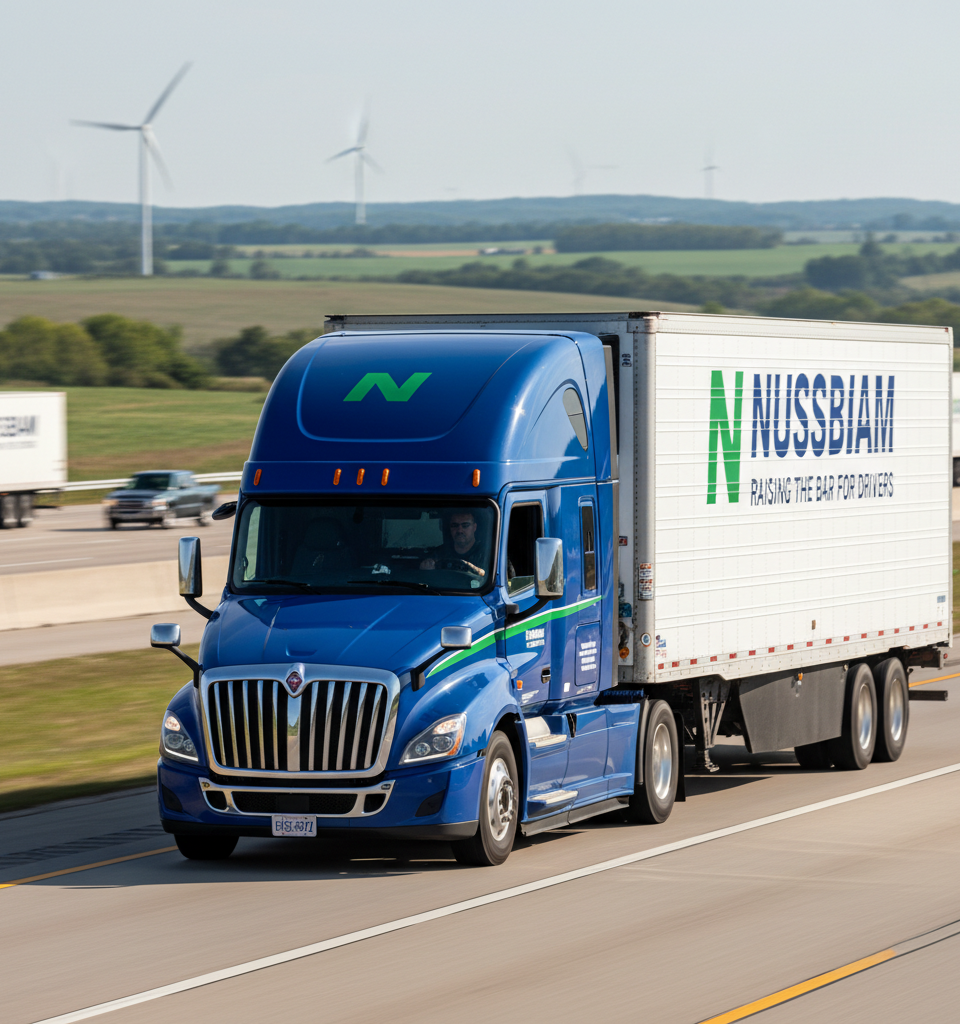
The freight industry is closely watching Carrier Nussbaum following its recent announcement of a significant pay increase for its drivers, a move that analysts suggest could be a bellwether for intensifying competition in the sector. This public posture contrasts with reports of other carriers quietly implementing similar — or potentially more aggressive — compensation adjustments. The development casts a spotlight on the critical role of driver retention and recruitment in an increasingly tight labor market for logistics.
This development is particularly salient given the persistent challenges of driver shortages that have plagued the trucking industry for years. The demand for freight services continues to exert pressure on an already constrained supply of qualified drivers, making compensation a primary battleground for talent. Nussbaum's decision to publicly declare its pay raise may be a strategic play to attract attention and talent, setting a precedent that other, perhaps smaller or more discreet, carriers might be compelled to match or exceed to remain competitive.
While specific figures for Nussbaum's pay increase were not immediately detailed in initial reports, the mere announcement signals a notable shift. Historically, pay adjustments have often been implemented with less fanfare, particularly by carriers keen to avoid tipping their hand to competitors or initiating a wider wage inflation spiral. The public nature of Nussbaum's move underscores the potential urgency with which some companies are addressing their driver needs.
The broader market implications of such moves are substantial. An uptick in driver compensation, whether public or private, translates directly into increased operational costs for carriers. These costs are typically passed on to shippers, potentially leading to higher freight rates across various sectors. This ripple effect could impact supply chains, consumer prices, and the overall economic landscape, especially if widespread adoption of higher driver pay becomes the norm.
Industry observers are parsing Nussbaum's announcement for clues about the current state of the driver market. The fact that "others are popping up more quietly" suggests a tactical divergence among carriers. Some may prefer to operate under the radar to avoid a full-blown bidding war, while others, like Nussbaum, might be leveraging a prominent announcement to achieve a first-mover advantage in attracting top-tier driving talent. This two-pronged approach highlights the varied strategies being employed to navigate the labor crunch.
Experts point out that while pay is a crucial factor, it is not the only lever carriers can pull to attract and retain drivers. Benefits packages, work-life balance, equipment quality, and company culture also play significant roles. However, in a market where demand for drivers arguably outstrips supply, a substantial pay hike often serves as the most immediate and impactful incentive.
Looking ahead, the freight industry is bracing for potential further adjustments. If Nussbaum's public announcement catalyzes a more widespread and overt competition for drivers, it could lead to a sustained period of wage inflation within the sector. Shippers will likely need to adjust their budgeting for transportation costs, and carriers will need to continually assess their compensation structures to remain attractive employers. The coming months will reveal whether Nussbaum's move proves to be an isolated incident or the harbinger of a broader, more aggressive fight for the nation's truckers.
Ultimately, the increased competition for drivers, underscored by Nussbaum's recent decision, reflects a fundamental supply-demand imbalance in the freight industry. Addressing this imbalance will require comprehensive solutions that extend beyond just compensation, but for now, pay appears to be the most active front in the battle for the open road.