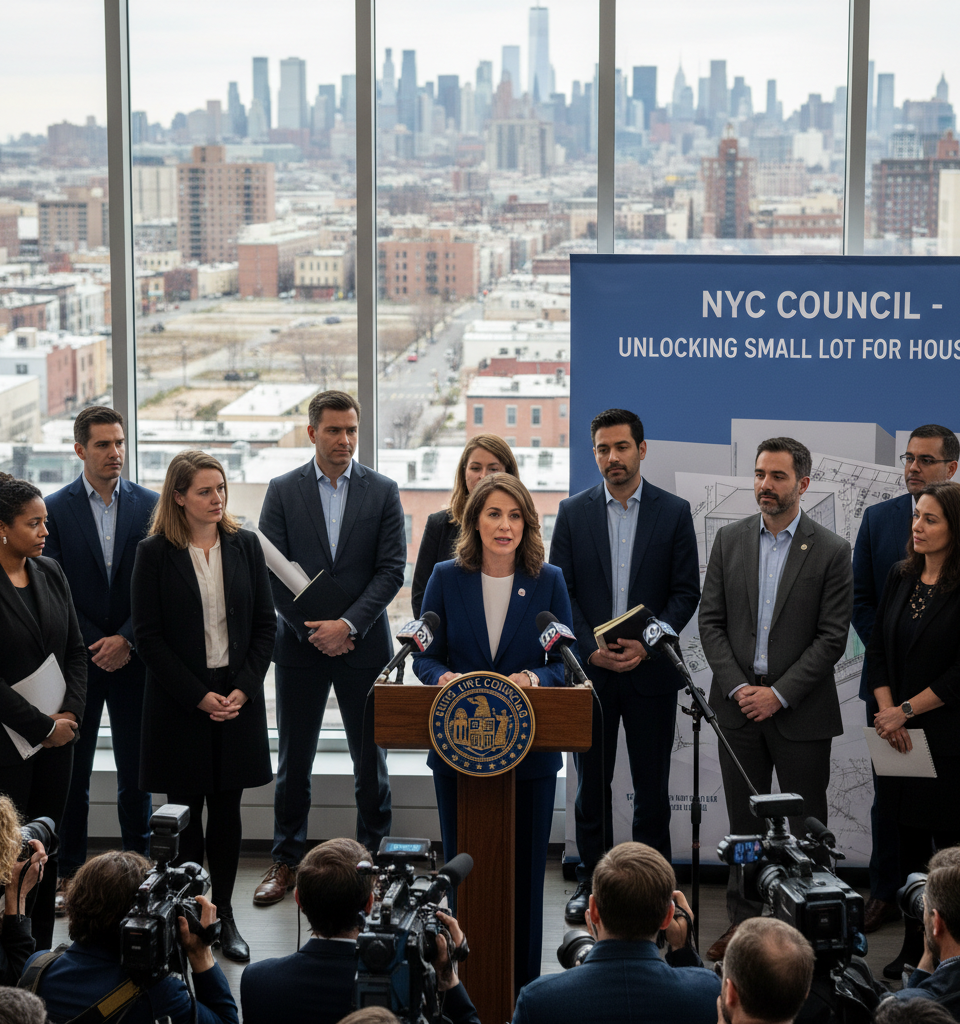
New York City Council Speaker Julie Menin announced the formation of a critical new advisory body on Friday, signaling a proactive approach to address the city's housing affordability crisis. The Council Advisory Group on Housing Affordability is tasked with the ambitious goal of identifying and implementing changes to the city’s complex construction codes and zoning regulations, specifically targeting the latent potential of small, often overlooked, land parcels. This move is designed to stimulate the development of an estimated 35,000 new housing units spread across roughly 3,000 underutilized small lots throughout the five boroughs.
Addressing a Persistent Challenge
The initiative comes at a time when New York City continues to grapple with a severe housing crunch, characterized by soaring rents, limited inventory, and intense competition for available units. For years, developers have cited restrictive zoning, outdated building codes, and the prohibitive costs associated with small-scale projects as significant impediments to housing creation, particularly for affordable options. The city's existing regulatory framework often makes it economically unfeasible to build on lots smaller than a certain size, leaving many parcels vacant or underutilized. Council Speaker Menin emphasized that unlocking the potential of these small lots is not just about increasing supply but also about fostering more equitable and diverse housing options within established neighborhoods.
Key Proposals and Expectations The Advisory
Group, comprised of architects, urban planners, developers, affordable housing advocates, and community leaders, will embark on a comprehensive review of current policies. Key areas of focus are expected to include streamlining permitting processes, exploring modifications to setback and density requirements for smaller infill lots, and potentially introducing new financing mechanisms to incentivize small-scale affordable housing development. One significant goal is to examine the feasibility of allowing for more flexible building types, such as missing middle housing – duplexes, triplexes, and small apartment buildings – which could blend seamlessly into existing residential zones. The ultimate aim is to create a more agile and responsive regulatory environment that can adapt to the unique challenges and opportunities presented by small urban parcels.
Impact on the Development Landscape
This initiative could significantly alter the dynamics of New York City's real estate development landscape. Currently, large-scale projects often dominate the narrative due to economies of scale and the ability to absorb regulatory complexities. By specifically targeting small lots, the Council aims to democratize development, providing opportunities for smaller builders and community-based organizations to contribute to the housing supply. This could lead to a more distributed and less centralized approach to housing growth, potentially integrating new units into a wider array of neighborhoods without requiring massive rezonings or displacement. The focus on infill development also aligns with sustainability goals by minimizing urban sprawl and leveraging existing infrastructure.
Expert Perspectives Urban planning experts and housing economists have largely welcomed the
Council's move, though some remain cautiously optimistic. "The potential of small and irregular lots has been largely untapped due to a one-size-fits-all regulatory approach," noted Dr. Evelyn Reed, a leading urban policy analyst at the City University of New York. "If this group can successfully identify targeted, evidence-based code amendments, it could unlock a significant, incremental supply of housing. The challenge will be balancing the need for more housing with preserving neighborhood character and ensuring robust community engagement." Developers, particularly those focusing on multi-family infill, are eager for clearer guidelines and reduced bureaucratic hurdles, which they argue could significantly cut project timelines and costs, making more projects financially viable.
The Road Ahead While the formation of the Advisory
Group marks a pivotal first step, the path to implementation will involve considerable effort and collaboration. The group is expected to present its initial recommendations to the City Council within six to nine months, followed by a period of public review and legislative action. Any proposed changes to the city's zoning resolution or building codes would require approval by both the City Council and the Mayor's office. The success of this initiative will ultimately depend on the group's ability to forge consensus among diverse stakeholders and navigate the complex political landscape of New York City, turning ambitious estimates into tangible housing units for its residents.