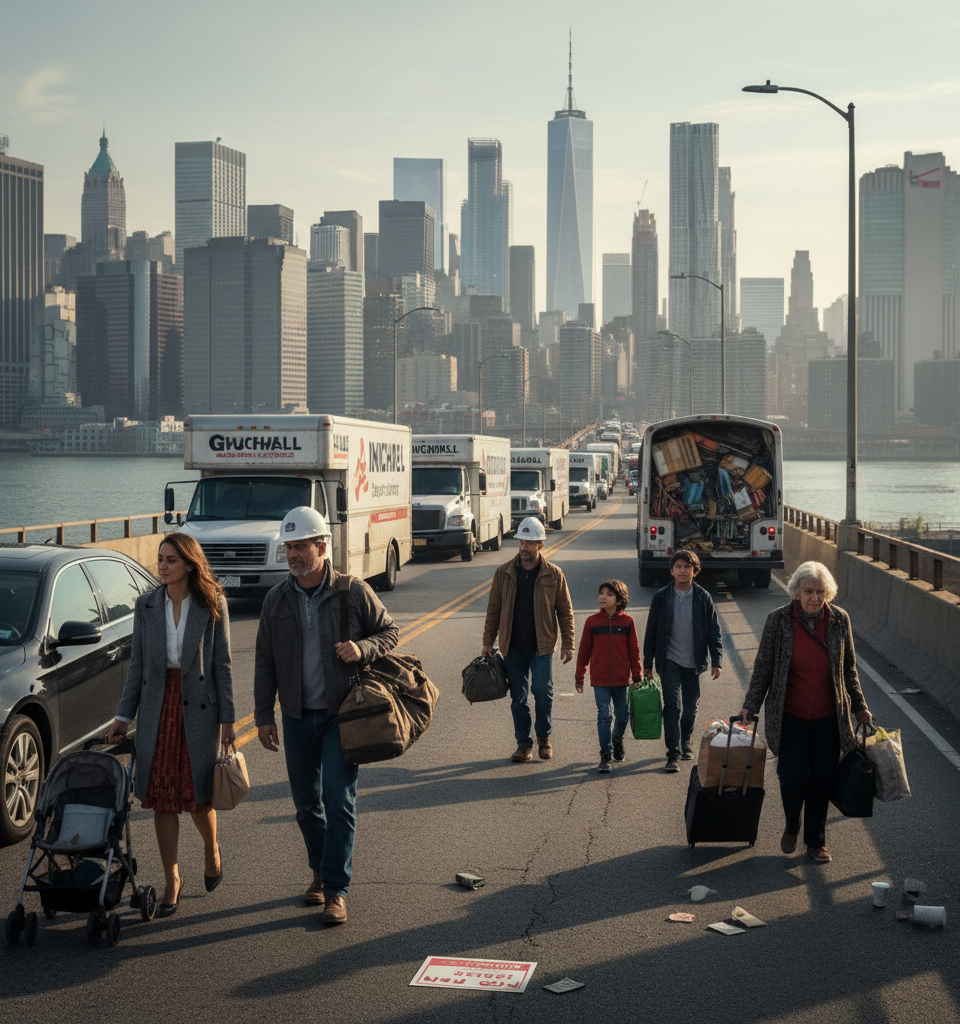
New York City's demographic rebound post-pandemic has been abruptly halted, with official figures revealing a net loss of approximately 12,000 residents in 2023. This unexpected downturn, defying earlier projections of continued growth, signifies a broad-based exodus affecting not only the city's affluent population but also middle- and lower-income households, raising concerns about the long-term economic and social fabric of the metropolis.
Contextualizing the Decline
This recent population dip carries significant weight, partly because it negates much of the modest recovery observed immediately after the COVID-19 pandemic. From April 2020 to July 2022, New York City witnessed an unprecedented outmigration, losing hundreds of thousands of residents amidst remote work shifts and quality-of-life concerns. While 2022 and early 2023 saw tentative signs of stabilization and even slight growth, driven by returning office workers and international migration, the latest data underscore persistent underlying challenges. Historically, New York City has weathered periods of population fluctuation, but the current movement suggests a more complex interplay of economic pressures and changing lifestyle priorities.
Key Data and Driving Factors The 12,000-person decline for 2023, while less dramatic in raw numbers than the pandemic's peak, is noteworthy for its demographic breadth. Data from various sources, including rental market analyses and moving company statistics, corroborate the official figures from the U.S. Census Bureau and the NYC Department of City Planning.
Anecdotal evidence suggests that escalating housing costs, particularly for rental properties, remain a primary driver. The median rent for a one-bedroom apartment in Manhattan, for instance, hovered around $4,200 for much of 2023, remaining stubbornly high despite some seasonal fluctuations. Beyond affordability, factors such as rising crime perceptions, the lingering prevalence of remote or hybrid work models, and the search for greater space and a perceived better quality of life in suburban or smaller urban environments are frequently cited by those departing.
Broader Economic Implications
The continued population contraction has significant ripple effects across the city's economy. A sustained outflow of residents impacts the tax base, potentially leading to reduced funding for public services, from transportation to education. Retail and service sectors, heavily reliant on a dense urban population, could face diminished demand. The real estate market, while still robust in certain high-demand segments, might experience increased vacancy rates in others, particularly in outer boroughs or less desirable commercial districts. The city's global standing as a business and cultural hub could also face long-term challenges if its talent pool continues to erode.
Expert Analysis and Perspectives Economists and urban planners are closely scrutinizing these trends, with many emphasizing the need for comprehensive policy responses. Dr. Eleanor Vance, an urban demographer at
NYU, notes, "What's concerning here is the broad-based nature of this departure. It's not just the ultra-wealthy seeking tax advantages, nor solely low-income individuals priced out. We're seeing a significant portion of the middle class, essential for the city's vitality, making the decision to leave." Others point to the need for aggressive affordable housing initiatives and improved public safety measures to stem the tide. "New York's allure has always been its dynamism, but that's predicated on accessibility," states Mr. Robert Chen, a real estate analyst. "If the cost of living continues to outpace wage growth, this trend will only accelerate."
Looking Ahead: Policy Responses and Future Trajectories
City officials acknowledge the challenge, indicating that housing affordability remains a top priority. Recent legislative efforts to streamline development and incentivize affordable housing construction are underway, though their impact will not be immediately felt. The administration also faces the ongoing task of revitalizing public spaces and addressing quality-of-life concerns to reassert New York City's unique appeal. The trajectory of remote work adoption, the future of corporate office mandates, and the influx of new immigrants will also play crucial roles in determining whether New York City can reverse this latest downturn and resume its historical pattern of growth in the coming years. The city’s ability to retain and attract a diverse population across all income levels will be paramount to its sustained prosperity and global competitiveness.