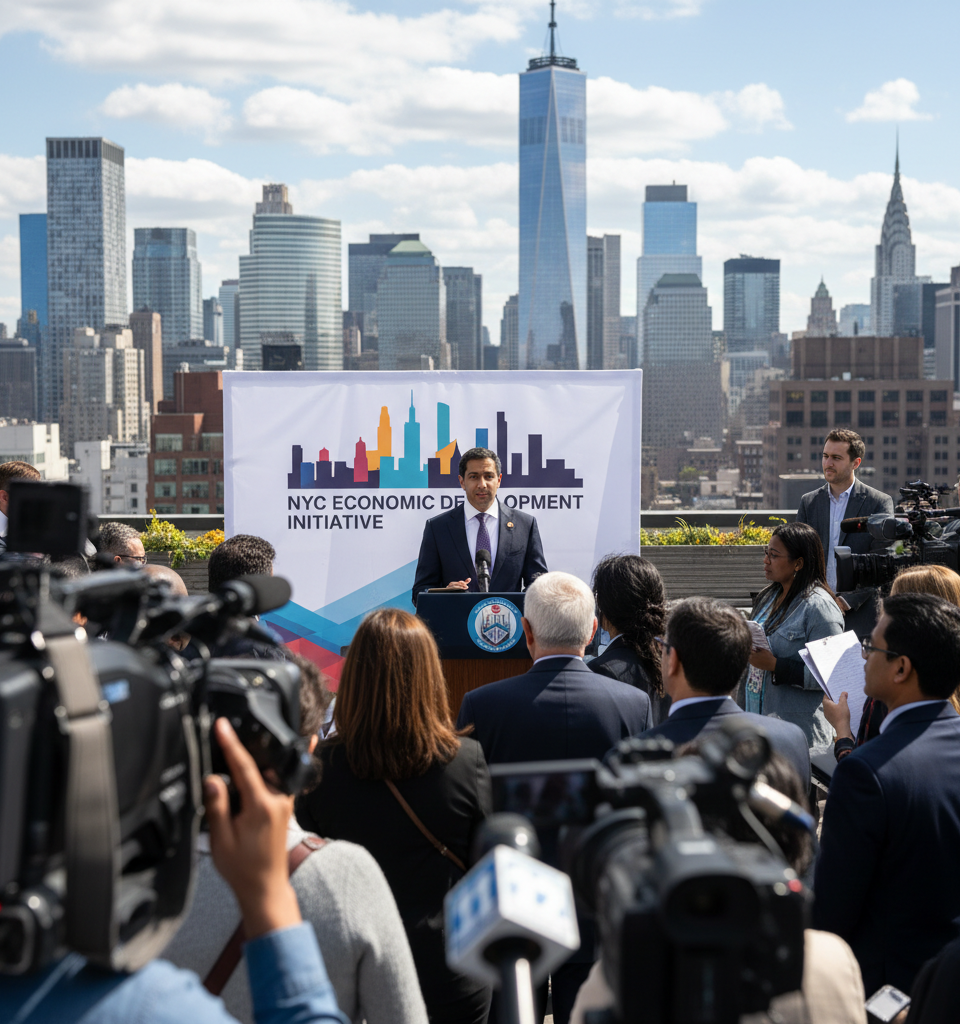
NEW YORK, NY – Whispers of a corporate flight from New York City have been rekindled following reports that financial titan Apollo Global Management is eyeing a second headquarters in the American South. This strategic exploration, while significant for Apollo's operational diversification, has inadvertently fueled a renewed debate regarding the economic health of New York City and the perceived impact of the new mayoral administration led by Zohran Mamdani. Yet, recent comprehensive data from the city's commercial office real estate sector paints a surprisingly resilient picture, largely contradicting the widespread concern of a mass business exodus.
The apprehension around businesses potentially decamping from New York is not new, particularly given the city's high operational costs and evolving tax landscape. The COVID-19 pandemic also accelerated discussions around remote work, prompting speculation about the long-term viability of traditional office spaces in dense urban centers. The current concerns, however, are now being increasingly tied to the political climate under Mayor Mamdani, with some critics suggesting his progressive policies might be deterring corporate investment. This historical backdrop of intermittent corporate flight anxieties provides important context for the current dialogue surrounding Apollo's reported considerations.
Despite the prevailing narrative of uncertainty, key indicators within New York City's office market suggest a cautious but discernible rebound. According to a recent Q1 2024 report from CBRE, Manhattan's office availability rate, while still elevated at 17.5%, saw a marginal decrease from the previous quarter. More importantly, leasing activity showed robust performance, with over 7.5 million square feet transacted, a substantial 15% increase year-over-year. The average asking rent for Class A space also remained stable, hovering around $83 per square foot, indicating sustained demand for prime locations. These figures challenge the notion of a precipitous decline, suggesting ongoing, albeit selective, corporate commitment to the city.
The implications for the broader commercial real estate sector are significant. A stable, if not growing, office market in New York City signals underlying confidence in its role as a global financial and cultural hub. While companies like Apollo may explore distributed work models or regional hubs, the core demand for a physical presence in NYC for talent acquisition, client engagement, and prestige remains strong. This sustained activity prevents a domino effect of declining property values and associated tax revenues, which would have broader economic repercussions for the city.
Industry experts largely concur that the 'business exodus' narrative is, at present, overstated. "While individual companies, especially those in finance, will always evaluate cost efficiencies and talent pools outside of New York, a systemic flight is not evident in the data," states Dr. Eleanor Vance, an urban economist at NYU Stern School of Business. "Leasing activity, particularly for premier spaces, shows that New York remains a critical node for global business. The dialogue often conflates a few prominent examples with a broader, underlying trend that simply isn't there yet." She further notes that the perceived impact of mayoral policies often takes years to manifest demonstrably in economic data, making immediate attributions speculative.
Looking ahead, the New York City office market is poised for continued evolution rather than radical decline. The Flight-to-Quality trend, where companies are consolidating into newer, amenity-rich buildings, is expected to intensify, potentially leading to further bifurcation in the Class A versus Class B market. The city's economic development corporations and the Mamdani administration will likely focus on strategies to retain and attract businesses, potentially through targeted incentives or infrastructure improvements. The ongoing debate around Apollo Global Management ultimately serves as a litmus test for corporate sentiment, but current data suggests that for now, the city's office market is weathering the storm and demonstrating considerable resilience.
The potential for new regulatory frameworks under Mayor Mamdani's administration could influence future investment decisions, particularly concerning real estate and labor. Stakeholders will be closely monitoring any proposed changes that could impact operational costs or the ease of doing business in the city. The city’s ability to adapt and innovate in response to these evolving corporate needs will be crucial in maintaining its competitive edge against other growing urban centers.
Ultimately, while the headline-grabbing movements of financial giants like Apollo deserve attention, a deeper dive into the robust and granular data of New York's office market paints a picture of enduring strength. The narrative of an imminent business exodus remains largely unsubstantiated, with the city's commercial real estate sector demonstrating ongoing vitality and adaptability even in the face of persistent speculation.