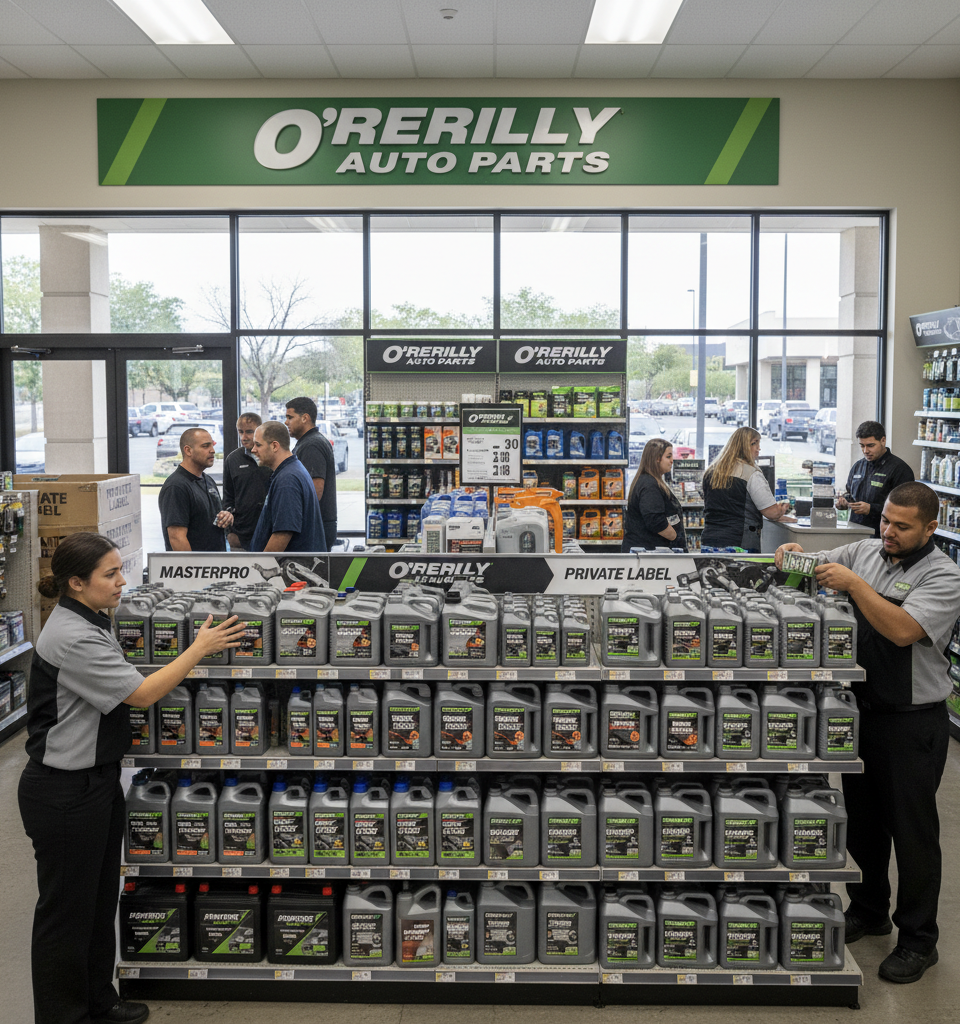
Springfield, Missouri – In a significant strategic pivot, O’Reilly Auto Parts announced its amplified focus on expanding its private label product portfolio, a move designed to bolster sourcing capabilities and exert greater control over its supply chain amidst ongoing global disruptions. The automotive parts giant, with over 6,000 stores across the United States, Mexico, and Canada, confirmed that prioritizing its store-branded inventory is a direct response to the volatile manufacturing and logistics landscape that has plagued industries worldwide since late 2020.
The Strategic Imperative of Private Label Expansion
This renewed emphasis on private label goods is not merely a cost-cutting measure but a fundamental shift in procurement strategy. By developing and distributing more products under its own brand, O’Reilly aims to reduce reliance on external suppliers, mitigate risks associated with fluctuating raw material costs, and gain more direct oversight of product quality and availability. The company has historically offered private label options, but the current initiative represents an accelerated investment, reflecting a broader industry trend where retailers seek to insulate themselves from external shocks by strengthening internal capacities. This strategy is particularly critical in the automotive aftermarket, where timely access to specific parts is paramount for both professional repair shops and DIY customers.
Enhancing Control and Quality
O’Reilly’s commitment to its store-branded products directly addresses several pain points exacerbated by recent supply chain woes. By collaborating more closely with a diversified base of manufacturers for its private label lines, the company can negotiate better terms, ensure consistent product specifications, and potentially circumvent bottlenecks that impact national brands. This enhanced control extends beyond just availability; it also allows O’Reilly to rigorously manage quality standards, fostering greater customer trust and loyalty. Experts suggest that private label products often offer comparable quality to national brands at a more competitive price, providing value to consumers while boosting retailer margins.
Industry Repercussions and Competitive Landscape
The move by O’Reilly is expected to send ripples across the automotive aftermarket. Competitors like AutoZone and Advance Auto Parts, which also maintain robust private label programs, may intensify their own efforts to prevent losing market share. This strategic play by O’Reilly underscores a broader trend within retail, where private labels are transitioning from being mere generic alternatives to becoming core components of a retailer's value proposition. The increased internal sourcing could put pressure on third-party branded suppliers who traditionally rely on retailers like O’Reilly for extensive distribution.
Analyst Perspectives on Vertical Integration
Industry analysts generally view O’Reilly’s private label expansion as a prudent and timely decision. "In an era of unpredictable global logistics, greater control over your product pipeline is not just an advantage; it's a necessity," stated one automotive sector analyst from a prominent financial institution. "O’Reilly's proactive stance on private label manufacturing suggests they are building resilience for the long haul. This vertical integration strategy not only safeguards against supply shocks but also enhances profitability by cutting out layers of middlemen." The analyst also noted the potential for O’Reilly to use its private brands to test new product categories and respond more swiftly to market demands.
Future Implications and Market Outlook
Looking ahead, O’Reilly’s expanded private label strategy is likely to yield several benefits: improved inventory stability, better gross margins, and stronger branding. The company anticipates that this initiative will allow it to better meet customer demand, even in the face of future supply chain volatility. Investors will be watching closely to see how this strategy impacts the company’s financial performance and competitive standing in the coming quarters. The success of this push could set a new benchmark for operational resilience within the retail auto parts sector, potentially prompting other retailers to accelerate their own private label development programs as a core strategic pillar rather than a supplementary offering.