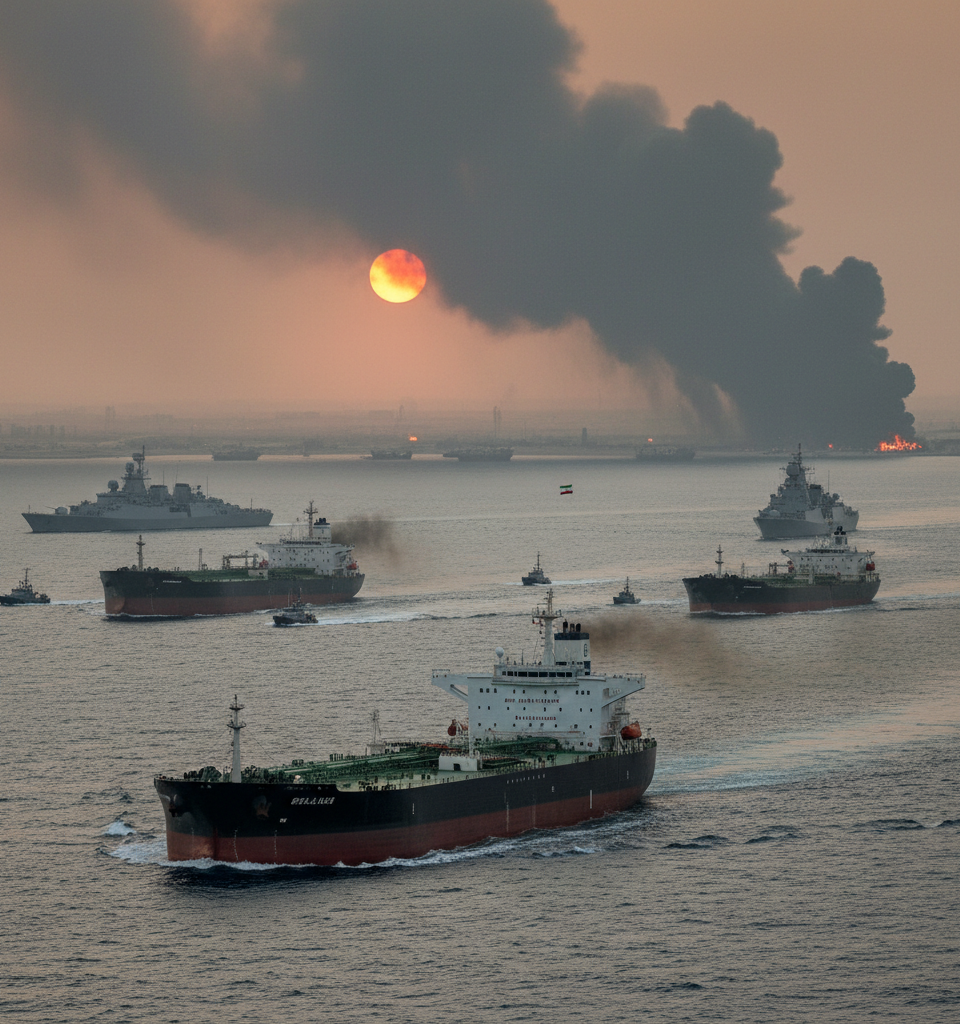
**London, UK – ** – The global oil market is teetering on the precipice of an even more severe demand downturn, according to prominent oil traders, who warn that the significant supply disruptions caused by the ongoing Iran war have yet to fully translate into a comprehensive market re-evaluation. Since late February, when the conflict erupted, an estimated 13 million barrels per day (bpd) of crude oil and refined product supplies originating from the Persian Gulf have been abruptly removed from the international market, creating an unprecedented supply shock that is now being met with an increasingly fragile demand outlook. This dire assessment underscores the gravity of the geopolitical landscape's influence on vital commodity markets. The Persian Gulf, a historical linchpin of global energy supply, has seen its output severely curtailed, prompting concerns over long-term energy security and price stability. The current situation marks a departure from typical supply-side shocks, as it is coupled with an anticipated, rather than realized, demand contraction, making market forecasting particularly challenging for industry veterans. Key figures within the trading community, speaking anonymously due to the sensitive nature of market predictions, highlighted the growing disconnect between physical market realities and futures pricing. "While the initial reaction to the supply cut was a sharp spike in crude prices, the underlying demand destruction, particularly in key Asian and European economies heavily reliant on these imports, is only just beginning to manifest," stated a senior trader at a major independent oil company based in Geneva. Data from maritime analytics firms indicates that tanker traffic out of the Strait of Hormuz has plummeted by approximately 45% since the conflict's onset, directly correlating with the 13 million bpd supply reduction. This double-edged crisis is sending shockwaves across the broader energy sector. Refiners, particularly in Asia, are grappling with dramatically higher input costs and uncertain product demand, leading to reduced utilization rates and potential plant closures. Concurrently, shipping insurance premiums for vessels operating in the Middle East have surged by over 300%, adding significant operational expenses for the remaining active transport routes. Economists widely predict that sustained high energy prices, exacerbated by the supply crunch, will act as a major headwind for global economic recovery efforts, potentially pushing several nations into recession. Energy market analysts are largely echoing the traders' cautionary statements. "The 'wait and see' approach adopted by many market participants might be underestimating the cumulative effect of these disruptions," noted Dr. Eleanor Vance, Head of Global Energy Research at Quantum Analytics. "We're not just looking at a temporary blip; this is a foundational shift in the global energy supply chain. The longer the conflict persists, the more entrenched the supply shortages become, and the more profound the demand response will be as economies struggle under the weight of higher energy costs." Looking ahead, the market is bracing for intensified volatility. Upcoming OPEC+ meetings are expected to address the critical supply deficit, though their ability to fully compensate for a 13 million bpd loss remains highly doubtful given existing spare capacity constraints, estimated by the EIA at barely 3 to 4 million bpd globally. Furthermore, the potential for escalation in the Iran war could lead to even greater supply disruptions, pushing Brent crude futures well beyond the $120 per barrel mark seen briefly last month. Governments worldwide are now exploring emergency strategic petroleum reserve releases, but these are seen as temporary stop-gap measures that fail to address the core structural imbalances emerging in the market. The consensus among experts is that the global economy must prepare for a prolonged period of elevated energy costs and supply uncertainty. Companies reliant on cheap, readily available oil are already recalibrating their operational strategies, while consumers are likely to bear the brunt of higher fuel prices, impacting everything from transportation to manufacturing. The immediate future of the global oil market hinges precariously on de-escalation in the Persian Gulf and a clearer understanding of the depth of global demand destruction.
Oil Market Braces for Deeper Demand Shock as Iran War Slashes Supply
Key Takeaways
Read this first — then go as deep as you need.
Discussion
Loading comments...
Enjoying this article?
Get more like it delivered to your inbox — free.
This article was compiled by GlobalSell News from publicly available reporting and has been edited for clarity and length. For full details, read the original source.