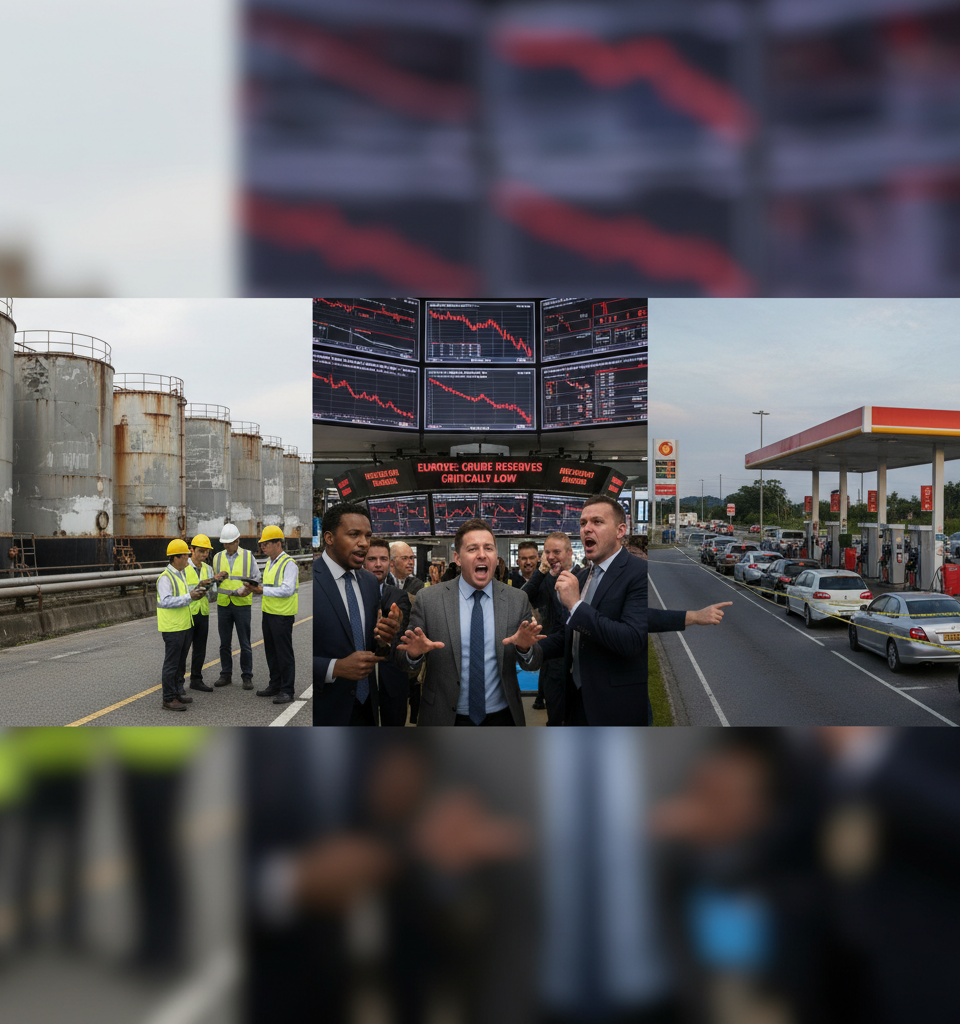
Global oil markets are converging on what industry veteran Jeff Currie terms 'tank bottoms' in Asia, signifying that inventory levels are nearing minimum operational thresholds. This concerning trend, as articulated by Currie, a specialist with Carlyle, suggests that Europe is likely to follow suit, with the United States potentially confronting oil shortages as early as July of this year.
The alarm raised by Currie underscores a growing fragility in the global crude supply chain. The concept of 'tank bottoms' refers to the lowest practical level of oil storage, below which refineries and distribution networks struggle to maintain consistent operations. Reaching this point can trigger acute supply disruptions, regardless of overall production levels, as the physical infrastructure cannot efficiently deliver the available crude.
The Widening Supply Squeeze
Currie's analysis paints a grim picture of a progressively tightening market. The current situation in Asia, a major consuming region, serves as a bellwether for potential broader challenges. The progression from Asia to Europe, then to the United States, indicates a systemic issue rather than isolated regional incidents. This suggests either a sustained draw on global inventories exceeding replenishment rates or significant logistical bottlenecks preventing efficient crude distribution.
Historical Precedent and Market Dynamics
Historically, periods of extremely low oil inventories have often preceded significant price volatility and, at times, economic disruption. While the precise factors driving the current reduction are not detailed in Currie's warning, it implies a confluence of factors such as robust demand, disciplined production, or potential geopolitical influences affecting supply routes and storage. The current market dynamics appear to be eroding the traditional buffer of strategic and commercial reserves, leaving consuming nations more vulnerable to disruptions.
Carlyle's Perspective and Expert Analysis
Jeff Currie, associated with Carlyle, a global investment firm, brings considerable weight to this warning. His assessment reflects deep analytical insight into the intricacies of global commodity markets. While the specific data points supporting his claim are not publicly detailed, the gravity of his language — 'tank bottoms' — implies a thorough evaluation of inventory data, shipping logistics, and demand trends across these key regions. His outlook suggests that the market is entering a phase where physical scarcity, rather than just price, becomes a dominant concern.
Implications for Industry and Consumers
Should Currie's predictions materialize, the impact could be widespread. Industries reliant on oil, from manufacturing and transportation to petrochemicals, could face increased operational costs and potential production slowdowns. For consumers, this could translate into higher fuel prices, impacting daily commutes and the cost of goods. Governments might also be pressured to consider releasing strategic reserves, though such measures are typically temporary and do not address fundamental supply imbalances.
Outlook: A Critical Period Ahead
The coming months are crucial for the global oil market. The projected timeline, with the U.S. potentially facing shortages by July, indicates an imminent challenge. Market participants, policymakers, and consumers will be closely monitoring inventory reports and geopolitical developments. The trajectory of oil prices and the stability of energy supply will heavily depend on how producers respond to tightening availability and how demand evolves in the face of these prospective challenges. The warning from Jeff Currie serves as a critical alert for a market navigating increasingly precarious supply conditions.