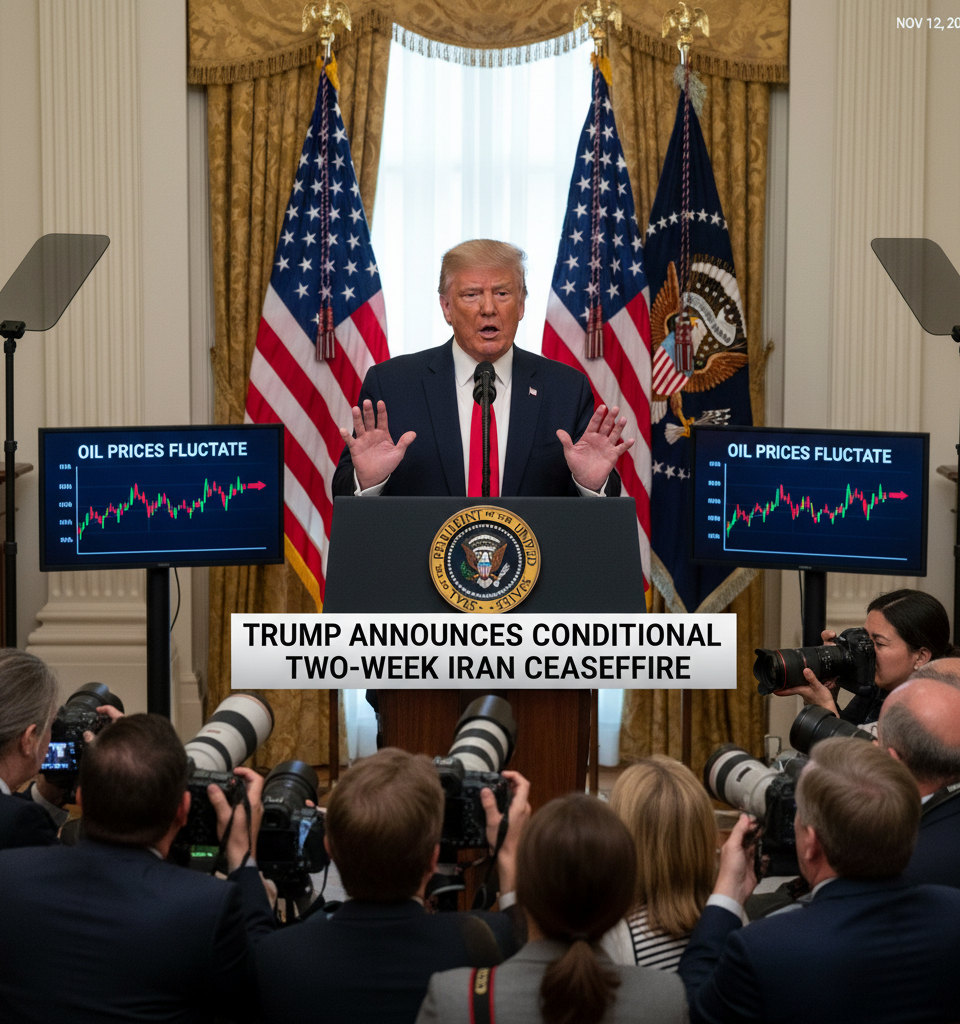
NEW YORK – Global crude oil prices experienced a notable downturn early yesterday after President Donald Trump announced a surprising and conditional two-week ceasefire agreement with Iran, narrowly averting a Tuesday evening ultimatum. The diplomatic breakthrough, revealed just hours before a potential escalation could have commenced, temporarily eased fears of a broader conflict in the crucial oil-producing Middle East region, sending ripples through international energy markets.
Context of Escalation and De-escalation
This development comes against a backdrop of escalating geopolitical tensions that have gripped the Strait of Hormuz, a vital chokepoint for global oil shipments. For weeks, the relationship between Washington and Tehran had been deteriorating, marked by a series of attacks on oil tankers, drone incidents, and increased military posturing. The ultimatum's expiration loomed large, with many analysts bracing for potential retaliatory actions or further economic sanctions that could have severely disrupted global crude supply chains. The ceasefire, though conditional, represents a significant pause in what had appeared to be an unstoppable march toward confrontation, reminiscent of past regional crises that have historically sent oil prices soaring.
Key Details of the Conditional Agreement
Details surrounding the ceasefire remain somewhat opaque, though sources close to the administration suggest the agreement hinges on Iran's commitment to de-escalate its enrichment activities and halt recent provocations in international waters. While specific terms were not fully disclosed, the two-week window is understood to be a period for de-escalation and exploratory diplomatic exchanges. "This is a temporary measure to allow for dialogue, not a permanent solution," President Trump stated in a brief press conference, emphasizing the conditional nature of the truce. The announcement helped pull Brent crude futures down by over 2%, trading at approximately $62.50 a barrel, while WTI futures saw a similar decline, hovering around $57.80. This contrasts sharply with the nearly 5% surge in prices observed last week amidst the height of the tensions.
Industry and Market Impact Analysis
The immediate market reaction underscores the profound influence geopolitical stability has on the global energy sector. Oil traders, who had been pricing in a significant 'risk premium' due to the growing Iranian threat, quickly adjusted their positions. The temporary relief from a potential supply disruption in one of the world's most critical oil corridors led to a sell-off. Shipping insurance premiums, which had skyrocketed by as much as 400% for vessels transiting the Persian Gulf, are also expected to see some moderation, albeit cautiously. The broader impact extends to global logistics and manufacturing, as stable oil prices are intrinsically linked to operational costs and consumer confidence.
Expert Perspectives on the Ceasefire
Energy market analysts offered a mix of caution and optimism regarding the ceasefire. "While any de-escalation is welcome, this is merely a temporary pause, not a resolution," commented Dr. Eleanor Vance, a senior geopolitical risk analyst at Global Energy Insights. "The underlying issues, including Iran's nuclear program and regional influence, remain unresolved. We could easily see renewed tensions after the two-week period, or even before, if conditions are perceived to be breached." Other experts pointed to the fragility of such agreements without a clear, long-term diplomatic framework, suggesting the market's initial relief might be premature given the fundamental disagreements between the two nations.
The Road Ahead: Potential Developments
Looking ahead, the next two weeks will be crucial. Diplomatic channels are expected to be cautiously reopened, though formal high-level talks have not yet been announced. The focus will be on whether both sides can adhere to the terms of the conditional ceasefire and potentially lay the groundwork for more substantive negotiations. Any perceived breach of the agreement by either party could quickly reignite tensions and send oil prices spiraling upwards once again. Companies operating in the region are likely to maintain heightened alert levels, while policymakers worldwide will closely monitor developments, understanding that global economic stability hinges significantly on peace in the Middle East. The long-term trajectory of oil prices will largely depend on the eventual outcome of this renewed, albeit fragile, diplomatic effort.