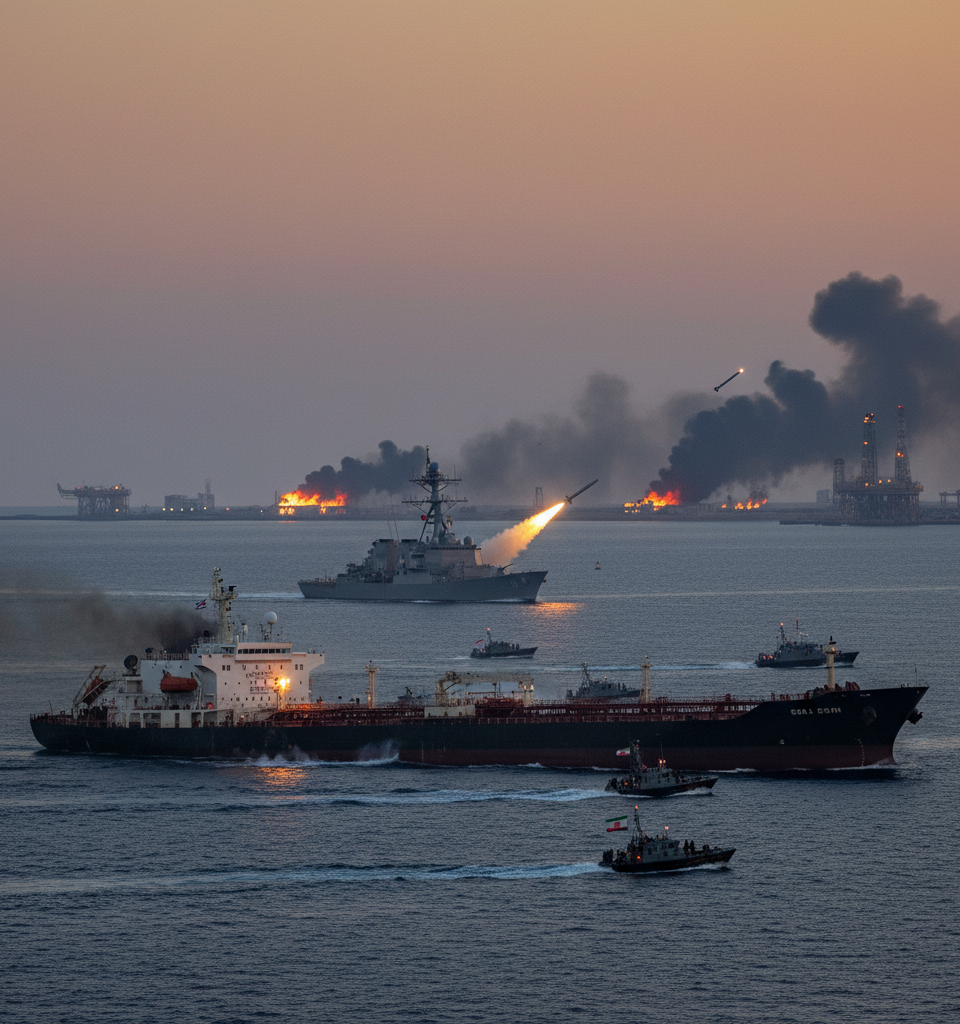
Global crude oil prices spiked dramatically on Sunday as geopolitical tensions between the United States and Iran escalated sharply, following reported attacks on commercial vessels navigating the Strait of Hormuz. The incident has pushed Washington and Tehran closer to a potential military confrontation, sending shockwaves through international energy markets and raising concerns about the stability of the world's most crucial oil transit route. Investors are bracing for further volatility as the situation unfolds.
Geopolitical Flashpoint Ignites Market Fear
This latest surge in oil prices underscores the profound interplay between Middle Eastern geopolitics and global economic stability. The Strait of Hormuz, a narrow waterway between the Persian Gulf and the Gulf of Oman, is an indispensable artery for international oil trade, handling approximately 20% of the world's total petroleum liquids consumption and a significant portion of global liquefied natural gas (LNG). Any disruption, real or perceived, in this strategic choke point invariably triggers an immediate and substantial market reaction. The current climate of heightened rhetoric and tit-for-tat actions between the US and Iran has created a volatile environment where even minor incidents can have outsized implications for global energy security.
Key details surrounding the attacks remain contested, with both the US and Iran engaging in accusations and counter-accusations. Sources within the US intelligence community, speaking on condition of anonymity due to the sensitivity of the information, indicated that preliminary assessments point towards Iranian involvement in the commercial vessel incidents. Tehran, however, has vehemently denied these allegations, instead accusing the US and its regional allies of provocations aimed at destabilizing the region. While specific damage assessments to the affected vessels are still underway, reports suggest deliberate targeting designed to maximize economic disruption without causing direct fatalities, a strategy consistent with a calibrated escalation of pressure.
Broader Market Repercussions and Supply Concerns
The immediate impact on the oil market was palpable. Brent crude, the international benchmark, saw its futures contracts jump by over 3%, while West Texas Intermediate (WTI), the US benchmark, experienced a similar uptick. This rapid escalation reflects deep-seated fears of supply disruptions. Should the conflict escalate further, or if the Strait of Hormuz becomes genuinely unnavigable due to military action or heightened security risks, the global economy could face an unprecedented energy crisis. Shipping insurance premiums for vessels traversing the region have already begun their ascent, adding to operational costs and further signaling the perceived risk.
Energy analysts are unanimous in their assessment that the current situation is precarious. "We are witnessing a classic geopolitical risk premium being baked into oil prices," stated Dr. Helene Fischer, Lead Energy Economist at Global Insights Research. "The market is now pricing in a higher probability of extended supply disruptions, even if full-scale conflict is not the base case. The true cost of this tension is uncertainty, which drives capital flight and inflation fears." Senior executives from major oil companies are reportedly holding emergency meetings to assess their logistical resilience and contingency plans for alternative shipping routes, though viable alternatives to the Strait are severely limited and costly.
What Lies Ahead: A Tightrope Walk for Diplomacy
Looking ahead, the immediate future hinges on de-escalation efforts, which appear increasingly fragile. Diplomatic channels between Washington and Tehran are virtually non-existent, leaving little room for direct communication to defuse tensions. International bodies, including the United Nations, have called for restraint and dialogue, but their influence remains limited in the face of entrenched grievances and strategic objectives. Any further incident in the Strait could rapidly trigger a disproportionate response, pulling regional and global powers into a wider conflict. Oil market participants will be closely watching for any shift in military postures, official statements from key governments, and, critically, any further reported disruptions to commercial shipping.
Near-term implications include continued price volatility and upward pressure on oil futures, as traders react to every geopolitical headline. Businesses reliant on global supply chains face potentially higher transportation costs, which could translate into increased consumer prices and inflationary pressures worldwide. The delicate balance in the Middle East has been disrupted, and the path to stability remains fraught with significant peril, with the world's energy lifeline hanging in the balance.