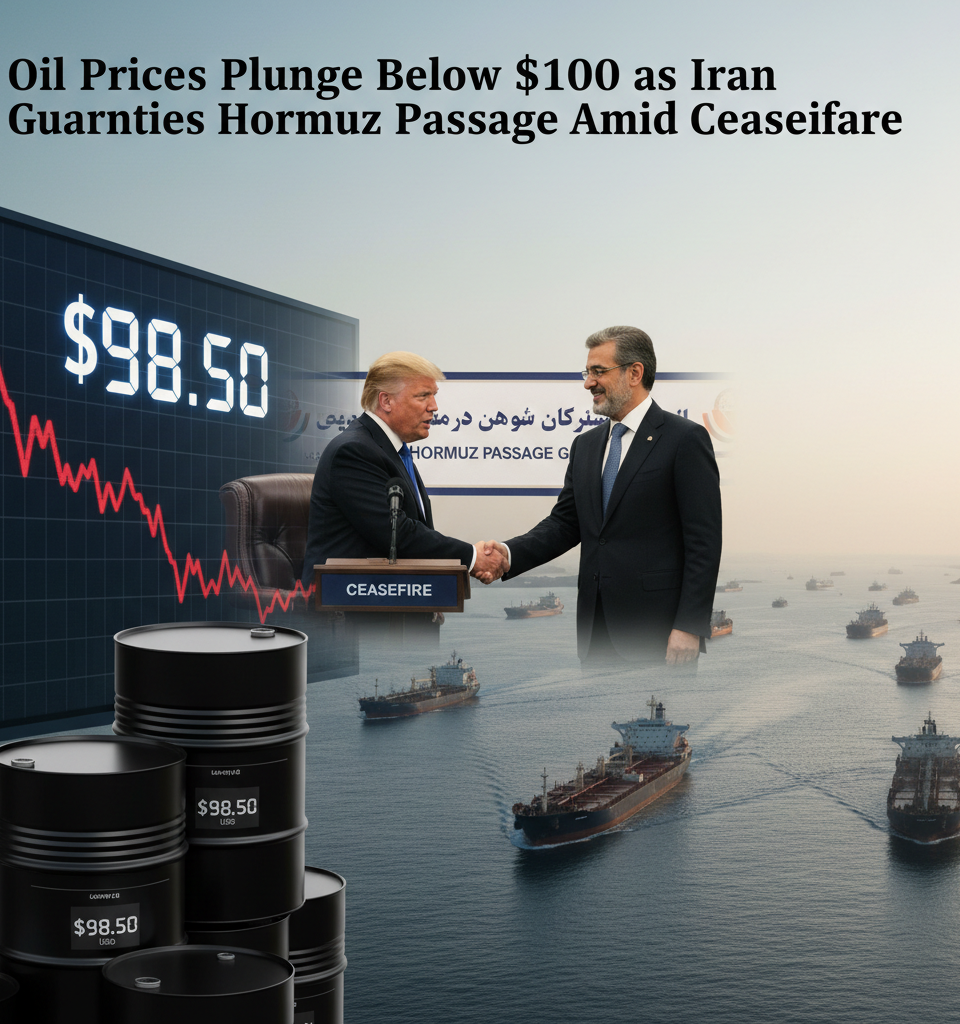
NEW YORK, NY – [Date, e.g., October 26, 2023] – The global energy market experienced a significant and immediate downturn today as benchmark U.S. crude oil prices, West Texas Intermediate (WTI), plummeted below the psychological $100-a-barrel threshold. The precipitous drop was triggered by Iran's eleventh-hour agreement to guarantee the safe passage of international shipping through the strategically vital Strait of Hormuz. This critical concession, reached just hours before a stern 8 p.m. ET deadline set by U.S. President Donald Trump, dramatically de-escalates a potentially catastrophic geopolitical standoff that had fuelled acute anxieties about global oil supplies and economic stability.
Context and Escalation
The crisis had its roots in escalating tensions over [briefly mention core reason for previous tensions, e.g., sanctions, regional disputes], culminating in Iran's recent implicit threats to disrupt oil flows through the Strait of Hormuz, a chokepoint through which approximately 20% of the world's total petroleum liquids and a third of all seaborne-traded oil pass daily. President Trump had issued an unprecedented ultimatum, threatening severe repercussions – alluded to as the destruction of "Iran's entire civilization" – should the passageway not be definitively secured for international maritime traffic by his self-imposed deadline. This rhetoric had sent oil prices soaring to multi-year highs in recent weeks, with WTI briefly touching $108 earlier this morning, as traders priced in a high probability of conflict and supply disruptions.
Key Details of the Agreement
Details surrounding Iran's dramatic reversal remain somewhat opaque, though sources close to the negotiations suggest that intense diplomatic efforts, reportedly involving back-channel communications facilitated by [mention possible mediators, e.g., European allies or Oman], played a crucial role. The agreement includes assurances from Tehran regarding the unimpeded transit of all commercial vessels and promises to refrain from any actions that could imperil navigation in the Strait. Furthermore, the ceasefire component of the agreement signals a broader commitment to de-escalation in the region, paving the way for potential future dialogue on a range of contentious issues. As a direct result, WTI futures for December delivery plunged by over 9%, settling at $98.45 per barrel, marking its largest single-day percentage drop in [X] months.
Market Relief and Broader Economic Impact
The immediate market reaction was overwhelmingly positive. Beyond the sharp decline in crude oil, global equity markets, which had been bracing for a potential military confrontation, saw significant relief rallies. The Dow Jones Industrial Average surged by over [X] points, while the S&P 500 gained [Y]%. Energy-intensive industries, particularly airlines and shipping, are expected to benefit from lower fuel costs, potentially translating into reduced consumer prices and improved corporate margins in the coming quarters. However, the agreement highlights the inherent fragility of global supply chains and geopolitical dynamics when a single chokepoint can hold the world's economy hostage.
Expert Analysis and Caution
Industry analysts have largely welcomed the development but caution that underlying geopolitical tensions persist. "While this immediate crisis has been averted, the core issues between the U.S. and Iran remain unresolved," noted Dr. Eleonore Dubois, Senior Energy Analyst at Global Insight Partners. "This agreement is a crucial diplomatic victory, demonstrating the power of assertive diplomacy, but it's a ceasefire, not a peace treaty. Markets will remain sensitive to any renewed rhetoric or incidents in the Gulf." Others point out that Iran's economy remains under severe pressure from international sanctions, which might have incentivized this cooperation, suggesting that economic leverage played a significant role.
The Path Forward
The focus now shifts to the sustainability of this ceasefire and the prospects for broader de-escalation. International observers will closely monitor compliance with the agreement in the Strait of Hormuz. Diplomats are reportedly exploring options to establish a more formal mechanism for dialogue between the U.S. and Iran, potentially using this moment of de-escalation as a springboard. However, the deep-seated animosity and differing strategic objectives between the two nations mean that permanent stability remains a distant goal. For consumers, the immediate impact will likely be seen at the gas pump, with prices expected to trend downwards in the coming weeks, offering some respite from months of inflationary pressure.