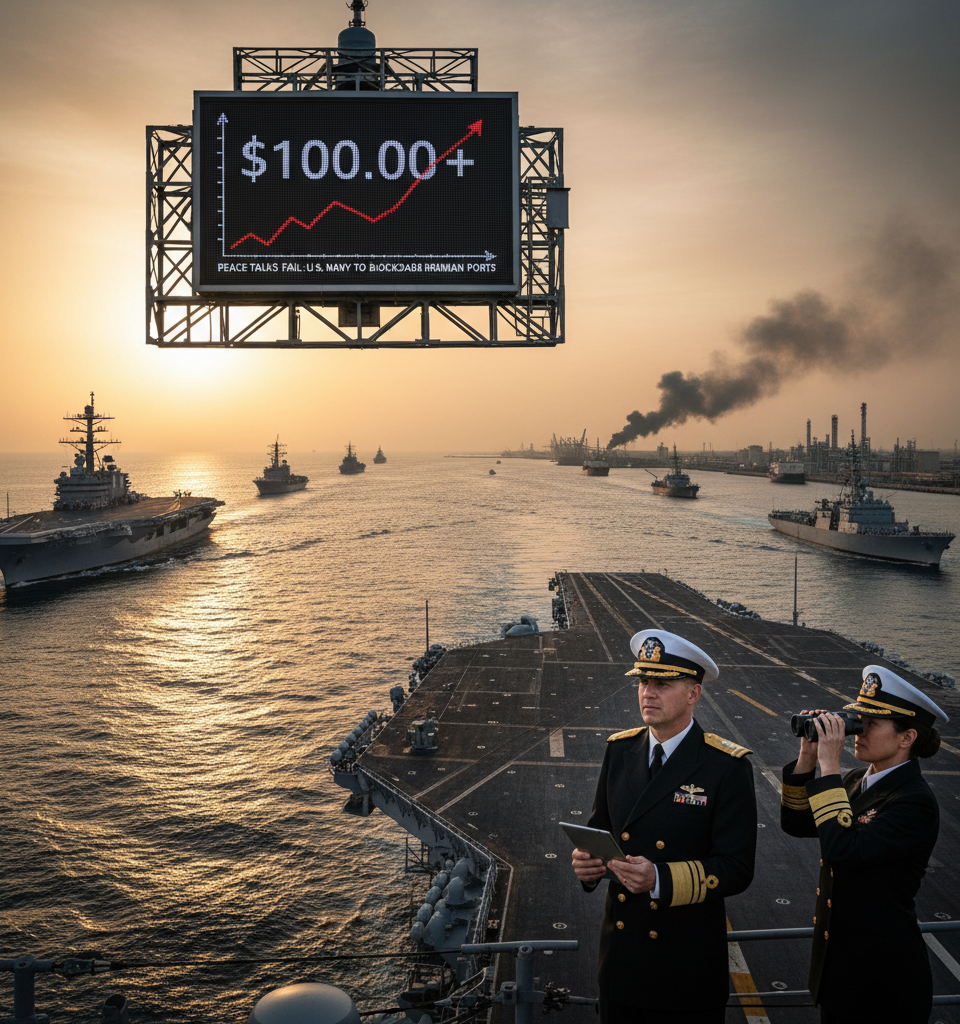
Global oil markets have experienced a dramatic price surge, pushing crude futures above the $100 per barrel mark, as geopolitical tensions in the Middle East intensify following the breakdown of peace talks and a subsequent, aggressive posture from the United States. President Donald Trump has issued a directive authorizing the U.S. Navy to interdict and halt any ship in international waters discovered to have paid tolls to Iran for transit through the critical Strait of Hormuz.
This presidential order marks a significant escalation in the ongoing standoff between Washington and Tehran, potentially transforming maritime commerce in one of the world's most vital shipping lanes. The perceived threat to global oil supplies, along with the immediate uncertainty surrounding future tanker movements, has sent a clear shockwave through international energy markets. Analysts are closely monitoring the situation, warning of potentially sustained higher prices and increased volatility should the naval blockade become active and enforce widespread disruption.
Escalating Tensions and Presidential Directives
The decision to implement a naval blockade comes in the wake of protracted but ultimately unsuccessful peace talks aimed at de-escalating the long-standing animosity between the U.S. and Iran. While details of the specific proposals discussed during these negotiations remain largely undisclosed, their failure appears to have prompted a decisive and robust response from the Trump administration. President Trump's explicit instruction to the U.S. Navy targets the alleged practice of Iran levying tolls on commercial vessels traversing international waters surrounding its ports, an action Washington views as a violation of international maritime law and an unacceptable funding mechanism for the Iranian regime.
Such a directive carries substantial implications for global trade and international relations. The Strait of Hormuz, a narrow choke point between the Persian Gulf and the open ocean, is the world's most important oil transit checkpoint, with approximately 21% of global petroleum liquids consumption transiting the strait. Any action that impedes this flow, even indirectly, has immediate and far-reaching economic consequences, particularly for major oil-importing nations in Asia and Europe.
Market Reaction and Broader Economic Implications
The immediate market reaction was swift and pronounced. Within hours of the announcement, benchmark crude oil prices crossed the psychological $100 threshold, signaling deep market anxieties about supply disruptions. Futures contracts for both West Texas Intermediate (WTI) and Brent crude registered significant gains, with traders adjusting to a new risk premium associated with Middle East oil flows. This elevated pricing is expected to ripple through the global economy, impacting everything from manufacturing and transportation costs to consumer prices at the pump.
Energy analysts are now grappling with the potential for a prolonged period of high oil prices. Should the U.S. naval operations successfully curtail Iran's ability to extract tolls or disrupt its maritime trade, the overall supply-demand balance in the global oil market could be fundamentally altered. Furthermore, the prospect of direct confrontation between U.S. naval assets and vessels attempting to comply with Iranian demands introduces an unpredictable geopolitical variable that could further destabilize the region and push crude prices even higher.
Future Outlook and Strategic Considerations
The immediate future hinges on the implementation and enforcement of President Trump's order. The U.S. Navy will face complex operational challenges in identifying and interdicting vessels in international waters, while navigating a delicate balance to avoid outright military conflict. The international community's reaction will also be critical, particularly from nations heavily reliant on Middle Eastern oil and those whose commercial vessels might be affected by the blockade. Retaliatory actions from Iran, though not explicitly detailed, remain a significant concern, potentially involving further disruptions to shipping or attacks on regional energy infrastructure.
This development sets the stage for a critical period in international relations and energy policy. The sustained price above $100 per barrel underscores the fragility of global oil supplies in the face of geopolitical flashpoints. The coming weeks will reveal the true extent of the blockade's impact and whether this aggressive posture by the United States will achieve its stated objectives without triggering a broader regional conflagration.