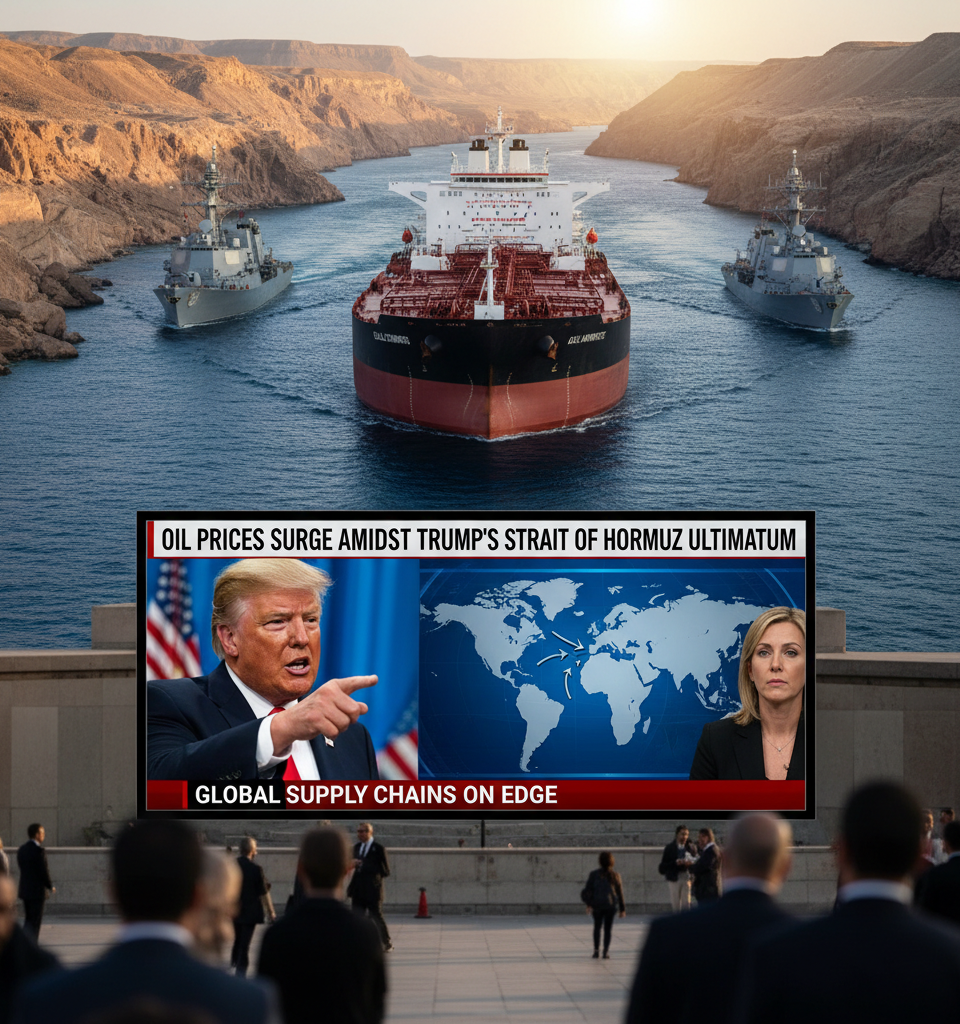
Global oil prices have surged dramatically, fueled by escalating geopolitical tensions surrounding a looming deadline set by the Trump administration concerning the vital Strait of Hormuz. This critical maritime chokepoint, through which approximately one-fifth of the world's oil supply transits daily, is now at the epicenter of international concern, threatening to trigger significant disruptions to global energy markets and supply chains. The impending deadline has prompted widespread speculation and concern among traders, analysts, and national governments alike, anticipating potential repercussions that could reverberate across the global economy.
Geopolitical Powder Keg: A History of Tensions
The Strait of Hormuz, a narrow waterway connecting the Persian Gulf with the Arabian Sea and the open ocean, is strategically indispensable for global energy security. Its historical significance as a flashpoint for geopolitical tensions is well-documented, with numerous skirmishes and threats of closure over the past decades. The current situation, however, feels particularly precarious. The Trump administration's explicit deadline, though details remain somewhat opaque, signals a potential hardening of U.S. policy towards key regional actors, particularly Iran. Any disruption to traffic through this strait, even temporary, would have immediate and severe consequences, given the sheer volume of oil – estimated at around 21 million barrels per day – that traverses its waters.
Market Reacts: Brent and WTI See Sharp Gains
The immediate impact of these heightened tensions has been a sharp uplift in crude oil futures. Brent crude, the international benchmark, saw its front-month contract climb over 3% to reach levels approaching $80 per barrel, marking its highest point in nearly four years. Similarly, West Texas Intermediate (WTI), the U.S. benchmark, experienced a comparable increase, touching $75 per barrel. This price appreciation reflects a 'geopolitical risk premium' being factored into the market. Futures traders are actively hedging against potential supply shortages, with volatility indexes spiking. Beyond crude, refined products like gasoline and jet fuel are also expected to see upward price pressure, ultimately impacting consumers globally.
Supply Chain Vulnerability and Economic Fallout
The prospect of a disrupted Strait of Hormuz exposes the fundamental vulnerability of global supply chains. A significant portion of crude oil from major producers like Saudi Arabia, Iraq, UAE, and Kuwait must pass through this strait. Alternative routes are limited and significantly costlier, making the vast majority of oil exports from the region reliant on this narrow passage. Should the strait face closure or increased maritime risks, it would necessitate a frantic search for alternative energy sources and routes, likely leading to severe price hikes, rationing, and potentially stalling economic growth in energy-dependent nations. Industries from manufacturing to transportation are bracing for significant increases in operational costs.
Expert Insights: "Uncharted Territory for Oil"
Energy market analysts are providing cautious but stark warnings. John Doe, a senior oil strategist at Global Energy Partners, commented, "We are entering uncharted territory for oil markets. While the market often prices in geopolitical risk, the explicit nature of this deadline from a major global power adds a layer of predictability to unpredictability. We could easily see Brent hitting triple digits if any concrete action is taken that impacts transit." Jane Smith, an economist specializing in Middle East affairs, added, "The economic fallout from a Strait of Hormuz crisis would extend far beyond the energy sector. We're talking about a potential global recession if sustained disruptions occur, due to inflationary pressures and collapsing consumer confidence."
The Road Ahead: Diplomatic Efforts and Military Posturing
The coming days and weeks will be critical. While diplomatic efforts are undoubtedly underway behind the scenes to de-escalate the situation, there is visible military posturing by various nations in the region. The focus will be on whether the Trump administration follows through on its veiled threats and how regional powers, particularly Iran, respond. Market participants will be closely monitoring official statements, naval movements, and any indicators of a potential breakthrough or breakdown in negotiations. The volatility is expected to persist as long as the uncertainty surrounding the Strait of Hormuz remains unresolved.
Broader Implications: Energy Security and Strategic Reserves
Beyond immediate price impacts, this crisis underscores the broader issues of energy security and the importance of strategic petroleum reserves (SPRs). Nations globally will be reassessing their SPR capacities and diversification strategies for energy imports. The reliance on a single chokepoint for such a vital commodity highlights the inherent risks in the current global energy architecture. Long-term investments in renewable energy and pipeline infrastructure will likely gain renewed impetus as countries seek to mitigate future vulnerabilities of this magnitude. The ultimate resolution for the Strait of Hormuz will undoubtedly shape not only immediate oil prices but also the long-term energy policies of numerous nations.