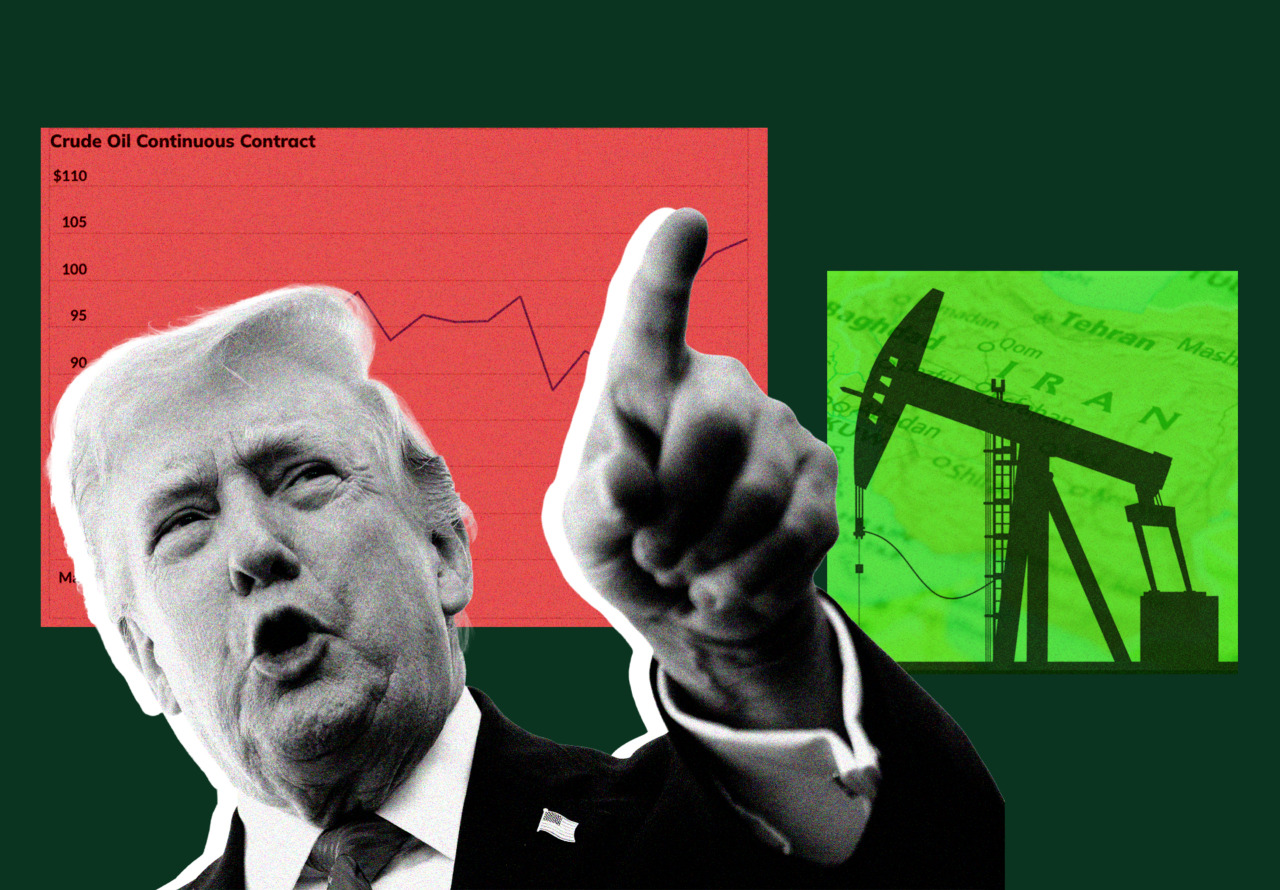
Oil prices witnessed an unprecedented surge in March, driven by escalating geopolitical tensions in the Middle East, particularly around the critical Strait of Hormuz. In a development that could herald a significant strategic shift, President Donald Trump has reportedly indicated to close aides his willingness to curtail the US military campaign against Iran, even if the vital shipping lane remains substantially closed. This pivot, if confirmed, challenges decades of US foreign policy predicated on ensuring unimpeded passage through the Strait and introduces new uncertainties into an already volatile global energy landscape.
The implications of this potential policy shift are profound. The Strait of Hormuz, a narrow waterway between the Persian Gulf and the Arabian Sea, is arguably the world's most important oil transit chokepoint. Approximately one-fifth of the world's total petroleum consumption, or about 21 million barrels per day (bpd), passed through the Strait in 2022, according to the U.S. Energy Information Administration (EIA). Any disruption or perceived threat to this flow invariably sends shockwaves through global crude markets. Traditionally, the US has maintained a robust naval presence in the region, explicitly tasked with safeguarding this passage. A departure from this long-standing commitment underscores a potential re-evaluation of US strategic priorities and its willingness to absorb certain economic risks for broader geopolitical gains.
March saw Brent crude futures jump by over 18%, reaching sustained levels above $90 per barrel, a peak not consistently observed since late 2023. West Texas Intermediate (WTI) followed suit, posting similar gains. Analysts attribute this sharp rise not only to OPEC+ production cuts and improving demand forecasts but, crucially, to the heightened risk premium associated with the Strait of Hormuz. Reports of potential Iranian harassment of commercial shipping and a more assertive stance from Tehran have contributed to market jitters. The alleged shift in US policy could be interpreted by markets as either a de-escalation of direct military confrontation – thereby reducing immediate conflict risk – or a reduction in the guarantee of free passage, potentially emboldening Iran and increasing long-term supply uncertainty.
The direct impact on the energy market could be multifaceted. While a fully closed Strait for an extended period would undoubtedly lead to catastrophic price spikes – some analysts predict oil could soar past $150 or even $200 per barrel in such a scenario – a largely obstructed Strait presents a different challenge. It could force shippers to consider alternative, longer, and more expensive routes, increasing transportation costs and delivery times. Insurance premiums for vessels navigating the region have already reportedly seen increases of 20-30% in recent months. Furthermore, major global economies, particularly those heavily reliant on Middle Eastern oil such as China, India, Japan, and South Korea, would face significant inflationary pressures and potential economic slowdowns.
Energy market experts are closely watching these developments. Dr. Sarah Jenkins, a senior energy analyst at Global Risks Consultancy, commented, "President Trump's reported stance suggests a calculated risk. It could be an attempt to exert pressure on Iran through economic means rather than direct military confrontation, or it could reflect a growing belief that the US’s energy independence lessens its reliance on Middle Eastern oil. However, it risks creating a vacuum that could be exploited by regional actors, potentially destabilizing an already volatile region and disproportionately impacting US allies." Other experts point to the US's increased domestic oil production, particularly from shale, which has positioned the country as a net energy exporter, theoretically reducing its strategic vulnerability to Middle Eastern supply disruptions. However, global oil prices are inextricably linked, and even robust domestic production would not fully insulate the US economy from a severe supply shock.
Looking ahead, the veracity and full extent of President Trump's reported policy shift will be paramount. Should this approach solidify, it would necessitate a re-evaluation of naval deployments and international alliances in the region. The implications extend beyond oil prices to global diplomacy, military strategy, and the future of international trade routes. Energy companies may accelerate investments in alternative transportation routes, such as pipelines bypassing the Strait, or diversify their sourcing strategies. The international community will be keenly observing whether this signals a fundamental recalibration of US foreign policy in the Middle East, potentially leading to a new era of energy security dynamics and geopolitical alignments in the coming months and years.