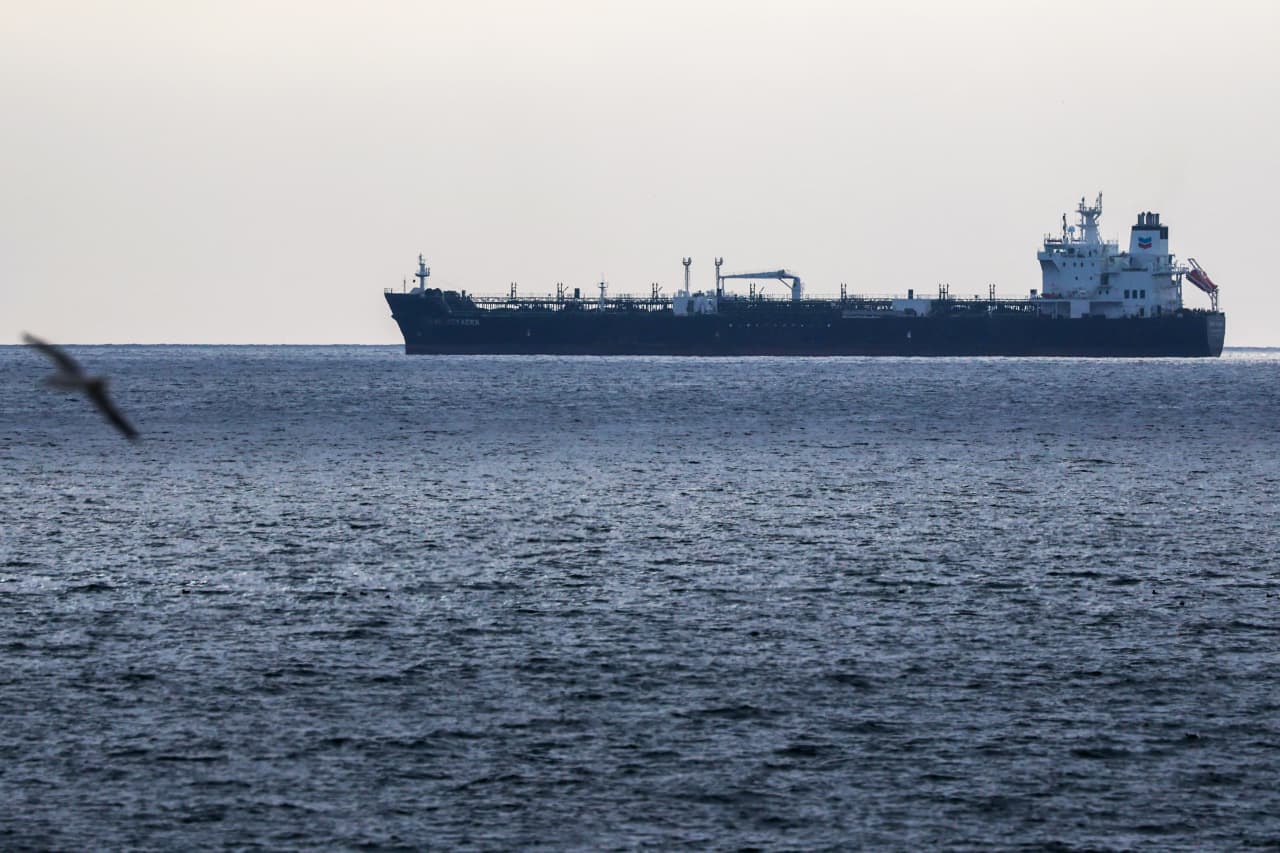
NEW YORK, NY & WASHINGTON D.C. – Global crude oil prices continue to trade near a four-year high this week, reacting to unconfirmed but widely circulated reports that President Donald Trump privately informed aides of his preference to end military action in Iran without necessarily pushing for the immediate reopening of the Strait of Hormuz. This potential policy pivot, if materialize, marks a stark departure from traditional U.S. foreign policy objectives concerning the critical chokepoint and introduces significant uncertainty into the global energy supply chain. The implication for oil's benchmark prices, particularly Brent crude trading around $85 per barrel and WTI hovering close to $76, is profound, reflecting market anxieties over sustained supply disruptions.
The Geopolitical Chessboard: Iran, The Strait, and Global Energy Security
The Strait of Hormuz, a narrow waterway between the Persian Gulf and the Gulf of Oman, is the world's most important oil transit choke point. Approximately 21 million barrels per day, or roughly 30% of all seaborne-traded oil, passed through the Strait in 2018. The persistent threat of its closure, whether by military action or political blockade, has historically sent tremors through international energy markets. Trump's reported stance – that a resolution with Iran might not necessitate reopening the Strait – challenges decades of U.S. commitment to ensuring freedom of navigation through the critical passage. This historical context underscores the gravity of the current situation; previous threats to the Strait have often led to swift diplomatic and military responses aimed at guaranteeing its accessibility.
Unpacking the President's Reported Position and Its Immediate Repercussions
The reports indicate President Trump expressed a willingness to accept a scenario where a military intervention in Iran concludes, but the Strait remains closed, potentially shifting the burden of protecting international shipping onto other nations or even accepting a new status quo. While official White House confirmation remains elusive, the market's reaction demonstrates the credibility and impact of such an unorthodoxy. Oil futures have seen significant upward pressure, with analysts pointing to increased geopolitical risk premiums. Furthermore, this uncertainty exacerbates existing supply concerns stemming from Venezuelan production declines and the impact of U.S. sanctions on Iranian oil exports, which have already removed over 1 million barrels per day from the global market.
Broadening Impact: Beyond Oil Prices to Global Trade and Regional Stability
The ramifications extend far beyond just oil prices. The potential closure or restricted access to the Strait of Hormuz would force a fundamental re-evaluation of global shipping routes, increasing transit times and costs for numerous commodities. Nations heavily reliant on Middle Eastern oil, particularly in Asia (e.g., China, India, Japan, and South Korea, which collectively import over 70% of their crude from the region), would face significant economic headwinds. Insurance premiums for vessels navigating the region would skyrocket, further dampening trade. Regional stability also faces severe threats, as any sustained disruption could embolden other actors and potentially lead to broader military confrontations in an already volatile Middle East.
Expert Analysis: A Paradigm Shift in Foreign Policy
Energy analysts and foreign policy experts widely concur that such a policy would represent a significant paradigm shift. Dr. Michael O'Hanlon, a senior fellow at the Brookings Institution, suggests, "If true, this would be an astonishing departure from established U.S. strategic doctrine. The freedom of navigation through international waters, especially critical chokepoints like Hormuz, has been a cornerstone of American foreign policy for decades." Similarly, energy economist Dr. Fatih Birol of the International Energy Agency stated, "The market is pricing in a significant risk premium. Any long-term closure of Hormuz would be catastrophic for the global economy, potentially triggering an oil price shock akin to the 1970s, but on a much larger scale given today's interconnectedness."
The Road Ahead: Diplomatic Maneuvers and Market Volatility
The immediate future is likely to be characterized by heightened diplomatic activity and continued market volatility. Oil traders will closely monitor any official statements from the Trump administration that could clarify or contradict the reported stance. International bodies and allied nations will likely pressure the U.S. to reaffirm its commitment to maintaining the Strait's openness. Furthermore, the oil industry will be exploring contingency plans, including increasing non-Middle East supplies and potentially activating strategic petroleum reserves, though these options offer only limited short-term relief. The possibility of the Strait of Hormuz becoming a persistent point of contention, rather than an unequivocally open trade route, fundamentally reconfigures the global energy landscape for the foreseeable future. Investors and consumers alike should brace for continued uncertainty and potential price spikes until a definitive resolution or policy articulation emerges from Washington.