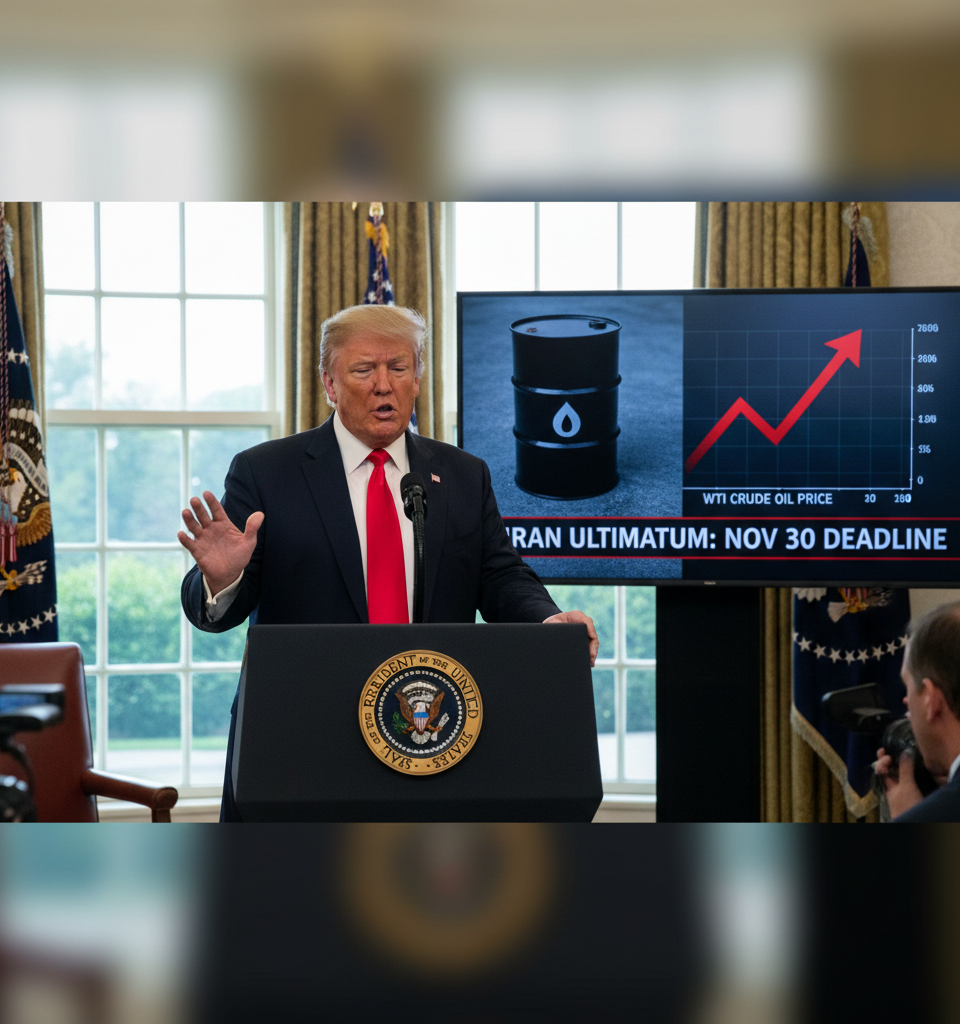
Global crude oil prices experienced a sharp uptick on Monday, driven by growing geopolitical tensions after President Donald Trump publicly reiterated a Tuesday deadline for potential military action against Iran. The President's statement, delivered from the Oval Office, specifically mentioned an escalation of attacks targeting Iran's critical power plants and bridges, sending immediate ripples through international energy markets and sparking concerns about regional stability.
Context and Background: A Brewing Storm
This latest development underscores a protracted period of strained relations between the United States and Iran, marked by a series of escalating provocations. The current crisis gained significant momentum following the U.S. withdrawal from the 2015 Iran nuclear deal (JCPOA) and the subsequent re-imposition of stringent sanctions designed to cripple Iran's economy and curtail its nuclear program. Iran has consistently denied seeking nuclear weapons, asserting its right to peaceful nuclear technology. The prospect of direct military engagement, particularly targeting critical infrastructure, marks a significant escalation from previous skirmishes and cyber warfare, representing a crossing of a dangerous new threshold in the long-standing geopolitical standoff.
Key Details and Presidential Remarks
During his brief but impactful press conference, President Trump stated, "We have given them until Tuesday. If there is no de-escalation by then, our targets are clear: their power grids and primary bridges. This is not a threat; it's a deadline for action." While the specific triggers for such an attack were not fully elaborated, the statement followed recent reports of increased Iranian naval activity in the Strait of Hormuz and alleged provocations against international shipping. White House press secretary Sarah Huckabee Sanders later clarified that the President hopes for a diplomatic resolution but "all options remain on the table" to protect U.S. interests and allies in the region.
Industry and Market Impact: Volatility Ahead
The immediate market reaction was palpable. Brent crude futures, the international benchmark, surged by approximately 3.5% to settle at over $70 per barrel, while West Texas Intermediate (WTI) futures saw a similar jump, nearing $64 per barrel. This sudden upward movement reflects fears of supply disruptions from the Middle East, a region responsible for roughly one-third of global oil production. Shipping costs for tankers passing through the Strait of Hormuz, a critical chokepoint for global oil transit, also experienced a noticeable spike, with insurance premiums reportedly increasing by 15-20% for voyages through the Gulf. Energy analysts warn that sustained hostilities could lead to a significant and prolonged increase in crude prices, potentially pushing Brent above $85 per barrel within weeks.
Expert Perspective: Analyst Warnings
"This is a genuinely concerning development," remarked Dr. Helena Petrova, lead energy analyst at Global Risks Consultancy. "Targeting power plants and bridges signifies a move beyond symbolic retaliation towards an intent to severely debilitate Iran's capacity to operate and defend itself. The market is pricing in a significant risk premium for a reason. Any disruption to oil flow through the Strait of Hormuz, even a temporary one, would have catastrophic implications for global energy security and could trigger a worldwide recession." Dr. Petrova further highlighted the potential for a retaliatory cyber-attack from Iran, which could disrupt digital infrastructure far beyond the immediate conflict zone.
What's Next: A Tense Stand-off
The coming days are expected to be fraught with tension as the Tuesday deadline approaches. International diplomatic efforts are reportedly underway, with key European allies urging de-escalation and a return to dialogue. However, Iran's foreign ministry spokesperson, Bahram Ghasemi, responded defiantly, stating that "Iran will not be intimidated by threats and will respond decisively to any aggression." The immediate focus will be on any observable changes in Iranian behavior or further statements from the White House. The global economy now holds its breath, watching to see if diplomacy can avert a potentially devastating military confrontation in a region already prone to instability. The ramifications for global energy prices, trade, and economic stability hinge on the events unfolding between now and Tuesday's critical ultimatum.