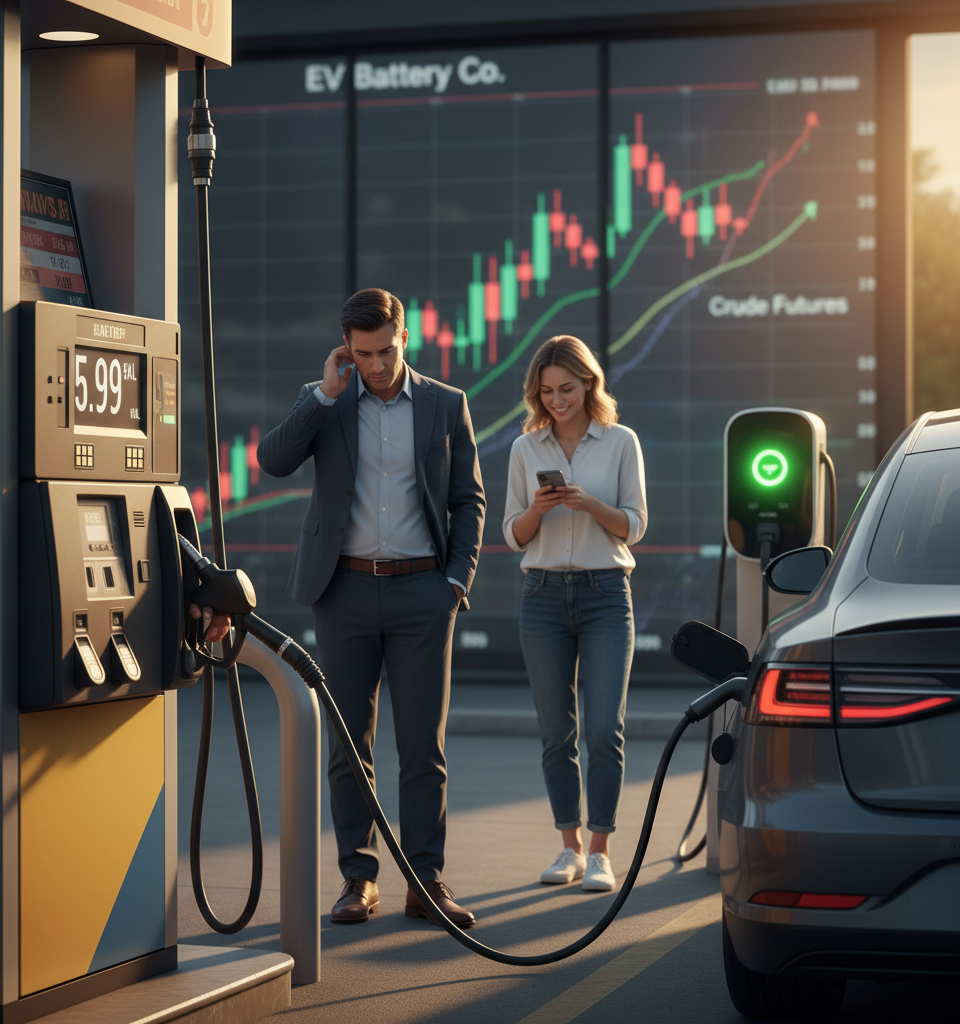
The Unforeseen Catalyst: Oil Prices and EV Battery Stocks
The recent surge in global oil prices, driven by factors ranging from geopolitical tensions to increased post-pandemic demand, has ignited a surprising but critical discussion among investors and industry analysts: Could escalating energy costs, traditionally a drag on economies, inadvertently become a significant tailwind for electric vehicle (EV) battery stocks? This complex interplay, where higher gasoline prices push consumers towards electric alternatives, is poised to reshape investment strategies and accelerate the transition towards sustainable transportation, creating both opportunities and challenges for the burgeoning EV battery sector.
Historical Precedents and Market Dynamics
Historically, consumer behavior has exhibited a direct correlation with fuel costs. Periods of sustained high gasoline prices, such as the early 2000s or the oil shocks of the 1970s, often trigger a reevaluation of transportation choices. In the modern context, this translates to a heightened interest in EVs. While the upfront cost of an EV remains a consideration, the long-term savings on fuel become increasingly attractive as petroleum prices climb. This dynamic is further amplified by growing awareness of climate change and corporate sustainability mandates, pushing both individual consumers and large fleets towards electrification. The market, therefore, tends to factor in these macro trends, anticipating increased demand for the foundational components of EVs: batteries.
Key Drivers and Industry Specifics
Key players in the EV battery sector, including industry giants like Contemporary Amperex Technology Co. Limited (CATL), LG Energy Solution, Panasonic, and BYD, are at the forefront of this potential boom. Data from BloombergNEF indicates that battery pack prices, while having fallen significantly over the past decade (down from over $1,200/KWh in 2010 to around $150/KWh in 2023), are facing fresh pressures from rising raw material costs, particularly for lithium, nickel, and cobalt. However, the increased demand spurred by higher oil prices could provide these manufacturers with stronger pricing power, helping to offset some of these material cost escalations. For example, a sustained period of West Texas Intermediate (WTI) crude above $80 per barrel could significantly widen the operating cost advantage of an EV over an internal combustion engine (ICE) vehicle, even with current electricity prices.
Broader Market and Inter-Industry Impact
The ripple effects of high oil prices extend beyond just EV sales. Automobile manufacturers, facing stringent emissions regulations and consumer pressure, are accelerating their EV transition plans. Companies like General Motors and Volkswagen have committed tens of billions to EV development, creating massive orders for battery suppliers. This in turn drives investment into research and development for next-generation battery technologies, such as solid-state batteries, promising greater energy density and faster charging. The entire EV ecosystem, from charging infrastructure providers to raw material miners, stands to benefit from this accelerated shift, transforming the automotive and energy landscapes.
Expert Perspectives on the Bullish Argument
Financial analysts are largely in agreement that sustained high oil prices act as a catalyst for the EV sector. "While raw material costs present a headwind for battery manufacturers, the overriding demand push from high oil prices creates a powerful bullish narrative for EV battery stocks," explains Sarah Chen, a senior equities analyst at GreenVest Capital. "Consumers are increasingly looking at total cost of ownership, and when every trip to the gas pump is a shock, the value proposition of an EV becomes undeniable." She further notes that government incentives, like those outlined in the U.S. Inflation Reduction Act, further sweeten the deal, making the transition even more attractive and reinforcing the long-term growth trajectory for battery makers.
Navigating the Volatility and Future Outlook However, the path forward is not without its challenges.
The volatility of raw material prices, particularly for lithium and nickel, presents a significant risk. Geopolitical stability in key mining regions and the establishment of robust, diversified supply chains are paramount for the sustained growth of the battery industry. Furthermore, the pace of charging infrastructure development and grid modernization must keep pace with EV adoption to prevent bottlenecks and ensure a seamless user experience. Looking ahead, analysts anticipate continued strong growth for EV battery stocks, projecting global EV sales to comprise over 50% of new car sales by 2030, a forecast that gains even more credence in a world grappling with persistently high oil prices. Companies that can innovate in battery chemistry, optimize manufacturing processes, and secure stable raw material supplies are best positioned to capitalize on this evolving landscape.
The Investment Horizon: A Calculated Bet
For investors, the current environment presents a calculated bet on the future of transportation. While short-term fluctuations tied to oil price volatility and supply chain issues are inevitable, the fundamental drivers behind electrification — environmental imperatives, technological advancements, and now, economic incentives driven by expensive fossil fuels — create a compelling long-term investment thesis for EV battery stocks. As the world navigates the complexities of energy transition, the humble battery, powered in part by the very energy source it seeks to displace, is set to play a pivotal role in shaping our collective future.