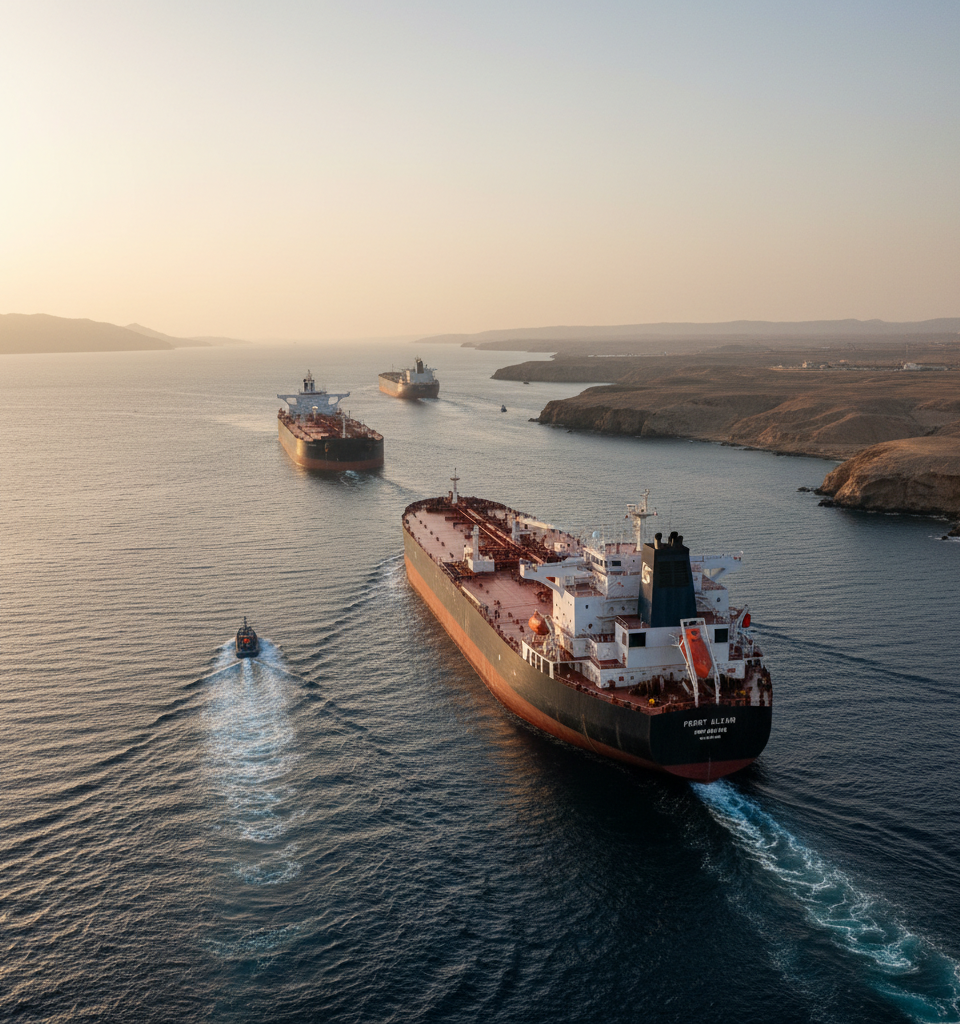
Amid escalating regional tensions, vital oil shipments continued their passage through the Strait of Hormuz on Saturday, June 21, 2026, directly contradicting earlier statements from Iran suggesting the waterway’s closure. Tracking data indicated that three supertankers, each carrying substantial crude oil volumes and together accounting for 6 million barrels of capacity, successfully navigated the strait. Their trajectory followed the established shipping lanes predominantly along Oman's coast.
Geopolitical Background and Economic Stakes
The Strait of Hormuz is recognized as the world's most crucial oil transit choke point, through which approximately one-fifth of global oil consumption passes daily. Any disruption to this narrow passage, which connects the Persian Gulf to the open ocean, carries profound implications for international energy markets and global economic stability. Iran has historically threatened to close the strait in response to sanctions or military provocations, viewing it as a strategic lever. These recent movements underscore the complex interplay between geopolitical rhetoric and the unrelenting demands of global energy supply chains.
Details of Supertanker Transits
The three supertankers in question, whose identities were not disclosed in the immediate reports, emitted signals confirming their location and movement through the strait. This satellite-based tracking data provided concrete evidence of continued maritime activity. The vessels maintained a course that closely followed the Omani side of the strait, a common and often preferred route for tankers exiting the Persian Gulf. The combined capacity of these ships highlights the significant volumes of crude oil that regularly traverse this maritime artery, emphasizing its indispensable role in global energy trade.
Impact on Global Oil Markets and Shipping
News of Iran's prior claims, even if unsubstantiated by actual closures, tends to inject volatility into global oil markets. Traders and refiners closely monitor developments in the region, with any perceived threat to shipping freedom potentially driving up crude futures prices due to supply uncertainty. The continued flow of tankers, however, serves as a short-term reassurance that supply lines remain open, despite the heightened rhetoric. Insurers and shipping companies operate with elevated caution in the region, often adjusting premiums and operational protocols in response to such declarations.
Broader Implications and Future Outlook
The persistence of oil shipments through Hormuz despite Iranian warnings suggests either a difference between stated intentions and practical actions, or a strategic maneuver by Iran to exert pressure without fully implementing a disruptive closure. Continued observation of shipping patterns will be crucial in assessing the long-term impact on regional stability and international shipping. The international community, particularly major oil-importing nations, remains vigilant regarding any developments that could impede passage through this vital waterway, which would necessitate significant logistical and economic adjustments worldwide.
As of today, the consistent signaling from these immense vessels confirms that, for now, the flow of oil through the Strait of Hormuz continues unabated, challenging the narrative of a closed channel.