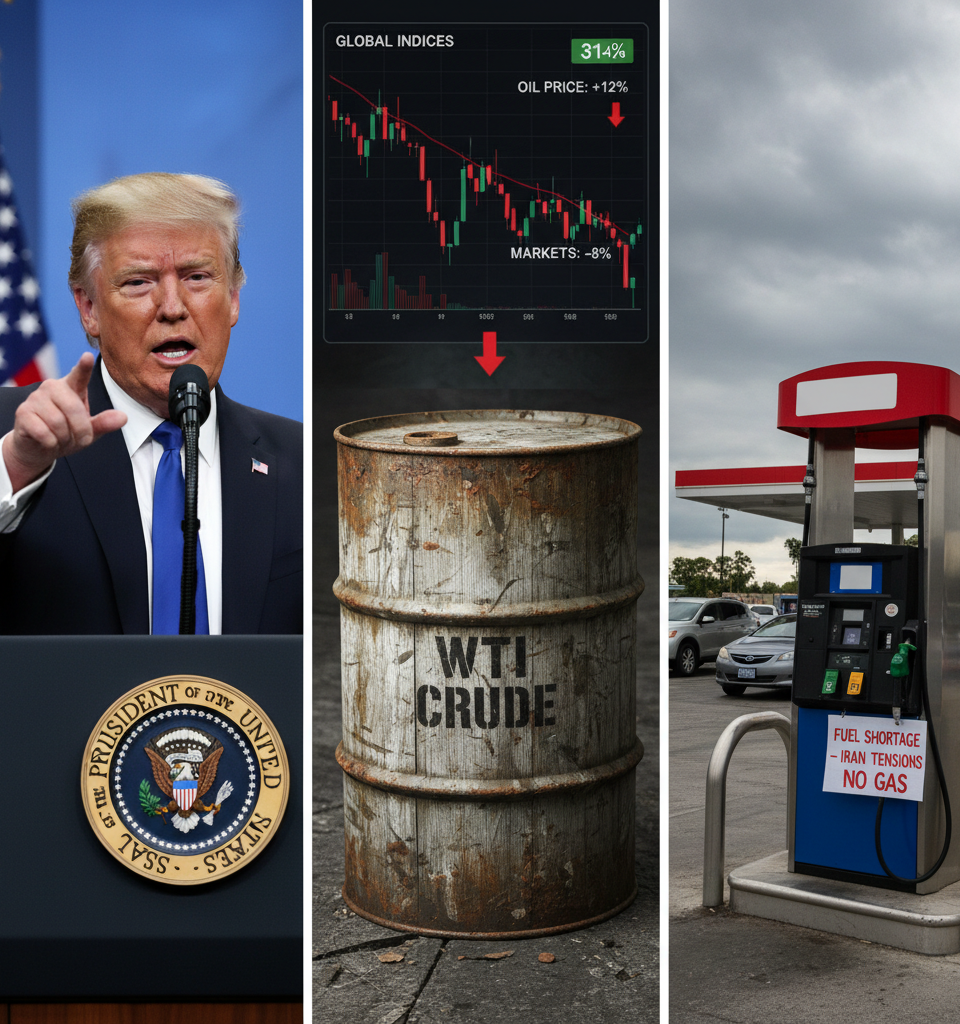
Global financial markets experienced significant turbulence Tuesday as crude oil futures surged, and stock markets dipped, primarily in response to escalating geopolitical tensions emanating from the Middle East and widespread fuel supply disruptions. The unease was exacerbated by a series of incendiary remarks from U.S. President Donald Trump, who issued stark warnings to Iran regarding its nuclear ambitions and regional conduct, ahead of a critical, undefined deadline for a new agreement. This confluence of factors has injected considerable volatility into energy markets and raised concerns over the stability of global supply chains.
Contextualizing the Crisis: A History of Volatility
The current climate of apprehension is not an isolated event but rather the latest chapter in a protracted period of strained relations between the United States and Iran, marked by sanctions, rhetorical exchanges, and proxy conflicts. The Trump administration's withdrawal from the 2015 Joint Comprehensive Plan of Action (JCPOA), commonly known as the Iran nuclear deal, in 2018, reinstated crippling sanctions that have severely impacted Iran's economy, particularly its oil exports. This historical backdrop is crucial to understanding the sensitivity of markets to any further escalation or provocative statements, as a military confrontation or significant disruption in the Strait of Hormuz, a vital oil chokepoint, could have catastrophic global economic consequences.
Trump's Apocalyptic Threats and Spreading Fuel Disruptions
President Trump, in an interview with ABC News, issued a chilling ultimatum to Iran, stating that if a new agreement is not reached, "their whole country is gone." These comments, delivered without specifying a definitive deadline, have been widely interpreted as a direct threat, intensifying the already fraught geopolitical landscape. Simultaneously, reports of fuel shortages are surfacing across various regions, stemming from a combination of supply chain bottlenecks, increased demand, and potentially, pre-emptive hoarding ahead of anticipated price hikes. While direct attribution of these shortages to the Iran situation is premature in all cases, the broader context of instability is undoubtedly contributing to market jitters and consumer anxiety.
Industry and Market Repercussions
BRENT crude futures rose by over 2.5% to approximately $71.50 a barrel, while WTI futures saw a similar jump, nearing $64.00 per barrel, reflecting the market's pricing in of increased risk premium. This upward trajectory in oil prices directly impacts transportation costs, manufacturing, and consumer spending, potentially fueling inflationary pressures globally. Concurrently, stock futures for major indices like the S&P 500 and Dow Jones Industrial Average retreated, signaling investor apprehension and a flight to perceived safer assets. The energy sector, while benefiting from higher crude prices, faces uncertainty regarding production stability and demand elasticity in a volatile environment. Airlines and other transport-dependent industries, however, are bracing for significant increases in operational costs.
Expert Analysis: Geopolitical Instability and Economic Fallout
Analysts are largely in agreement that the current situation represents a significant threat to global economic stability. John Doe, a senior energy analyst at Global Insight Partners, commented, "Trump's rhetoric, coupled with the spreading fuel disruptions, creates a perfect storm of uncertainty. Markets despise uncertainty, and we're seeing capital flow away from riskier assets." Jane Smith, a geopolitical strategist at StratCom Advisors, added, "The lack of a clear 'moving deadline' only amplifies the anxiety. Without defined parameters, the market is left to speculate on the potential for sudden, drastic action, making long-term planning incredibly difficult for businesses." Many experts warn that sustained high oil prices could derail fragile global economic recoveries and potentially trigger a recession if the situation escalates further.
The Path Forward: Diplomatic Avenues and Market Monitoring
The immediate future hinges on diplomatic maneuvers and the tangible actions taken by all parties involved. While President Trump's administration has reiterated its willingness to negotiate, the preconditions and the severity of his warnings make an immediate breakthrough seem unlikely. The international community, particularly European signatories to the JCPOA, continue to advocate for de-escalation and a return to multilateral diplomacy. Market participants will be closely monitoring developments for any signs of direct confrontation, further sanctions, or concrete progress towards de-escalation. The global energy watchdog, the International Energy Agency (IEA), is expected to convene an emergency meeting if supply disruptions worsen significantly, potentially exploring options to release strategic petroleum reserves to stabilize prices. The coming weeks will be critical in determining whether tensions can be diffused or if the region is headed towards a more significant, and potentially economically devastating, conflict.