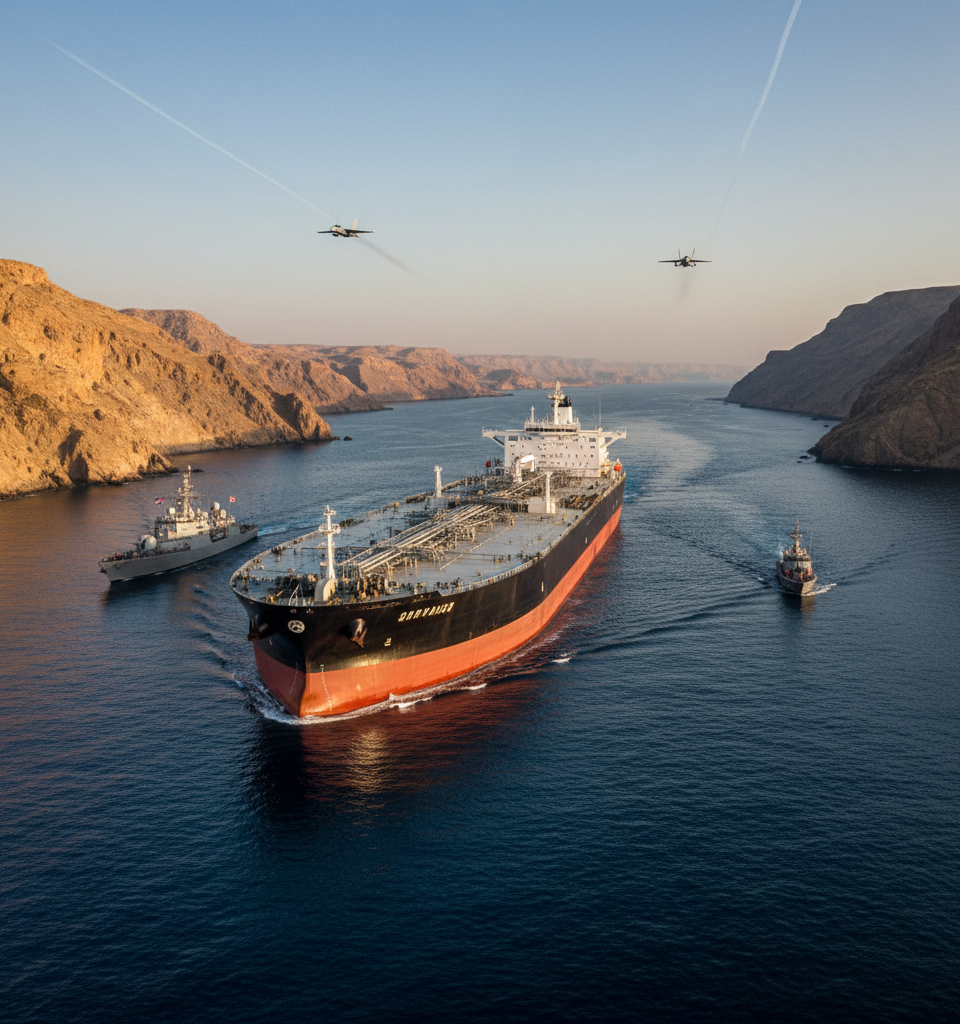
Global oil markets reacted sharply today as Brent crude futures surged past the $100-per-barrel threshold, closing at $101.80, a 1.8% increase, following earlier volatility. The upward movement was directly attributed to the persistent closure of the Strait of Hormuz, a vital chokepoint for global oil tanker traffic, exacerbating concerns over energy supply security.
Context and Historic Precedent
The Strait of Hormuz, a narrow waterway between Iran and Oman, is a crucial conduit through which approximately one-fifth of the world's total oil consumption, or about 21 million barrels per day, passes. Its closure, whether due to geopolitical conflict, military exercises, or other unforeseen events, reliably triggers immediate and significant price hikes in the global energy market. Historically, even threats of disruption in this region have sent crude prices soaring, underscoring its indispensable role in the international energy supply chain. The last sustained period of oil prices above $100 per barrel was in 2014, with intermittent breaches occurring during moments of extreme volatility, such as the initial phase of the conflict in Ukraine.
Key Market Movements and Figures
Brent crude, the international benchmark, experienced a volatile trading session before settling definitively higher. The 1.8% rise brought its value to $101.80 per barrel, up from its previous close. West Texas Intermediate (WTI), the U.S. benchmark, also saw a robust increase, trading near $97.50 per barrel, reflecting the widespread impact of the supply concerns. Analysts point to the sudden tightening of available crude due to the Hormuz situation as the primary catalyst, outweighing demand concerns that had limited gains earlier in the week. Shipping data indicates a significant backlog of tankers accumulating on either side of the strait, further fueling fears of prolonged disruptions.
Broader Economic and Industry Impact
The ripple effects of sustained high oil prices extend far beyond the energy sector. Industries heavily reliant on transportation, such as logistics, manufacturing, and aviation, face increased operational costs, which are typically passed on to consumers. This can reignite inflationary pressures, posing a challenge for central banks already grappling with monetary policy. For oil-importing nations, higher crude prices strain national budgets and can lead to trade imbalances. Conversely, oil-exporting countries may see a temporary boost in revenue, though the global economic slowdown triggered by such price shocks could eventually curtail demand.
Expert Analysis and Outlook
Energy market analysts are largely in agreement that the current price surge is fundamentally driven by supply-side anxieties. "The market is pricing in a significant risk premium due to Hormuz," commented Sarah Jenkins, Senior Energy Strategist at Global Asset Management. "Until that shipping lane reopens and confidence in unhindered passage is restored, we expect prices to remain elevated and highly volatile." She added that market participants are also closely watching strategic petroleum reserves and any coordinated responses from major consuming nations. Other experts highlight the lack of readily available spare capacity among OPEC+ producers, which limits their ability to quickly compensate for any large-scale supply disruptions.
Anticipating Future Developments
The immediate future of oil prices hinges critically on the resolution of the situation in the Strait of Hormuz. International diplomatic efforts are reportedly underway to de-escalate tensions and facilitate the reopening of the waterway. Should the closure persist, analysts warn that prices could climb further, potentially even testing the all-time highs seen during previous crises. Governments globally are likely to assess their strategic petroleum reserves and consider measures to mitigate the economic fallout. The next few days will be crucial in determining whether this is a short-term blip driven by immediate events or the beginning of a more prolonged period of elevated energy costs and market uncertainty.