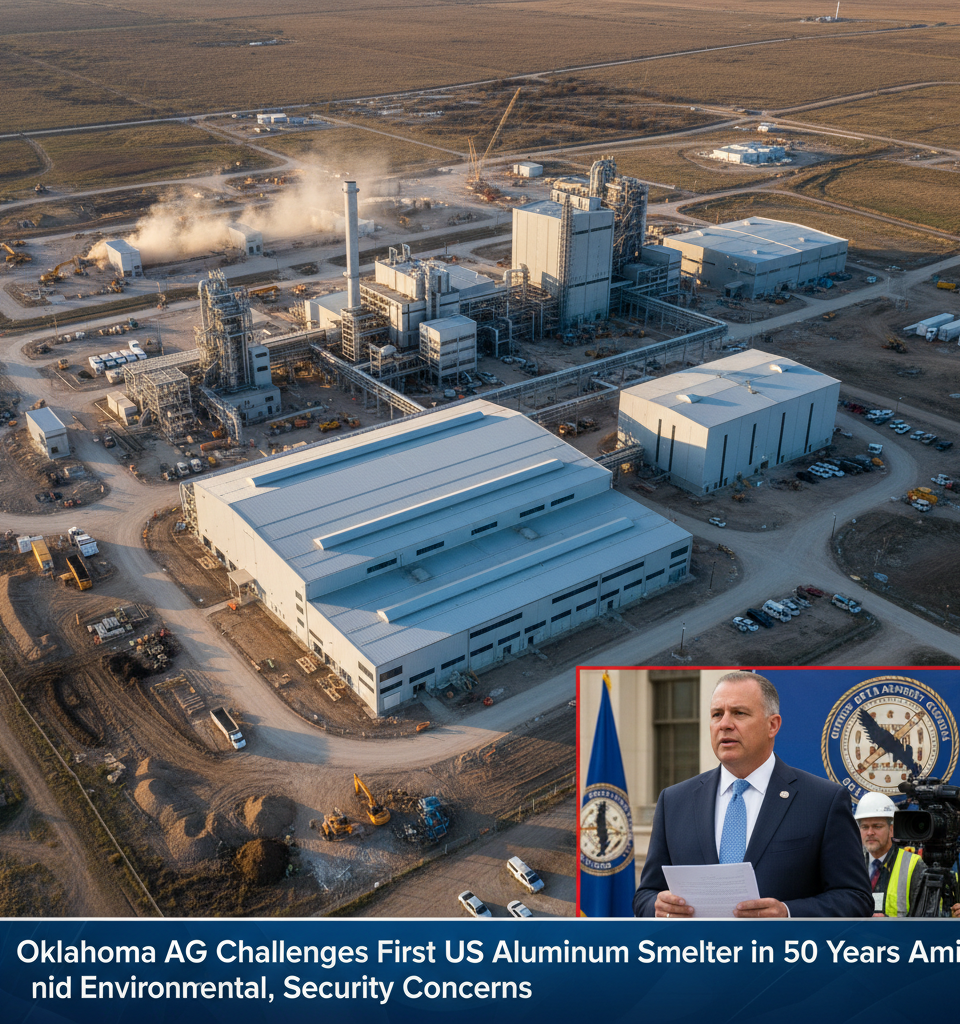
The Attorney General for the State of Oklahoma has initiated legal proceedings aimed at preventing the construction and operation of a planned aluminum smelter, a project poised to be the first of its kind in the United States in 50 years. This legal challenge, filed recently, casts a shadow over a facility that has already secured hundreds of millions of dollars in both state and federal funding, intended to substantially increase the nation's aluminum production capacity.
The project is designed to expand U.S. aluminum capacity by more than 750,000 metric tons per year, a significant surge for a sector vital to numerous industries from aerospace to automotive. The intervention by the Oklahoma Attorney General introduces considerable uncertainty into a development that has been lauded by proponents as a crucial step towards bolstering domestic manufacturing and supply chain resilience. The petition argues that the proposed smelter raises serious environmental and national security concerns, necessitating a halt to its progress.
Project Context and National Significance
For half a century, the United States has not seen the groundbreaking of a new primary aluminum smelter, making this project a landmark endeavor. The current reliance on imported aluminum has been a point of discussion for policymakers and industry leaders, particularly in recent years amidst global supply chain disruptions. The planned facility was intended to address this dependency, marking a pivotal moment in the nation's industrial strategy. The substantial financial backing from both state and federal levels underscores the strategic importance attributed to revitalizing domestic heavy industry.
Environmental & National Security Concerns
The core of the Attorney General's legal challenge centers on dual pillars: the potential environmental impact and risks to national security. While the specific details of these concerns were not elaborated upon in the initial description, new aluminum smelters typically involve considerable energy consumption and present complex waste management challenges. Environmental groups often raise concerns about air emissions, water usage, and the disposal of byproduct materials. On the national security front, the Attorney General's petition suggests that the project could pose unstated risks, though further details are anticipated as the legal process unfolds. This aspect of the challenge could refer to the ownership structure, operational dependencies, or broader strategic vulnerabilities that the smelter might inadvertently introduce or exacerbate.
Economic and Market Implications
Should the project proceed, its contribution of over 750,000 metric tons of aluminum annually would represent a substantial increase in U.S. production. This output could significantly alter the domestic aluminum market, potentially reducing reliance on imports, stabilizing prices, and fostering job creation within the manufacturing sector. The hundreds of millions of dollars in awarded funding highlight the economic incentives and expected benefits that governments perceive in supporting such large-scale industrial projects. However, a halt or significant delay could force a reevaluation of U.S. industrial policy and investments in critical raw material production.
The Path Forward
This legal filing marks the commencement of what is expected to be a contentious legal battle. The Attorney General's office will likely present detailed evidence supporting its claims of environmental and national security risks. Project developers and their governmental backers will, in turn, need to defend the project's viability and address the raised concerns. The outcome of this petition will have far-reaching implications, not only for the specific project but also for future heavy industrial developments across the United States. It will serve as a bellwether for the balance between economic development, environmental protection, and national strategic interests in a rapidly evolving global landscape.
Precedent and Future Development
The previous half-century hiatus in new aluminum smelter construction highlights the challenges and regulatory hurdles inherent in such undertakings. The present legal challenge underscores that even with significant financial backing and strategic importance, major industrial projects face intense scrutiny. The precedent set by this case could influence how similar large-scale manufacturing facilities are planned, approved, and constructed in the future, particularly those deemed critical for national infrastructure or supply chain sovereignty. Stakeholders across various industries will be closely watching the proceedings, understanding that the resolution could redefine the parameters for industrial expansion in the U.S. for years to come.