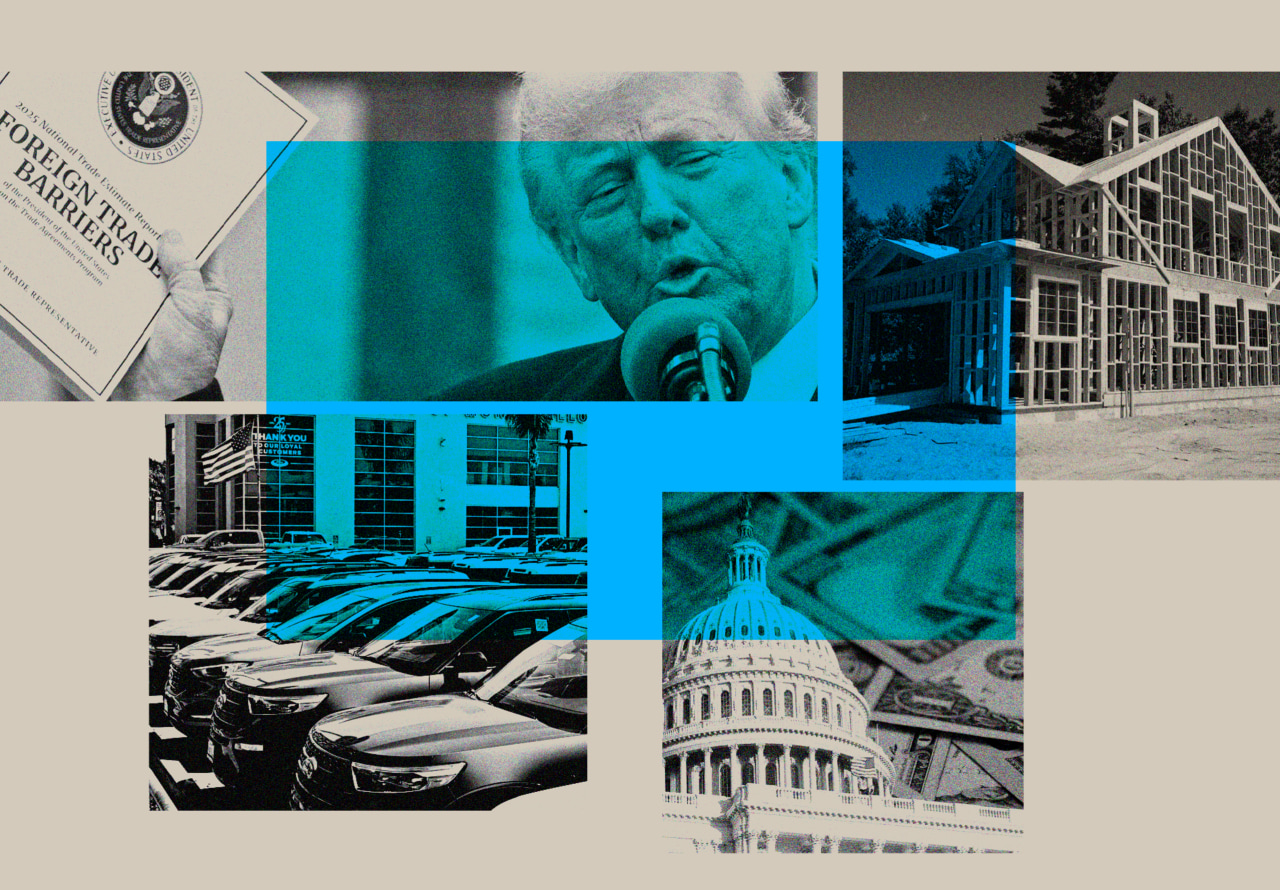
One year after the Trump administration initiated its sweeping tariff strategy, a critical assessment reveals a significant economic downturn for crucial American sectors, notably U.S. home builders and automotive manufacturers. These duties, initially touted as a means to reduce the federal debt and protect domestic industries, have instead imposed substantial costs, challenging the administration's stated objectives and raising concerns across the economic landscape.
The Unfolding Economic Impact: A Year in Review
When President Trump first levied tariffs on a broad range of imported goods, including steel and aluminum from numerous countries, the move was framed as a necessary measure to correct perceived trade imbalances and bring manufacturing jobs back to the United States. The administration also frequently asserted that the revenue generated from these tariffs would contribute significantly to reducing the national debt. However, a year into their implementation, the actual financial impact paints a different picture, characterized by rising input costs for domestic producers and meager contributions to federal coffers. The historical context of trade wars, often leading to retaliatory tariffs and reduced global trade, loomed large, and these concerns are now manifesting in tangible ways.
Key data underscores the financial burden. For instance, the National Association of Home Builders (NAHB) reported an estimated $2.5 billion increase in costs for new home construction over the past year due to steel and lumber tariffs alone. This figure translates to an average increase of over $7,000 per new home, directly impacting affordability for American families. Similarly, the automotive industry has faced considerable pressure. Manufacturers like General Motors and Ford have cited rising steel and aluminum prices as significant headwinds, leading to increased production costs and, in some cases, passed-on expenses to consumers. The tariffs have done little to reduce the federal debt, which has continued its upward trajectory, challenging the administration's initial claims.
Industry Response and Market Fluctuations
The ripple effects of these tariffs have been felt acutely across various industries. Domestic steel and aluminum producers, while initially beneficiaries, have faced the challenge of managing increased demand while input costs for other goods have risen. Conversely, industries reliant on these materials have seen their profit margins erode. The S&P 500 Homebuilding Index, for example, has shown volatility, reflecting investor uncertainty surrounding material costs and future housing demand. Automotive sector stocks have also experienced fluctuations, pressured by concerns over trade disputes and potential retaliatory tariffs from key markets like China and Europe, which could further disrupt global supply chains and dampen export opportunities for U.S.-made vehicles.
Expert Analysis and Looming Concerns
Economists and trade analysts have largely expressed caution, if not outright skepticism, regarding the long-term benefits of the tariff strategy. Dr. Mary Johnson, a senior economist at the Peterson Institute for International Economics, stated, "While there might be short-term gains for protected industries, the broader economic impact is demonstrably negative. We're seeing a 'tax' on American consumers and businesses, not just foreign entities." She further elaborated that the tariffs effectively act as an import tax, increasing the cost of doing business for companies relying on global supply chains and ultimately leading to higher prices for domestic goods. Furthermore, the lack of significant debt reduction directly contradicts a central tenet of the policy's rationale.
The Road Ahead: Navigating Ongoing Trade Tensions
Looking forward, the persistence of these tariffs, coupled with ongoing trade negotiations, presents a complex and uncertain outlook. Businesses are grappling with the need to either absorb higher costs or pass them on to consumers, potentially stifling demand. The looming threat of additional tariffs, particularly on goods from the European Union or other major trading partners, could further exacerbate the situation, leading to increased market volatility and reduced business investment. The administration's focus remains on leveraging tariffs as a negotiating tool, but the economic data from the past year suggests that the costs are being borne, at least in part, by the very industries they were intended to protect. Future developments will undoubtedly hinge on the outcomes of ongoing trade talks and the administration's willingness to re-evaluate the efficacy of its current tariff strategy against growing domestic economic pressures.