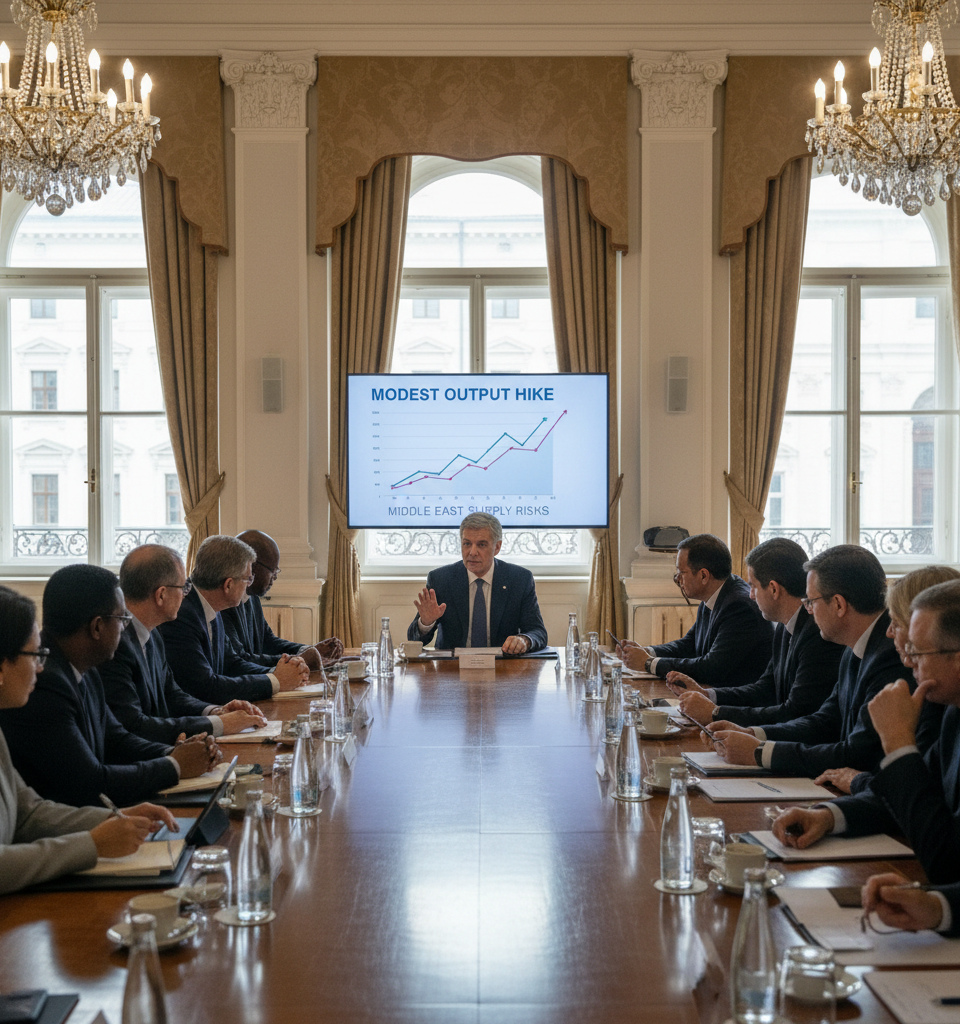
VIENNA, AUSTRIA – [Date, e.g., October 26, 2023] – The Organization of the Petroleum Exporting Countries and its allies (OPEC+) today announced a largely symbolic increase in oil production quotas for the coming month, a move that belies the gravity of a concurrent warning: the intricate damage inflicted upon Middle Eastern energy assets by ongoing conflicts will exert a protracted and significant impact on global oil supply, even long after the cessation of hostilities. This measured adjustment to output, signaling an addition of approximately 100,000 barrels per day (bpd) to the market, stands in stark contrast to the profound and lasting supply challenges foreseen by the influential oil cartel, underscoring a complex interplay of market dynamics and geopolitical anxieties.
Geopolitical Tensions Cast Long Shadow Over Energy Markets
This decision arrives at a precarious juncture for global energy markets. The conflict in the Middle East, particularly the ongoing war in Iran, has not only introduced immediate volatility but has also irrevocably altered the calculus of long-term supply stability. OPEC+'s pronouncement highlights a crucial shift from short-term crisis management to the acknowledgment of systemic, enduring damage. Historically, the Middle East has been the bedrock of global oil supply, accounting for over 30% of the world's crude oil production. Any sustained impairment to this region's infrastructure or operational capacity reverberates across the entire global economy, threatening energy security and inflationary pressures worldwide.
Specifics of the Output Adjustment and Supply Projections
The approved increase of roughly 100,000 bpd for November represents a marginal uplift, barely scratching the surface of estimated global demand growth, which the International Energy Agency (IEA) recently projected at around 1.5 million bpd for 2023. Committee members, speaking anonymously, conveyed that the primary focus of discussions was not aggressive supply additions, but rather an assessment of the 'cumulative and lasting' impact of regional strife on export capabilities, refining capacities, and pipeline integrity. Key Iranian oil fields, once capable of exporting millions of barrels daily, have reportedly suffered extensive damage, with reconstruction efforts projected to take years and require multi-billion dollar investments, even in a post-conflict environment. Estimates suggest that up to 1.5-2 million bpd of Iranian output could be offline or severely hindered for the foreseeable future.
Far-Reaching Implications for Global Industry and Consumers
The ramifications of this long-term supply constraint are profound. For energy-intensive industries, including manufacturing, transportation, and petrochemicals, sustained higher oil prices could erode profit margins and necessitate strategic shifts towards alternative energy sources at an accelerated pace. Consumers, already grappling with elevated inflation, could face further increases in fuel costs, impacting discretionary spending and overall economic growth. Furthermore, the warning from OPEC+ could spur renewed impetus for strategic petroleum reserve releases by major importing nations, although such measures offer only temporary relief and do not address the fundamental supply deficit anticipated.
Expert Analysis: A Cautious and Realistic Outlook
Energy analysts are largely interpreting OPEC+'s declaration as a realistic, albeit sobering, assessment. Dr. Helena Schmidt, a leading oil market strategist at Global Energy Intelligence, commented, "This isn't merely about current output; it's a stark pre-warning about structural changes to the global oil supply chain. The damage to infrastructure, the diversion of investment due to geopolitical risk, and the potential for a protracted recovery mean that the market will likely be operating with a tighter supply cushion for years to come. The symbolic hike is a diplomatic gesture; the real message is about long-term scarcity." Other experts highlight the potential for increased market volatility as traders price in future supply uncertainties.
Anticipating Future Market Dynamics and Geopolitical Maneuvers
The path forward will be dictated by a complex interplay of geopolitical developments, investment decisions, and the pace of global energy transition. Future OPEC+ meetings will likely continue to balance immediate market demands with the long-term implications of regional instability. Expect heightened diplomatic efforts to de-escalate tensions in the Middle East, not just for humanitarian reasons but also for global economic stability. Furthermore, oil majors and national oil companies may be forced to re-evaluate their investment strategies, potentially accelerating projects in less volatile regions or investing more heavily in sustainable energy solutions. The global energy landscape is poised for a period of sustained recalibration, driven by the lingering scars of conflict. The world will be watching for signs of stability, but preparing for prolonged uncertainty in oil markets.