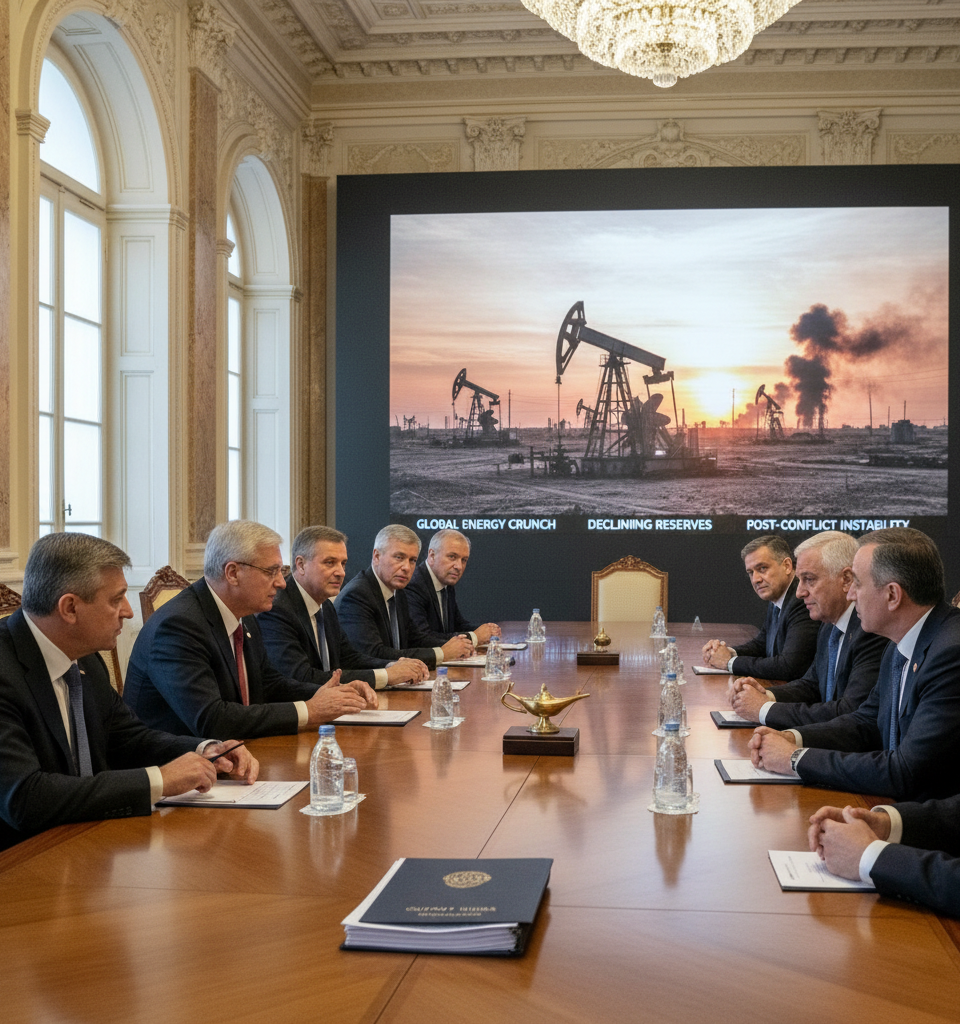
**Vienna, Austria – ** – The Organization of the Petroleum Exporting Countries and its allies (OPEC+) today announced a largely symbolic increase in oil production quotas for the upcoming month, a decision overshadowed by the consortium's grim forecast of enduring disruptions to global crude supply due to extensive damage sustained by Middle Eastern energy assets. Convening in Vienna, the ministerial meeting concluded with an agreement to increase collective output by a mere 100,000 barrels per day (bpd) for August, a figure widely regarded by market analysts as negligible in a volatile global energy landscape.
Contextualizing the Crisis: Beyond the Immediate Bump
This modest quota adjustment comes against a backdrop of escalating geopolitical tensions and protracted conflict in oil-rich regions, particularly following the protracted conflict. While the conflict itself may eventually abate, OPEC+'s assessment indicates that the destruction and debilitation of crucial oil infrastructure will have a ripple effect on production capabilities for years to come. This long-term concern significantly outweighs the short-term impact of the incremental supply increase, highlighting a fundamental shift in the cartel's strategic outlook and global energy security discussions. The specter of prolonged supply constraints adds another layer of complexity to an already tight market, still grappling with post-pandemic demand recovery and the implications of the Ukraine conflict.
Key Details: A Drop in the Ocean
The 100,000 bpd increase, distributed among the 23 member nations, represents a fractional adjustment to global supply, estimated at less than 0.1% of daily world demand. This figure falls significantly short of calls from major consuming nations, including the United States, for more substantial output increases to temper soaring crude prices. Brent crude, the international benchmark, has consistently traded above $100 per barrel for several months, driven by robust demand, constrained supply, and geopolitical risk premiums. Experts note that the approved increment is barely enough to cover the natural decline rates in some mature oil fields, effectively rendering it a non-event in terms of market rebalancing. A delegate close to the discussions, speaking on condition of anonymity, stated, "The destruction has been profound. Even with the best intentions, rebuilding and restoring full capacity will be a multi-year endeavor."
Industry and Market Implications: A New Era of Scarcity?
The long-term forecast from OPEC+ is a potent signal to global energy markets: an era of prolonged tightness and elevated prices may be an unavoidable reality. Major oil companies, refiners, and commodity traders are now reassessing their long-term supply strategies, anticipating sustained volatility. This outlook could accelerate investments in alternative energy sources, but also incentivize new exploration and production projects in less politically volatile regions. The potential for higher energy costs threatens to exacerbate inflationary pressures globally, impacting industrial output, consumer spending, and overall economic stability. Shipping and logistics industries, already facing headwinds, could see further cost increases, translating to higher prices for goods.
Expert Analysis: The Structural Shift
Energy analysts are largely concurring with OPEC+'s assessment regarding the duration of supply constraints. "This isn't a temporary blip; it's a structural shift in global oil supply dynamics," commented Dr. Eleanor Vance, lead energy economist at Global Insight Group. "The damage to infrastructure, coupled with underinvestment in upstream capabilities over the past decade, means the world will struggle to meet demand for an extended period. The 100,000 bpd increase is purely symbolic, a diplomatic gesture rather than a market-altering decision." Other experts point to the psychological impact on markets, where the confirmation of long-term scarcity could solidify price floors well above historical averages.
What's Next: Navigating a Challenging Future
The immediate aftermath of this OPEC+ meeting will see market participants scrutinizing inventory data and geopolitical developments even more closely. Future OPEC+ meetings will be under immense pressure to balance global demand with their stated technical capacities. The focus will inevitably shift deeper into the long term, with discussions around energy security, diversification of supply, and the acceleration of the energy transition likely to dominate international dialogues. Governments of consuming nations may explore options for strategic petroleum reserve releases or incentives for domestic production, but these are short-term solutions to a problem that OPEC+ has now formally identified as chronic. The next ministerial meeting, expected in early September, will provide further insight into the evolving strategy of the cartel.