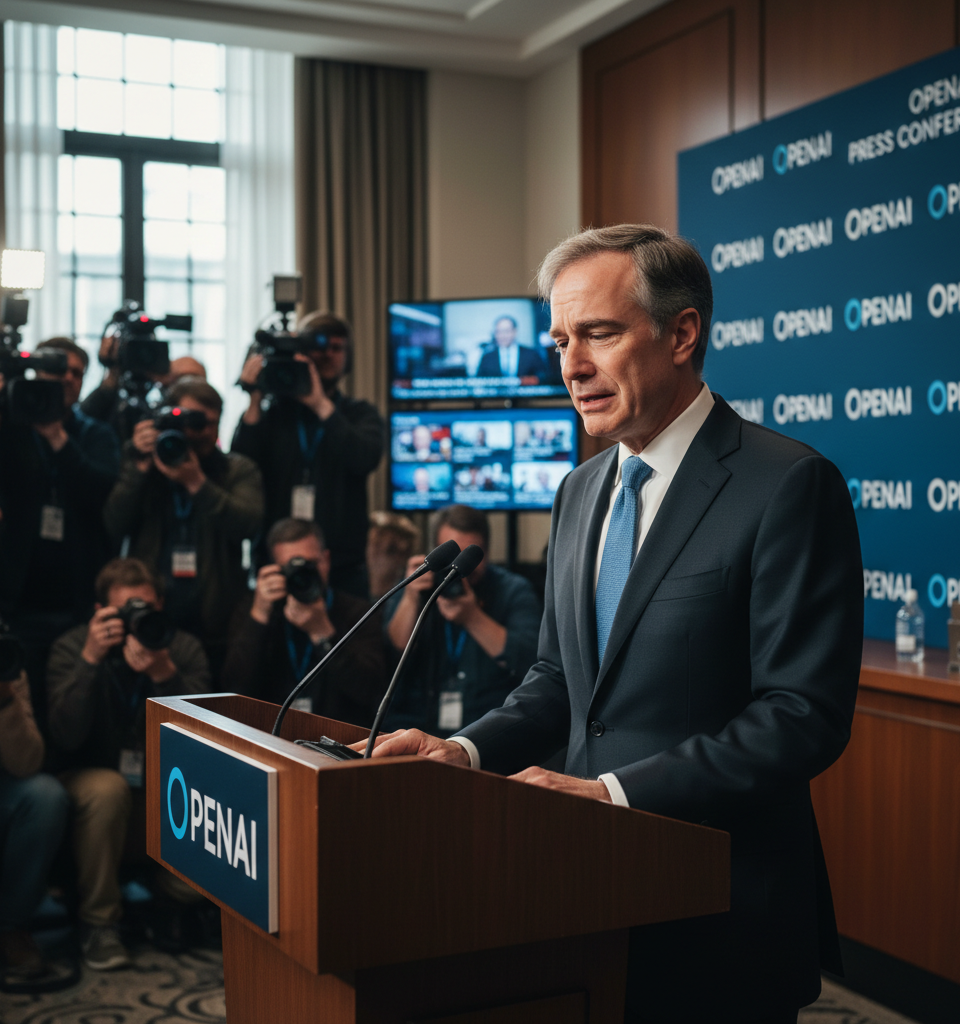
Sam Altman, the chief executive of OpenAI, the artificial intelligence research and deployment company behind ChatGPT, has publicly apologized after a mass shooting suspect was not flagged to police following interactions with an OpenAI platform. The admission, delivered during a press conference on Tuesday, has ignited a fresh debate about the ethical obligations and public safety responsibilities of AI developers, particularly concerning the potential misuse of advanced technologies. This incident casts a shadow over the rapidly evolving AI industry, raising critical questions about the balance between privacy, free speech, and national security in the digital age.
The failure to detect and report a credible threat highlights the nascent and often ambiguous regulatory landscape governing AI, which has largely struggled to keep pace with technological advancements. Historically, social media companies have faced similar pressures regarding content moderation and threat assessment, setting a precedent that AI firms may now be expected to follow. Altman's apology was direct and unequivocal.
He stated, "We deeply regret that our systems did not identify and report this individual to the authorities. We are committed to learning from this incident and ensuring such a lapse does not recur." While specific details about the suspect's interactions with the AI system were not fully disclosed due to ongoing investigations, initial reports suggest that the individual had engaged in concerning discussions that, in hindsight, should have triggered an alert.
This omission has provoked criticism from various angles, including victim advocacy groups and cybersecurity experts, who argue that AI companies must implement more robust threat detection mechanisms.
Industry Impact and Regulatory Scrutiny
The fallout from this incident is likely to reverberate throughout the AI industry. Investors and policymakers are expected to ramp up calls for greater transparency and accountability from AI developers. Shares of several publicly traded AI-adjacent technology companies experienced slight dips in early trading following the news, reflecting investor apprehension about potential new regulations or increased operational costs associated with enhanced safety protocols. Industry analysts predict a renewed push for standardized guidelines regarding threat assessment, data sharing with law enforcement, and the development of AI ethical frameworks that specifically address public safety concerns.
Expert Perspectives Dr. Anya Sharma, a leading
AI ethics researcher at Stanford University, commented on the situation, stating, "This incident is a stark reminder that as AI becomes more powerful and pervasive, its developers bear an immense responsibility to integrate strong ethical safeguards and collaborate proactively with authorities. Relying solely on reactive measures is no longer sufficient; proactive threat intelligence must become a cornerstone of AI design." Others, like former FBI special agent Mark Carlson, emphasized the complexity of balancing user privacy with the need to prevent harm. "The challenge lies in identifying genuine threats without infringing on civil liberties or creating a surveillance state," Carlson noted.
Future Implications and Collaborative Strategies
Moving forward, OpenAI has committed to a series of significant changes. Altman announced the formation of an internal task force dedicated to enhancing threat detection capabilities, including investments in advanced natural language processing (NLP) models designed to identify patterns indicative of malicious intent. Crucially, the company plans to increase its engagement with government agencies and law enforcement bodies worldwide. This collaboration will likely involve developing protocols for sharing information, training AI systems on threat indicators, and establishing clear lines of communication for urgent situations. The incident serves as a critical inflection point, prompting a reevaluation of how AI companies interact with the public safety ecosystem and adapt to their growing civic responsibilities in an increasingly AI-driven world.