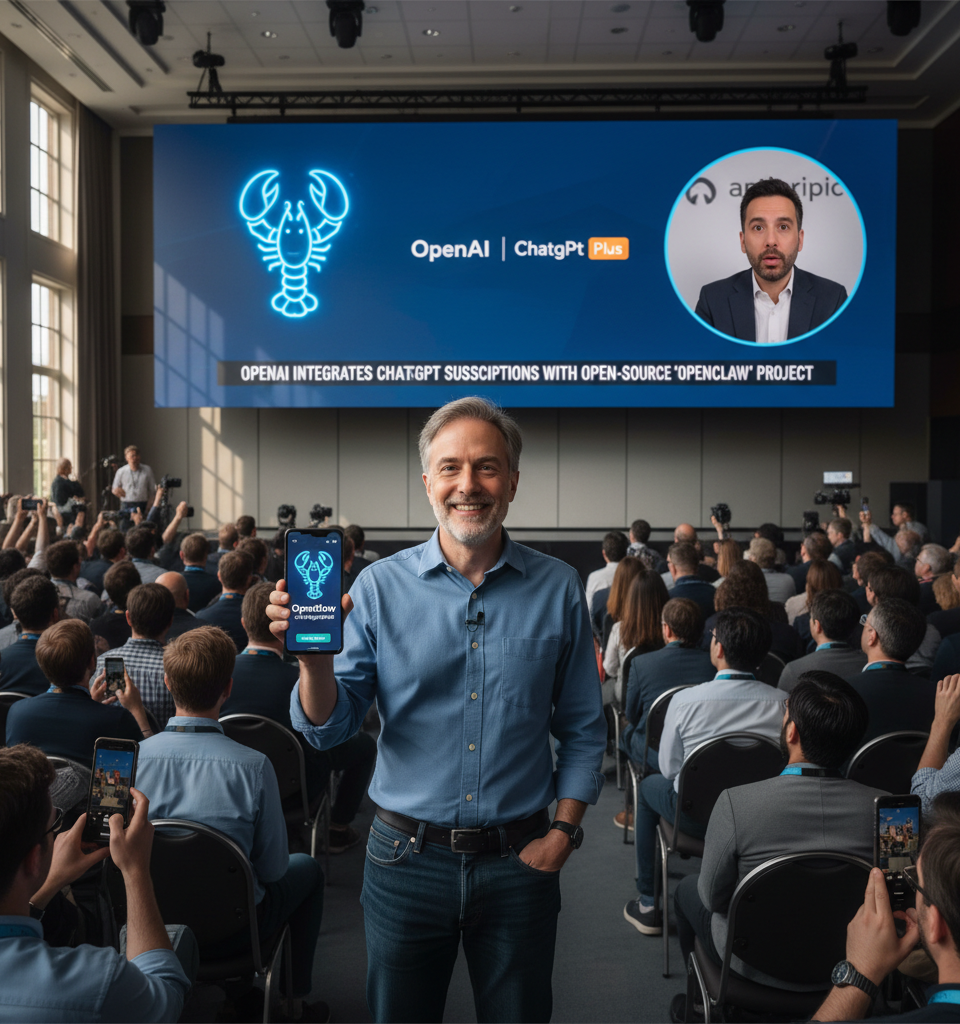
In a significant strategic maneuver, artificial intelligence powerhouse OpenAI has enabled direct integration of ChatGPT subscriptions with 'OpenClaw,' an open-source project lauded for its extensive user base. The announcement, made by OpenAI CEO Sam Altman on X (formerly Twitter) early on May 2, stated, "you can sign in to openclaw with your chatgpt account now and use your subscription there! happy lobstering." This integration allows ChatGPT Plus subscribers to leverage their existing accounts for premium access within OpenClaw, a development poised to reshape the interaction between proprietary AI services and the open-source community.
Context and Strategic Implications
The move, while presented with Altman's characteristically casual online demeanor, carries profound implications for the artificial intelligence landscape. OpenClaw represents a critical juncture for an AI firm to seamlessly merge its commercial offerings into a popular open-source initiative, effectively leveraging an external, community-driven platform to expand its subscriber benefits. This strategy contrasts sharply with the traditional approach of developing entirely in-house ecosystems. The integration signals a sophisticated play by OpenAI to foster deeper engagement with the developer community and to drive further adoption of its paid services by offering tangible value through a project already embraced by millions.
Key Details of the Integration
The partnership allows existing ChatGPT Plus subscribers to authenticate directly within OpenClaw, immediately gaining access to advanced features or enhanced performance that might otherwise be gated or unavailable to regular OpenClaw users. While specific premium features unlocked by the ChatGPT subscription within OpenClaw have not been fully itemized, the value proposition is clear: a unified premium experience across both platforms. This initiative builds upon OpenAI’s aggressive push to monetize its highly successful language models and to solidify its position as a dominant force in AI. The announcement's timing suggests a readiness to rapidly deploy and integrate its services into diverse technological environments.
Industry and Market Impact
The ripple effects of this integration are already palpable across the AI industry. By embedding itself within a leading open-source project, OpenAI not only expands its user base but also potentially creates a new standard for how commercial AI interacts with community-driven software. This development could inspire other proprietary AI firms to explore similar integrations, blurring the lines between open and closed source development in unprecedented ways. However, it also raises questions about data privacy, intellectual property, and fair competition, particularly from companies that champion entirely open AI paradigms. This strategic move could significantly shift market dynamics, compelling competitors to rethink their engagement models.
Expert Perspectives
AI analysts are closely scrutinizing OpenAI’s latest strategy. Dr. Evelyn Reed, a leading technology policy expert, noted, "This isn't just about cross-promotion; it’s about establishing a new form of digital infrastructure where leading AI models become foundational components of widespread open-source tools. The potential for rapid feature dissemination and user base growth is immense, but so are the governance challenges." Others point to the risk of centralizing control within an ostensibly open ecosystem, potentially leading to vendor lock-in despite the open-source nature of OpenClaw itself. The immediate reaction from Anthropic, a prominent OpenAI competitor, underscored these concerns, illustrating the contentious nature of such deep integrations.
Anthropic's Response and Future Implications
Notably, Anthropic, a key competitor in the AI space and developer of the Claude AI model, responded by promptly banning OpenClaw from its platforms and services. This swift and decisive action highlights the competitive tension and ideological differences within the AI community regarding open versus closed ecosystems. Anthropic's stance likely stems from concerns about OpenAI's increasing influence, data control, or perhaps a desire to maintain a distinct separation in its own offerings.
Looking ahead, this integration could accelerate the consolidation of AI services, leading to fewer, larger ecosystems. The long-term success will hinge on user reception, the tangible benefits delivered to OpenClaw users, and how competing AI firms adapt to this novel strategy. The AI industry is entering a phase of rapid consolidation and redefinition, with OpenAI firmly at the forefront of pioneering new integration models.