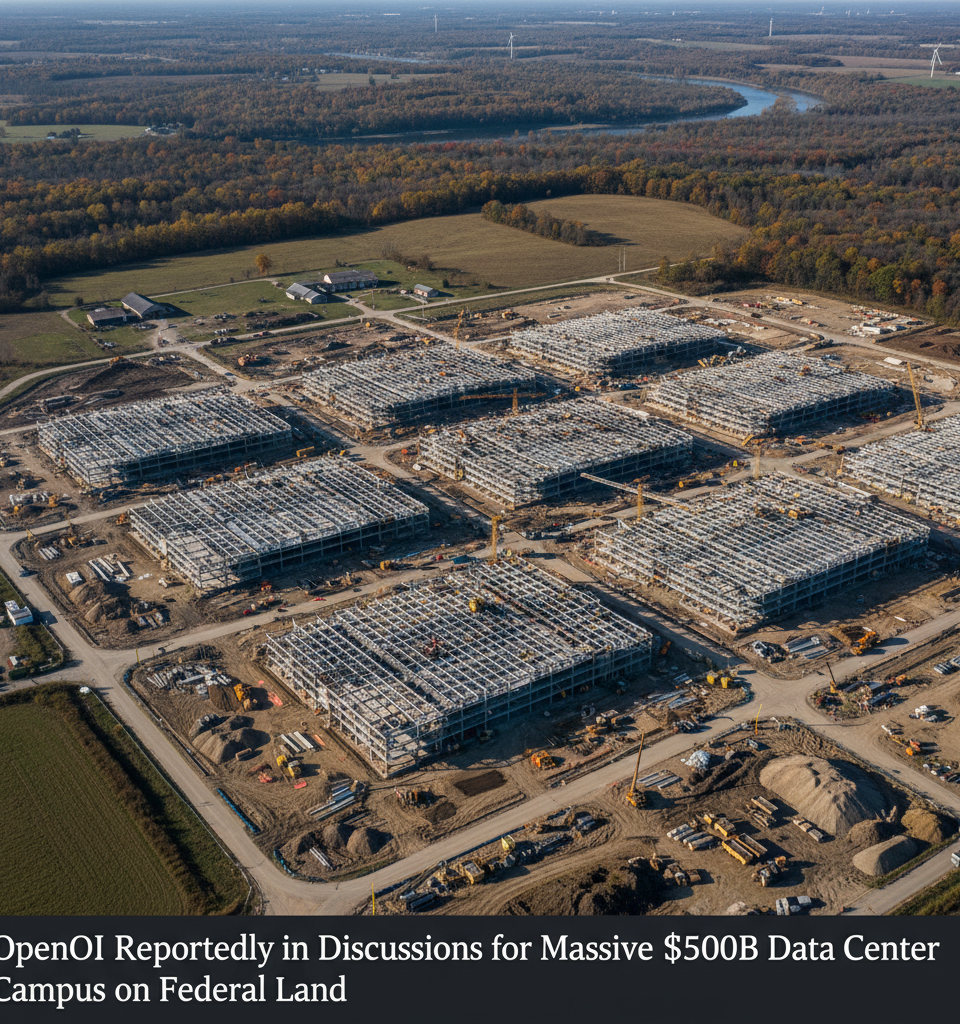
OpenAI, a leading artificial intelligence research and deployment company, is reportedly in advanced discussions to secure a lease for an extensive 10-gigawatt data center campus. This colossal infrastructure project, valued at an estimated $500 billion, is proposed for development on federal land controlled by the U.S. Department of Energy (DOE) in Ohio. The potential agreement underscores the immense and rapidly escalating power and computing demands driven by advanced AI models and applications.
Context and Significance
The move comes as AI development accelerates, pushing the boundaries of computational requirements. Building and operating sophisticated AI models, particularly large language models (LLMs) and generative AI, necessitates unprecedented levels of processing power and reliable, high-capacity electrical grids. Current industry estimates suggest that AI data centers could consume a substantial portion of global energy production in the coming years. This reported initiative by OpenAI highlights a strategic pivot towards securing dedicated, massive-scale infrastructure to support its long-term growth and innovative endeavors.
Project Scope and Location
The proposed data center, with its aspirational 10-gigawatt capacity, would represent one of the largest such facilities globally if realized. Its potential location on DOE-owned land in Ohio is particularly notable. Federal properties, especially those previously associated with energy-intensive industrial or scientific operations, often possess existing robust power transmission infrastructure and extensive land parcels. This could significantly reduce the complexities and timelines associated with acquiring land and upgrading power grid connections, which are typically major hurdles for projects of this magnitude. The total estimated cost of $500 billion for such a facility reflects not only the scale of construction but also the specialized hardware, cooling systems, and long-term operational expenses inherent in cutting-edge AI data centers.
Industry Impact and Power Demands
The AI industry's insatiable appetite for computing power is well-documented. As AI models become more complex and widespread, their energy footprint expands exponentially. A 10-gigawatt facility would dwarf most existing data centers, consuming as much electricity as several small countries. This potential development by OpenAI signals a future where AI companies become major players in national and even global energy markets, requiring dedicated power generation and distribution solutions. The implications for utilities, energy policy, and renewable energy integration are profound, potentially accelerating investments in grid modernization and sustainable power sources to meet these new demands.
Strategic Implications for OpenAI
For OpenAI, securing such a massive infrastructure would provide a significant competitive advantage. Dedicated, large-scale computing resources offer greater control over operational costs, improved security, and optimized performance for its proprietary AI models. It would also reduce reliance on third-party cloud providers, which currently host a significant portion of AI workloads. This strategic independence could enable OpenAI to push the boundaries of AI research and deployment without logistical bottlenecks or escalating operational expenditures tied to public cloud services. The sheer scale suggests a long-term vision far beyond current AI capabilities, anticipating a future where AI systems demand orders of magnitude more processing power than today.
Environmental and Regulatory Considerations
A project of this size would inevitably face intense scrutiny regarding its environmental impact, particularly concerning energy consumption and water usage for cooling. Regulatory bodies and environmental advocacy groups will likely monitor the development closely, emphasizing the need for sustainable practices and potentially requiring significant investment in renewable energy sources to power the facility. The involvement of the U.S. Department of Energy also implies adherence to federal environmental standards and may introduce complex permitting processes. Balancing ambitious AI development with environmental stewardship will be a critical challenge.
What's Next
The negotiations between OpenAI and the U.S. Department of Energy are ongoing, and the final terms of any potential lease agreement or development plan remain subject to change. Should these discussions materialize into a definitive agreement, it would mark a pivotal moment for both OpenAI and the broader AI industry, ushering in an era of unprecedented infrastructure investment tailored specifically for AI workloads. Future announcements from either OpenAI or the DOE are anticipated as these high-stakes discussions progress, detailing timelines, funding mechanisms, and the specific technological capabilities envisioned for this colossal undertaking.