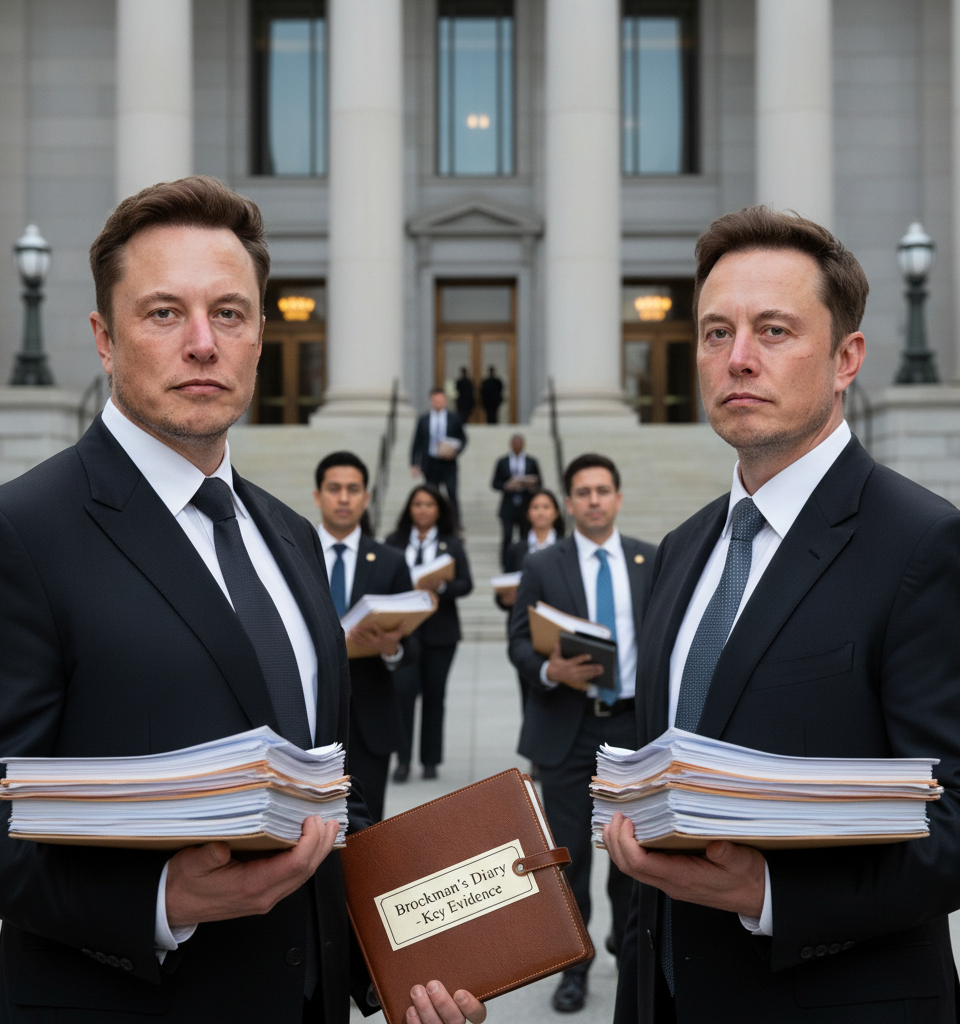
Jury selection is underway this Monday in Oakland federal court for a highly anticipated trial that will determine the legal validity of OpenAI's transformation from a nonprofit entity into one of the world's most valuable technology companies. The proceedings pit Elon Musk, a co-founder of OpenAI in 2015 and a significant early donor, against current CEO Sam Altman and other key figures. At the heart of Musk's lawsuit is the allegation that this strategic conversion represents a fundamental breach of the organization's initial charitable trust, a claim buttressed by internal documentation, including a diary entry from OpenAI President Greg Brockman explicitly stating the strategic shift as a "lie."
Context and Background of the Lawsuit
This legal challenge arrives at a critical juncture for the artificial intelligence industry, highlighting the inherent tensions between rapid technological advancement, corporate ambition, and foundational ethical commitments. OpenAI was established in 2015 with a stated mission to ensure that artificial general intelligence (AGI) benefits all humanity, not just shareholders. Early investors and founders, including Musk, contributed substantial capital—Musk himself donated at least $38 million—under the understanding that the organization would operate as a nonprofit, prioritizing safety and public good over profit maximization. Its subsequent restructuring in 2019, which saw the creation of a for-profit subsidiary capable of raising billions and pursuing commercial ventures, sparked a contentious debate about its original charter and the true intent of its leadership.
Key Details and Evidence
The central piece of evidence expected to sway the jury is an entry from Greg Brockman's personal diary. This document, reportedly detailing internal discussions surrounding OpenAI's strategic shift, allegedly characterizes the move from a pure nonprofit model to a hybrid for-profit one as a deviation from their initial mission, potentially even a "lie" intended to assuage early philanthropic donors and maintain momentum. Musk’s legal team will likely present this as smoking gun evidence of a deliberate attempt to mislead. The lawsuit seeks to compel OpenAI to revert to its original nonprofit structure and potentially disgorge profits made from its commercial endeavors. The financial stakes are enormous, with OpenAI now valued in the tens of billions of dollars, largely due to products like ChatGPT and its enterprise partnerships.
Industry and Market Impact Beyond the immediate parties, this trial carries significant implications for the broader
AI landscape and the future of mission-driven tech companies. A ruling in Musk’s favor could send shockwaves through an industry grappling with rapid commercialization. It could force other AI ventures that started with similar altruistic aims to re-evaluate their corporate governance and profit structures. Conversely, a victory for OpenAI might validate the hybrid model as a viable path for funding incredibly expensive AI research, potentially encouraging more such transformations. The outcome could set a precedent for how innovation is funded and how ethical obligations are upheld in the fast-evolving tech sector, particularly concerning the development of powerful AGI.
Expert Perspectives Legal and corporate governance experts are closely watching the proceedings.
"This isn't just about a breach of contract; it's about the soul of a company that promised to develop AI for the common good," stated Dr. Eleanor Vance, a corporate law professor at Stanford University. "The challenge for the plaintiffs will be to prove a clear, legally actionable breach of fiduciary or charitable trust, beyond merely a change in strategic direction. Brockman's diary, if authenticated and interpreted as presented, could be highly damaging to the defense." Analysts also note that the case could redefine the boundaries of founder intent versus evolving corporate strategy, especially when confronted with the immense capital requirements necessary to push the frontiers of AI research.
What's Next: Future Implications
The trial is expected to last several weeks, with both sides presenting extensive documentary evidence and calling numerous witnesses, including current and former OpenAI executives. Regardless of the verdict, the proceedings are guaranteed to shed unprecedented light on the internal machinations and founding principles of one of the world's most influential AI companies. A protracted appeals process is likely, irrespective of the initial judgment. The decision will not only impact OpenAI's corporate structure and future but also serve as a critical legal benchmark for the entire AI industry, potentially influencing how future AI ventures are founded, funded, and governed, and how they balance profit motives against stated ethical or charitable missions.