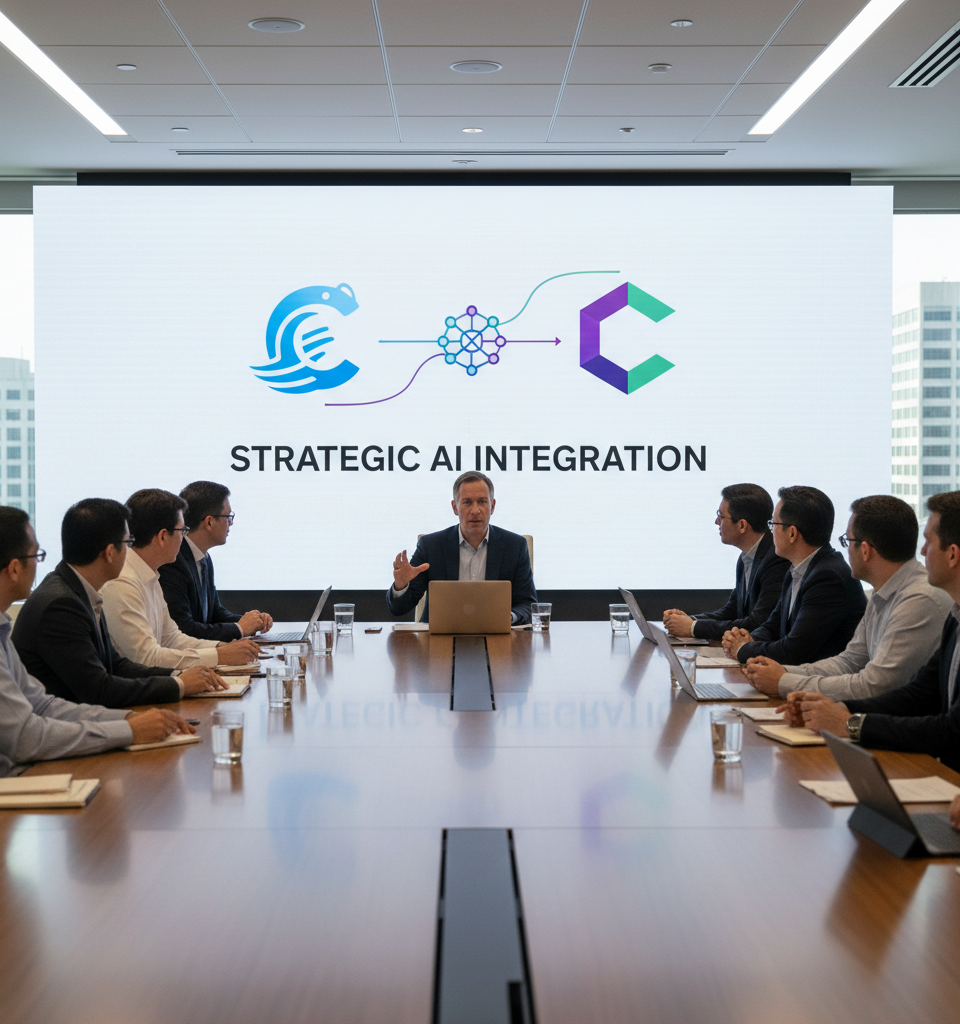
OpenAI, a leading force in artificial intelligence research and deployment, has initiated a significant internal restructuring, placing its prominent language model, ChatGPT, and its code-generating counterpart, Codex, under a singular product development umbrella. Co-founder and president Greg Brockman will spearhead this consolidated effort, signaling a strategic pivot towards a unified, 'agentic' AI platform. The move, reportedly communicated through an internal memo seen by Wired, underscores OpenAI's commitment to accelerate innovation and simplify its core offerings, potentially laying the groundwork for more sophisticated, integrated AI systems.
Strategic Consolidation and Vision
This consolidation marks a pivotal moment for OpenAI, moving away from siloed development pathways for its groundbreaking technologies. By merging ChatGPT, designed for natural language understanding and generation, with Codex, known for its ability to translate natural language into code and complete code, OpenAI aims to unlock synergy and create more capable, versatile AI agents. Brockman's memo reportedly highlighted an intensified focus on a singular 'agentic platform,' suggesting a strategic vision where AI models can independently act and learn across diverse tasks, rather than operating as disparate tools. This vertical integration is anticipated to streamline development cycles, reduce redundancies, and ultimately accelerate the commercialization of advanced AI capabilities.
Impact on the AI Landscape
The implications of this organizational shift extend far beyond OpenAI's internal structure. In an increasingly competitive AI landscape, where tech giants such as Google, Microsoft, and Meta are pouring billions into AI research, a unified platform approach could give OpenAI a significant edge. By fostering a more cohesive development environment, OpenAI may accelerate the creation of multimodal AI models that can seamlessly transition between different types of tasks, from generating human-like text to writing complex software. This could lead to a new generation of AI applications that are more intuitive, powerful, and adaptable, potentially reshaping industries from software development to customer service.
Market Dynamics and Competitive Edge
OpenAI's decision to hand the reins of this integrated product strategy to Brockman, a seasoned technologist and one of the company's most influential figures, underscores the strategic importance of this initiative. Brockman's deep understanding of both the technical and product development aspects of AI is expected to be crucial in navigating the complexities of integrating such advanced models. The move is also a response to evolving market demands, where end-users and developers increasingly seek comprehensive, all-in-one AI solutions rather than fragmented tools. This focus on a singular, powerful agentic platform positions OpenAI to capture a larger share of the burgeoning AI market, estimated to reach hundreds of billions of dollars in the coming years.
Expert Analysis and Future Prospects
Industry analysts view this consolidation as a shrewd move, recognizing the strategic advantage of a unified platform. "This brings together OpenAI's two most impactful contributions to date under one leader, which should lead to more efficient development and more powerful integrated applications," commented Dr. Anya Sharma, a principal analyst at AI Insights Group. She added, "The 'agentic' component is key here; it signals OpenAI's long-term vision to build truly autonomous and adaptable AI systems." The move is also seen as a preparation for the next wave of AI innovation, where models increasingly exhibit higher levels of autonomy and decision-making capabilities. This integration could significantly accelerate the research and development milestones necessary for achieving artificial general intelligence (AGI).
What Lies Ahead
Looking forward, the immediate focus will likely be on migrating existing functionalities and developer APIs to this new unified platform, ensuring a seamless transition for OpenAI's growing user base. We can anticipate faster iteration cycles for new features and capabilities, along with a more consistent user experience across different AI applications. Longer term, this strategy sets the stage for OpenAI to introduce more sophisticated AI assistants and tools that can perform complex, multi-step tasks requiring both language understanding and code generation. The success of this integration will undoubtedly influence the trajectory of AI development, potentially setting new industry standards for how advanced AI models are designed, deployed, and ultimately utilized globally.