OpenAI Unveils Workspace Agents: A Leap Forward in Enterprise AI Automation
carl.franzen@venturebeat.com (Carl Franzen)•April 22, 2026•4 min read
Key Takeaways
Read this first — then go as deep as you need.
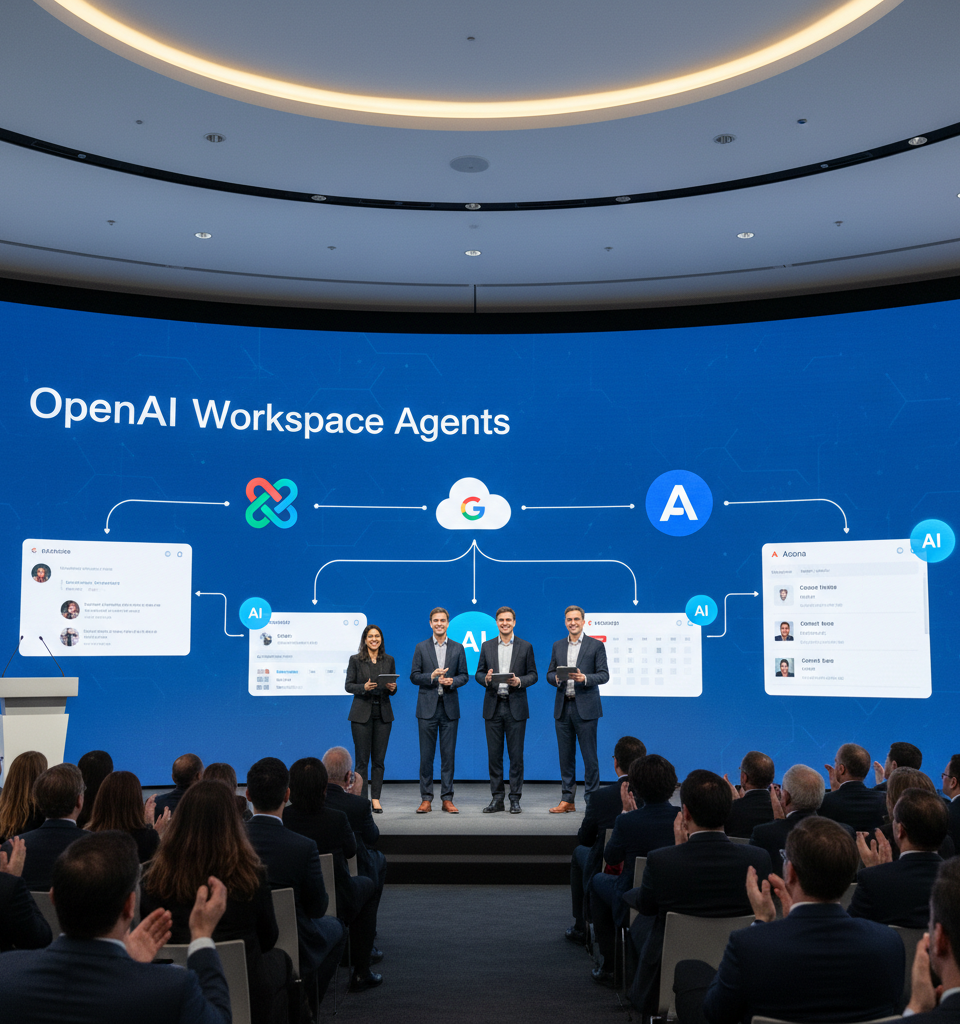
OpenAI Redefines Enterprise AI with Workspace Agents, Integrating Directly into Business Ecosystems San Francisco, CA – OpenAI, the leading artificial intelligence research and deployment company, today announced the introduction of "Workspace Agents," a revolutionary new paradigm poised to transform enterprise operations. Targeting businesses utilizing its ChatGPT Business, Enterprise, Edu, and Teachers subscription plans, this offering enables users to deploy customizable AI agents directly within critical third-party applications such as Slack, Salesforce, and Microsoft 365, automating a wide array of work tasks. The move marks a strategic pivot for OpenAI, moving beyond standalone custom models to deeply integrated, actionable AI workforces designed to enhance productivity and streamline complex workflows across the corporate landscape. This launch represents a crucial evolution in the adoption of AI within corporate environments, building on the foundation laid by previous iterations like Custom GPTs. While Custom GPTs offered bespoke AI models, Workspace Agents elevate this concept by granting these AI entities direct access and interaction capabilities with a business's core operational tools and data sources. This deep integration addresses a long-standing challenge for enterprises: how to seamlessly embed AI into daily operations without requiring extensive, proprietary development or disrupting existing infrastructure. The increasing demand for efficient, scalable AI solutions has propelled OpenAI to develop a product that not only automates but also intelligently assists knowledge workers tackling routine and complex tasks. Workspace Agents are available to subscribers of ChatGPT Business ($20 per user per month) and the variably priced Enterprise, Edu, and Teachers plans. Users can either design custom agents tailored to specific organizational needs or select from a library of pre-existing templates. These agents are engineered to perform tasks ranging from data retrieval and summarization from internal documents to scheduling meetings in Google Calendar, responding to customer service inquiries in Salesforce, or even managing projects within platforms like Asana. The ability for these agents to interact directly with external applications via APIs fundamentally shifts their utility from mere information processors to active contributors within an enterprise's digital ecosystem, significantly reducing manual overhead and boosting operational efficiency. This development is expected to send ripples across the enterprise software and AI markets. Competitors in the AI space, from established tech giants to burgeoning startups, will need to respond to OpenAI's aggressive push into integrated AI automation. The direct plug-in capability to widely used platforms like Slack and Salesforce positions Workspace Agents as a powerful, ready-to-deploy solution, potentially disrupting the market for custom automation tools and specialized AI applications. It also underscores a broader trend where AI is no longer just a standalone tool but an embedded layer within the fabric of enterprise software, promising a future of hyper-automated workplaces. Industry analysts are largely optimistic about the potential impact of Workspace Agents. "This is not just an incremental update; it's a strategic leap for enterprise AI," stated Dr. Evelyn Reed, a lead analyst at TechInsights Group. "By providing direct integration with mission-critical applications, OpenAI is addressing a key enterprise pain point: the disjointed nature of many AI solutions. The potential for cost savings and productivity gains, especially for companies embracing hybrid work models, is immense. However, concerns around data privacy, security, and the ethical implications of autonomous agents will undoubtedly require robust governance frameworks from OpenAI and adopting businesses alike." She estimates that early adopters could see a 15-25% reduction in time spent on administrative tasks within the first year. The launch of Workspace Agents is likely just the beginning of OpenAI's ambitious roadmap for enterprise AI. Future iterations are expected to include more sophisticated natural language understanding, enhanced reasoning capabilities, and broader integration with an even wider array of business applications and proprietary data systems. OpenAI has also hinted at developing a marketplace for third-party developers to create and offer specialized Workspace Agents, fostering an ecosystem much like app stores for mobile devices. This would further democratize access to advanced AI automation, allowing businesses of all sizes to leverage tailored AI solutions, driving a new wave of digital transformation across industries. As businesses navigate an increasingly complex technological landscape, tools like Workspace Agents signify a future where AI isn't just an assistant but an integral, active participant in day-to-day operations. The challenge now lies in ensuring secure, ethical, and effective deployment of these powerful AI workforces, balancing innovation with responsible integration.
Discussion
Join the discussion
Sign in to leave a comment on this article.
Loading comments...
Enjoying this article?
Get more like it delivered to your inbox — free.
This article was compiled by GlobalSell News from publicly available reporting and has been edited for clarity and length. For full details, read the original source.