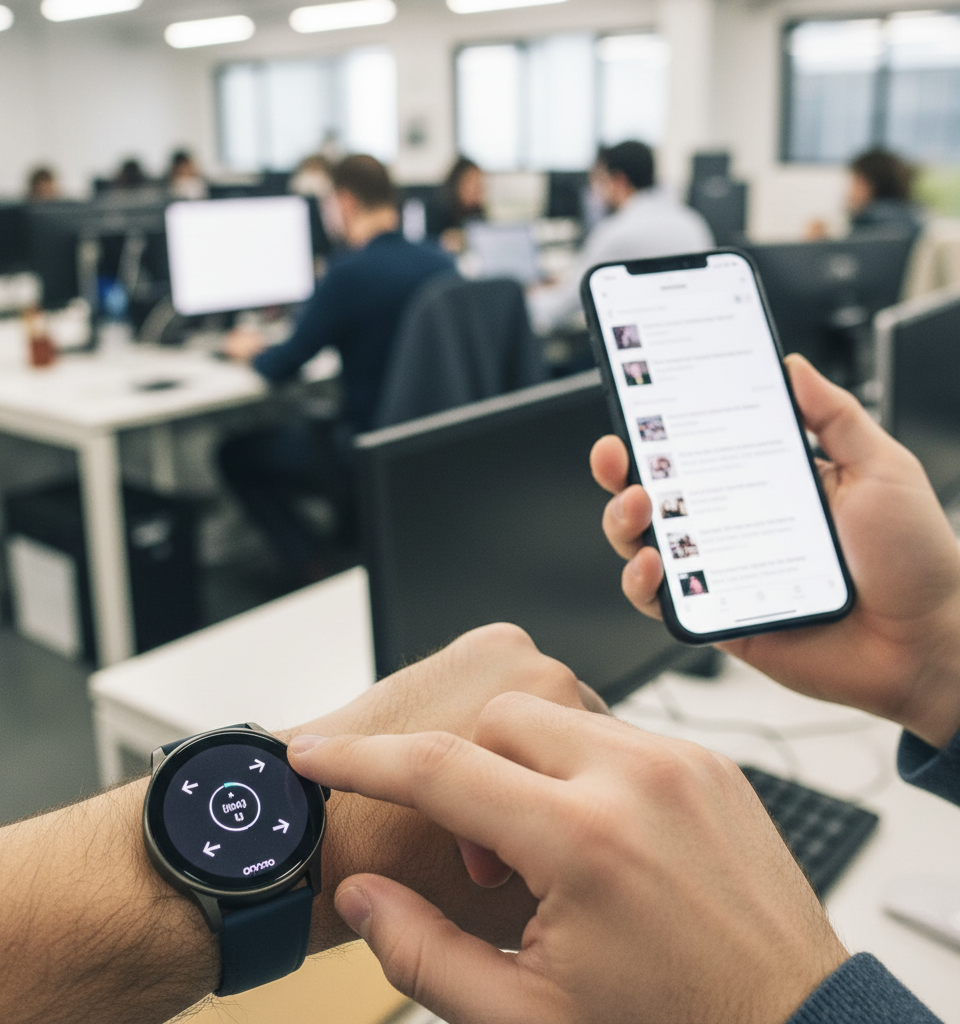
The OPPO Watch X3, OPPO's newest entry into the competitive smartwatch market, is drawing attention for an unconventional yet increasingly valued characteristic: its remote control functionality that allows users to scroll from their wrist. What began as a seemingly whimsical gimmick has, for many, evolved into a surprisingly indispensable tool for daily interactions with other devices.
Unveiling the Unexpected Utility
Initially perceived as a novelty, the remote scrolling feature on the OPPO Watch X3 enables users to navigate content on connected screens—such as smartphones, tablets, and potentially smart TVs—directly from their wrist. This hands-free interaction bypasses the need to directly touch the primary device, offering a new dimension of convenience. For tasks ranging from browsing lengthy documents or social media feeds to controlling presentations or media playback, the watch’s ability to act as a remote scroll has proven unexpectedly efficient.
A New Paradigm for Device Interaction
This development signifies a subtle but notable shift in how users might interact with their ecosystem of smart devices. Smartwatches have traditionally focused on health tracking, notifications, and basic app functionalities. By integrating a seamless remote control for scrolling, OPPO is pushing the boundaries of what a wearable can achieve in terms of cross-device utility. The feature streamlines interactions, particularly in scenarios where direct access to a larger screen is cumbersome or impractical, like during cooking, exercising, or presenting in a meeting.
Market Implications and Competitive Landscape
The introduction and subsequent positive reception of this feature could spur other manufacturers in the wearable tech space to explore similar functionalities. In a market where innovation often revolves around incremental improvements in fitness tracking or battery life, a truly novel user interaction mechanism like remote scrolling can serve as a significant differentiator. Competitors like Apple, Samsung, and Google, with their respective Apple Watch, Galaxy Watch, and Pixel Watch lines, may feel pressure to integrate comparable, innovative control features to maintain competitive parity and consumer interest.
User Experience and Adoption
Feedback from early adopters highlights the ease of integration into daily routines. Users report that the intuitive nature of the wrist-based scrolling quickly overcomes any initial skepticism. The functionality is praised for its responsiveness and the practical relief it offers from constantly handling a phone. This smooth user experience is critical for sustained adoption and turning a "silly" feature into a genuinely useful one.
The Future of Wearable Interactivity
Looking ahead, the success of the OPPO Watch X3's remote scrolling capability suggests a broader trend towards more interconnected and intelligently controlled device ecosystems. Future iterations of smartwatches may expand upon this foundation, offering even more sophisticated remote control options, potentially including gesture-based commands for a wider array of functions. This could lead to a future where the smartwatch serves not just as an extension of the phone, but as a central hub for seamless interaction with all personal smart devices, signaling a new era of effortless digital engagement. The journey of this feature, from perceived novelty to essential tool, underscores the unpredictable path of technological innovation and user adoption.