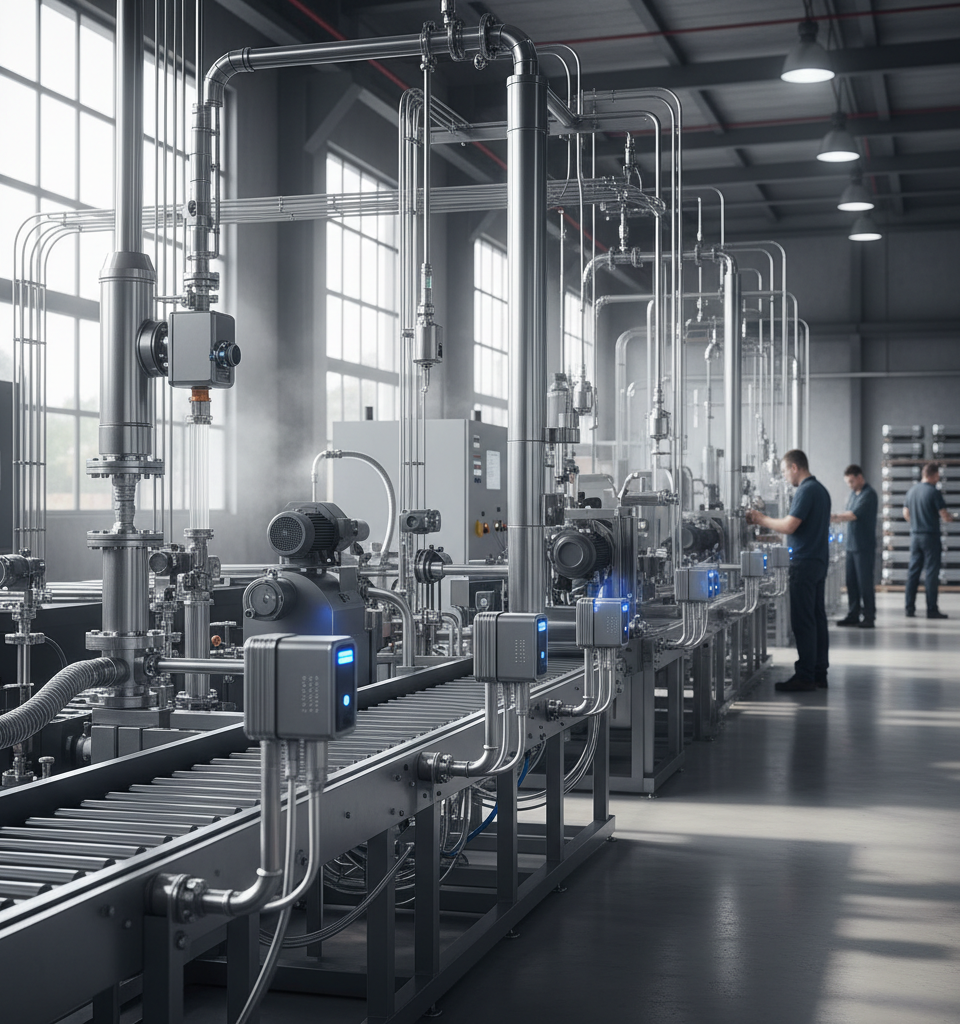
Global manufacturers and logistics operations face persistent pressure to minimize operational expenditures and meet stringent environmental targets. Investing in smart monitoring solutions for pneumatically-driven machines directly addresses these challenges, offering a tangible route to cost savings and reduced environmental impact that directly translates to improved bottom lines for cross-border enterprises.
Smart and sustainable monitoring solutions for pneumatically-driven machines are emerging as a critical tool for industries relying on compressed air technology. These solutions are designed with a dual objective: to significantly reduce energy costs and decrease the carbon dioxide (CO2) footprint associated with pneumatic systems. The overarching goal is to enhance operational profitability by optimizing efficiency and minimizing waste.
The Drive for Efficiency and Sustainability
Pneumatic systems, while robust and reliable, are often significant consumers of energy within industrial settings. Inefficient operation, leaks, and suboptimal pressure management can lead to substantial energy waste, which translates directly into higher utility bills and increased greenhouse gas emissions. The introduction of smart monitoring technologies aims to tackle these issues head-on, providing data-driven insights that were previously unavailable or difficult to ascertain.
These advanced monitoring solutions typically involve the deployment of sensors, data analytics platforms, and intelligent control mechanisms. By continuously tracking key performance indicators such as air pressure, flow rates, temperature, and leak detection, operators can gain a comprehensive understanding of their pneumatic systems' health and efficiency. This real-time data allows for immediate identification of inefficiencies and predictive maintenance opportunities, preventing costly downtime and prolonging equipment lifespan.
Economic and Environmental Impact
The direct economic benefit of these solutions lies in their ability to reduce energy consumption. By optimizing pressure settings, detecting and fixing leaks promptly, and ensuring machines operate at peak efficiency, businesses can expect a notable decrease in their electricity consumption attributed to air compressors. This reduction in energy demand directly translates into lower operational costs and, consequently, higher profitability. For businesses operating on tight margins or in highly competitive global markets, such savings can provide a significant competitive advantage.
Beyond cost savings, the environmental advantages are equally compelling. A reduction in energy consumption from pneumatic systems directly correlates with a decrease in CO2 emissions. This helps companies meet increasingly stringent environmental regulations and corporate sustainability goals, which are becoming vital for global brand reputation and investor relations. Demonstrating a commitment to sustainability can also open doors to new markets and attract environmentally conscious customers and partners.
Technological Advancements and Future Outlook
The technological backbone of these solutions includes the integration of IoT (Internet of Things) devices, cloud computing for data storage and analysis, and sophisticated algorithms for predictive modeling. These advancements enable remote monitoring and control, allowing facility managers to oversee multiple sites from a centralized location and respond to issues proactively. The insights gained can inform long-term strategic decisions regarding equipment upgrades and system design, fostering a continuous improvement cycle.
Looking ahead, the widespread adoption of smart monitoring solutions for pneumatic machines is expected to become an industry standard. As the global push for decarbonization intensifies and energy costs remain a critical concern, the value proposition of these technologies will only grow. Manufacturers of pneumatic equipment are likely to integrate these smart features directly into new machines, making energy and CO2 footprint reduction an inherent part of their product offerings. The synergy between smart technology and sustainable practices will continue to drive innovation in industrial automation, benefiting both the bottom line and the planet.