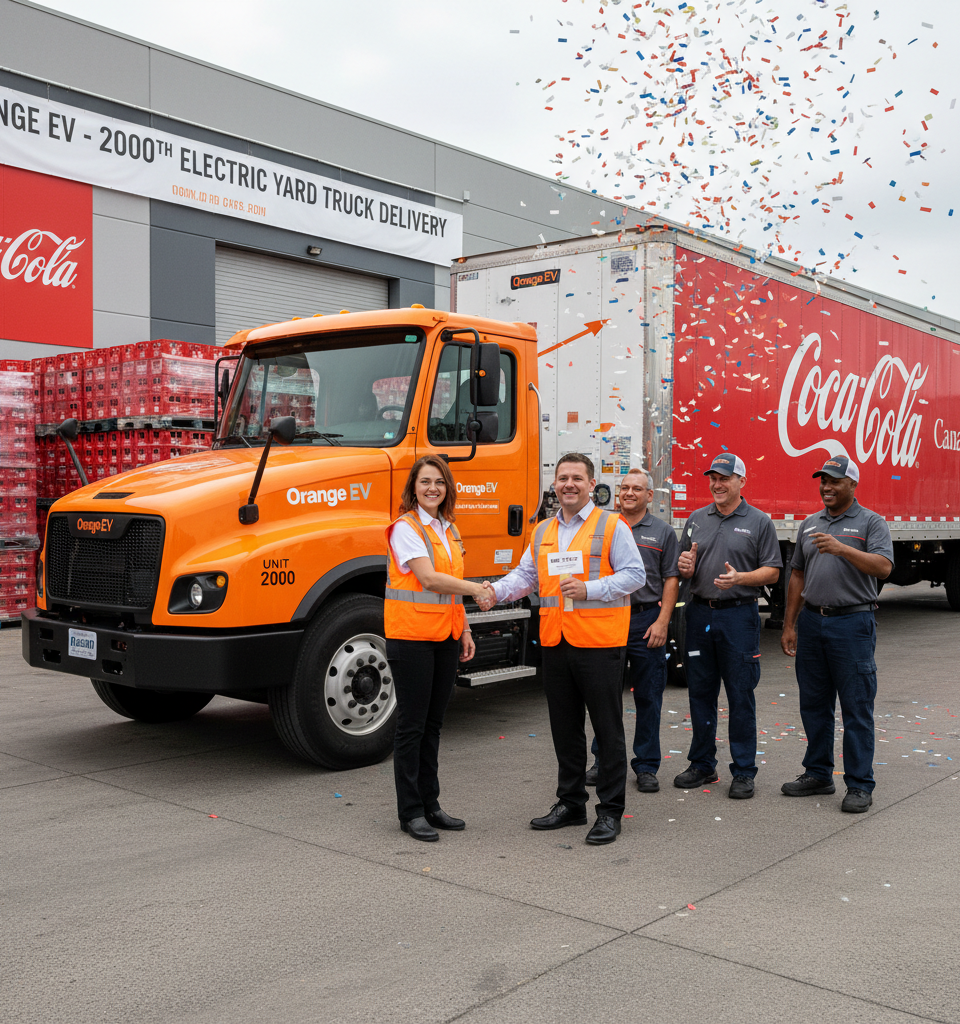
Orange EV, a leading producer in the electric heavy-duty vehicle sector, achieved a significant company milestone today, June 23, 2026, by delivering its 2,000th electric terminal truck. This particular unit was deployed to Coca-Cola Canada Bottling, highlighting the increasing trend among major corporations to electrify their logistics and supply chain operations.
A Growing Market for Electric Yard Trucks
This achievement for Orange EV signals robust growth within the niche but critical market of electric yard trucks, also known as terminal tractors or shunt trucks. These vehicles are indispensable for moving trailers and containers within distribution centers, warehouses, and port facilities. The transition to electric models addresses pressing environmental concerns, reduces operating costs associated with traditional diesel engines, and aligns with corporate sustainability objectives. The deployment to a high-profile entity like Coca-Cola Canada Bottling further validates the reliability and economic viability of these electric alternatives.
Enhancing Operational Efficiency and Sustainability
For companies such as Coca-Cola Canada Bottling, the adoption of electric terminal trucks like those from Orange EV represents a dual benefit of enhanced operational efficiency and a reduced carbon footprint. Electric vehicles typically require less maintenance due to fewer moving parts compared to their internal combustion engine counterparts, leading to increased uptime and lower long-term service costs. Furthermore, eliminating diesel consumption directly contributes to cleaner air within operational facilities and helps companies meet increasingly stringent environmental regulations and their own ambitious sustainability targets.
Broader Industry Implications
The delivery of 2,000 electric units by Orange EV reflects a broader transformation occurring across the logistics and transportation industries. As companies seek to decarbonize their supply chains, investment in electric heavy-duty vehicles is accelerating. This trend is not isolated to yard trucks; it extends to medium- and long-haul trucking, last-mile delivery, and passenger transport. The success of specialized manufacturers like Orange EV provides a blueprint for how focused innovation can drive significant market penetration in key industrial segments, pushing the entire sector towards electrification.
The Role of Corporate Adoption
The strategic choice by Coca-Cola Canada Bottling to integrate Orange EV's electric terminal truck into its operations is a powerful endorsement. Major corporations often lead by example, and their adoption of new technologies can spur wider industry acceptance and investment. Such high-profile deployments not only provide real-world performance data but also build confidence among other potential buyers, accelerating the market for electric industrial vehicles. The beverage industry, with its extensive distribution networks, stands to gain considerably from the operational and environmental advantages offered by electric fleets.
What Lies Ahead
Looking forward, the momentum gathered by companies like Orange EV suggests continued expansion in the electric yard truck market. Innovations in battery technology, charging infrastructure, and vehicle design are expected to further enhance the appeal of these electric alternatives. As governments worldwide intensify efforts to reduce emissions and corporate sustainability mandates become more stringent, the demand for reliable and efficient electric logistics solutions is poised for sustained growth. Orange EV's 2,000th delivery marks a significant waypoint in this ongoing electric revolution within industrial transport, positioning the company as a key player in the clean energy transition for supply chain operations.