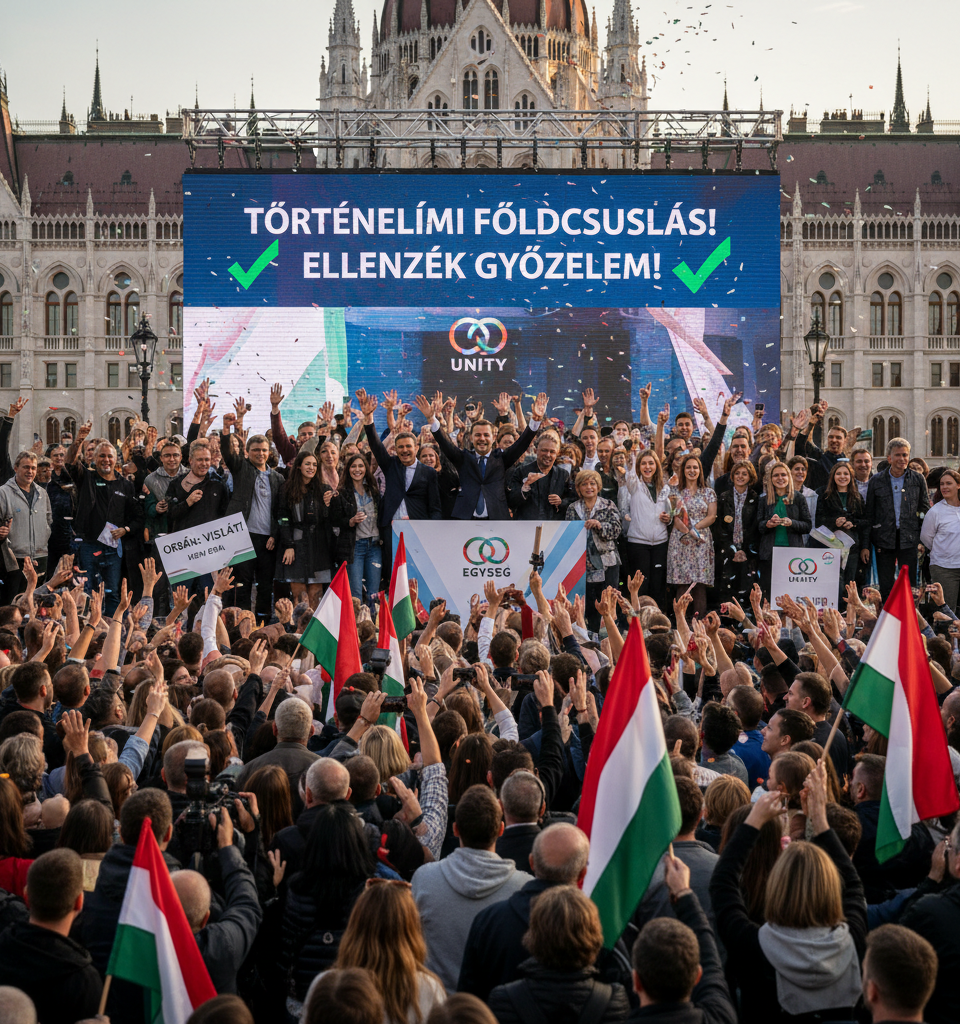
BUDAPEST, Hungary – In a truly momentous electoral outcome, a unified coalition of Hungarian opposition parties has secured a stunning landslide victory, effectively ending the decade-long reign of Prime Minister Viktor Orbán's Fidesz party. The results, confirmed late Tuesday evening following a meticulous vote count, represent a dramatic repudiation of Orbán's nationalist-conservative agenda and signal a profound shift in Hungarian politics. This unprecedented win sends shockwaves across the European Union, where Orbán's government had frequently clashed with Brussels over rule of law and democratic standards.
This election transcends a mere change of government; it signifies a potential recalibration of Hungary's societal and geopolitical trajectory. For over ten years, Orbán systematically consolidated power, reforming electoral laws, controlling media, and cultivating a narrative of national sovereignty often at odds with EU integration. The opposition, despite its ideological diversity ranging from the liberal left to the conservative right, managed to forge an unprecedented alliance, demonstrating a strategic maturity many analysts believed impossible. Their collective appeal to disillusioned voters, coupled with a promise of restoring democratic norms and tackling pervasive corruption, proved overwhelmingly successful.
Preliminary results indicate the opposition coalition secured approximately 55-60% of the popular vote, translating into a supermajority in the Hungarian Parliament. This far surpasses the 40-45% projected by most pre-election polls, catching both domestic and international observers by surprise. Key figures within the opposition, including Péter Márki-Zay, the joint prime ministerial candidate, hailed the victory as a testament to the Hungarian people's desire for change and a stronger democratic future. Initial celebrations in Budapest were marked by jubilant crowds waving Hungarian and EU flags, symbolizing a potential rapprochement with Brussels. Economic data released shortly after the results indicated a slight uptick in the Hungarian Forint against the Euro, reflecting cautious optimism in financial markets.
This outcome will undoubtedly reverberate throughout the Central European region and beyond. Viktor Orbán had positioned himself as a vanguard of illiberal democracy, often finding common cause with populist movements across Europe. His close ties with Russia's Vladimir Putin and his vocal opposition to EU sanctions had also raised concerns among Western allies. The new government is expected to pursue a more pro-European stance, potentially strengthening alliances with countries like Germany and France and seeking to repair Hungary's often-strained relationship with the bloc. This shift could impact regional energy policy, democratic discourse, and the overall balance of power within the EU.
Political analysts are rapidly assessing the ramifications of this historic upset. Dr. Eleonóra Kovács, a professor of political science at Eötvös Loránd University, commented, "This is not just a victory; it's a profound statement by the Hungarian electorate. It shows that even in entrenched systems, a united, disciplined opposition can overcome significant structural disadvantages. The challenge now lies in unifying disparate ideological factions under a cohesive policy agenda and fulfilling the promises of democratic renewal." International observers from organizations like the OSCE had previously raised concerns about the fairness of Hungary's electoral system, making this victory even more remarkable.
The immediate future will see the opposition coalition forming a new government, a process that is expected to involve intense negotiations given the diverse political platforms involved. Key priorities will include addressing inflation, which recently surged past 8.5%, reversing legislative changes perceived as undermining judicial independence, and reforming state media. Internationally, the new administration will likely seek to re-engage constructively with the European Commission on long-standing disputes, including those concerning rule of law meccanisms and the allocation of EU funds. The world will be watching closely to see if this historic mandate translates into tangible democratic and economic reforms, and how the EU responds to this significant internal shift within its ranks.