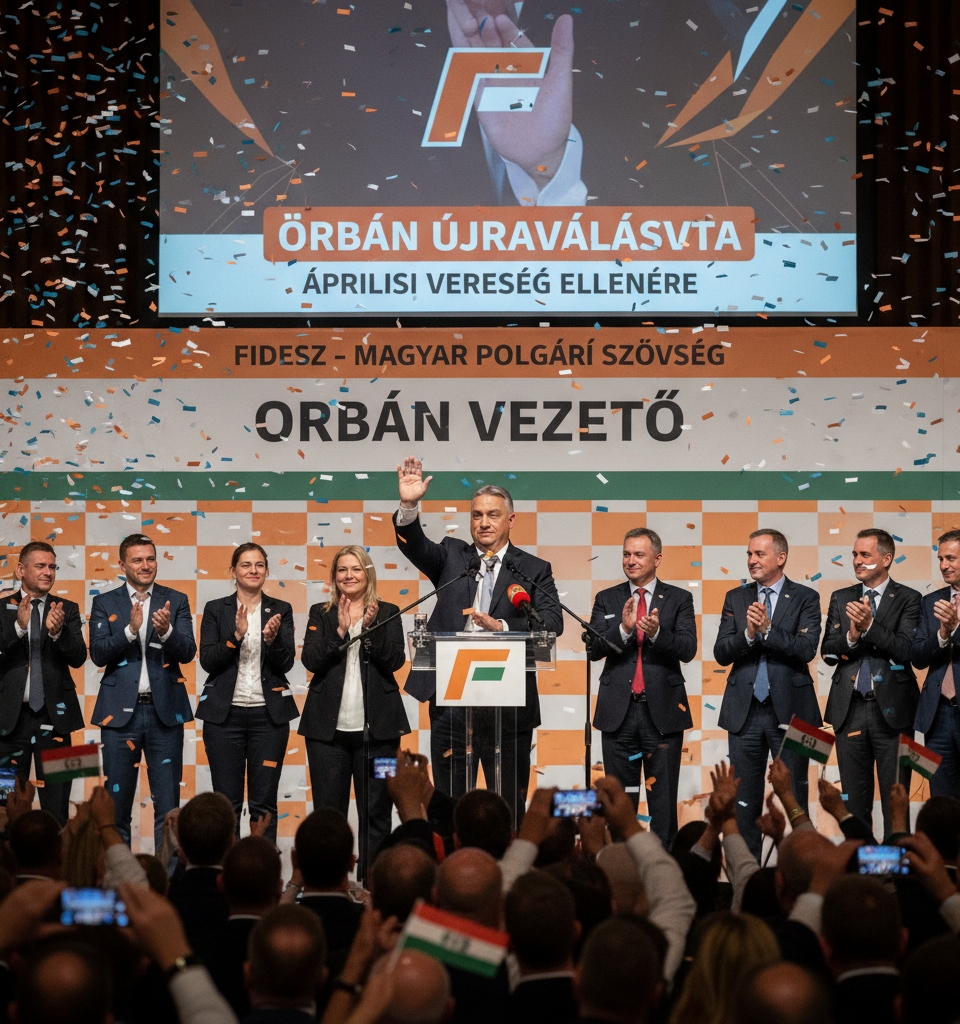
Viktor Orban has secured his leadership of Hungary's Fidesz party, having been re-elected to the top post without facing any opposition. The re-election comes in the wake of the pro-Russian Fidesz party's defeat in the April general election, an outcome for which Orban has publicly stated he bears full responsibility. This internal party reaffirmation of leadership, despite a recent electoral setback, signals a continued direction for the party under his long-standing influence.
Context and Background
Orban's re-election as party leader is significant, especially considering the political climate following the April general election. Fidesz, under Orban's guidance, has been a dominant force in Hungarian politics for over a decade, characterized by a conservative platform and often a critical stance towards European Union policies. The recent electoral loss marked a rare moment of vulnerability for the party, making Orban's unchallenged return to the leadership position a crucial development for understanding Fidesz's internal dynamics and future trajectory. His pro-Russian alignment has also been a focal point of international scrutiny, particularly in the context of broader geopolitical tensions.
Key Details
The re-election process saw Orban as the sole candidate for the party leadership, indicating a strong internal consensus or, perhaps, a lack of viable challengers within Fidesz. His statement acknowledging full responsibility for the April defeat is a notable public admission, potentially aimed at unifying the party and establishing a clear path forward during a period of introspection. The lack of opposition in the leadership contest suggests that, despite the recent electoral outcome, Orban retains a firm grip on the party's direction and support base.
Industry/Market Impact
While the re-election is an internal party matter, the stability of Fidesz's leadership under Orban has broader implications for Hungary's economic and political landscape. Orban's continued tenure suggests that the party's established policies and diplomatic approach, including its relationship with Russia, are likely to continue. This consistency could offer a degree of predictability to international investors and financial markets that closely watch political developments in Central and Eastern Europe. However, it also means that the criticisms and concerns following the April election defeat may not lead to significant shifts in the party’s core strategies in the immediate future.
What's Next
Looking ahead, Orban's re-election positions him to lead Fidesz through its period as an opposition party, if the April election results led to a change in government, or to consolidate power further if they remain in government in a different capacity, which is not stated explicitly in the source. His declared responsibility for the recent loss suggests a potential strategy to regroup and reassess ahead of future electoral challenges. The focus will likely shift to how Fidesz, under Orban's continued leadership, plans to address the issues that contributed to its defeat and how it will navigate both domestic politics and its stance on international relations in the coming months and years. The party will undoubtedly be strategizing for future elections, with Orban at the helm, to regain lost ground and reinforce its political influence in Hungary.