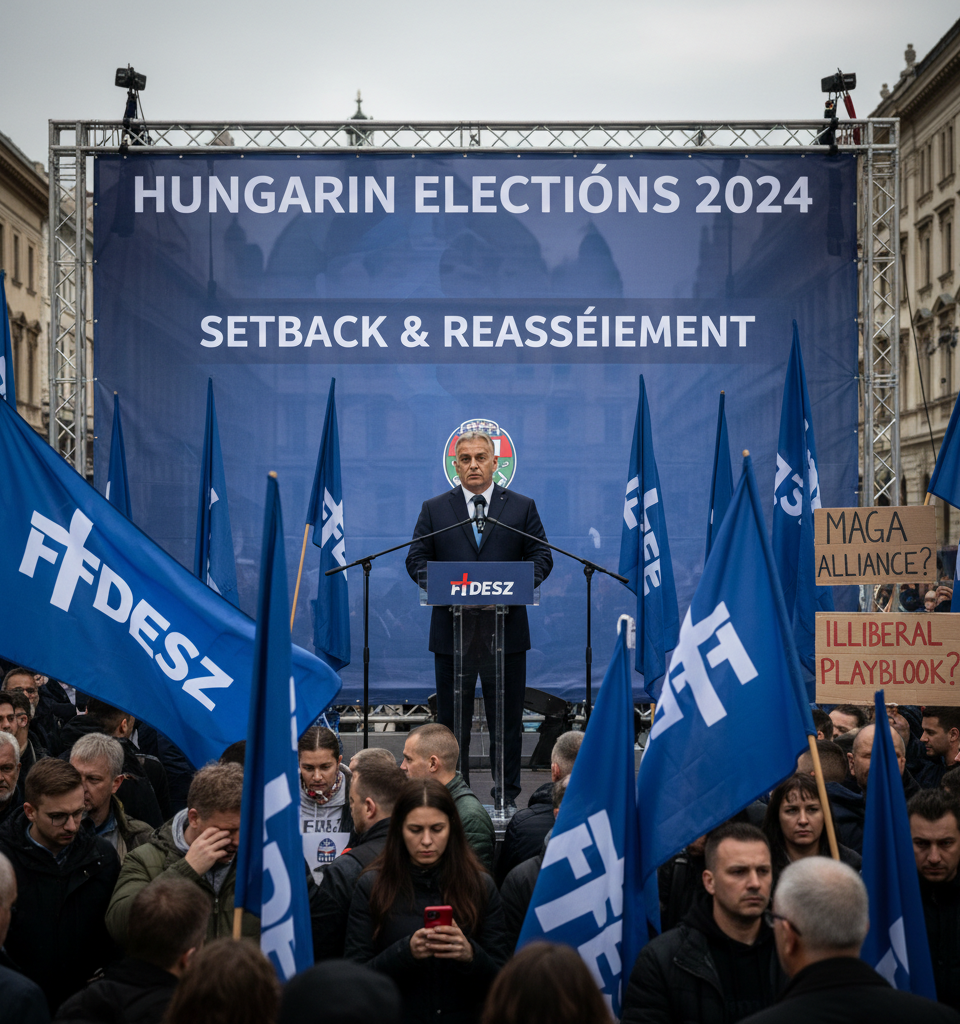
BUDAPEST – The recent electoral setback suffered by long-serving Hungarian Prime Minister Viktor Orbán has ignited a wave of introspection among a segment of the American conservative movement, particularly those aligned with the 'Make America Great Again' (MAGA) faction. Orbán, who for years cultivated an image as a vanguard of nativist conservatism and 'illiberal democracy,' saw his Fidesz party experience a significant dip in support during Hungary's local and European parliamentary elections. This unexpected shift has raised questions about the universal appeal and a long-term sustainability of the very authoritarian-leaning populist playbook that some US conservatives had eagerly embraced and sought to replicate.
The MAGA-Orban Connection: A Symbiotic Relationship Under Scrutiny
For nearly a decade, Orbán has been a celebrated figure within certain American right-wing circles. His staunch anti-immigration stance, cultural conservatism, and open defiance of what he terms 'globalist' forces resonated deeply with figures such as former President Donald Trump and prominent media personalities. Orbán was a keynote speaker at the Conservative Political Action Conference (CPAC) in 2022 and 2023, hailed as a model for strong leadership and national sovereignty. This intellectual and political exchange saw American conservatives drawing inspiration from Orbán's policies on family values, border control, and media regulation, viewing Hungary as a testing ground for a new brand of national conservative governance that prioritizes cultural identity over liberal pluralism. The recent electoral results, however, suggest that this model might be more fragile than its proponents had believed, potentially undermining the narrative of an unstoppable global conservative ascendancy.
Election Results Signal Shifting Tides
While Fidesz remained the largest party, its performance in the June 2024 elections was notably weaker than in previous cycles. Preliminary results indicate Fidesz secured roughly 44% of the vote in the European parliamentary elections, down from nearly 53% in 2019. More significantly, in the municipal elections, Fidesz lost control of several key cities and districts, including substantial erosion of its dominance in Budapest. This decline is largely attributed to the emergence of Péter Magyar’s Tisza Party, a new centrist opposition force that managed to capture approximately 30% of the European parliamentary vote, rapidly consolidating anti-Orbán sentiment. This fragmentation of the right-wing vote and the rise of a credible, charismatic opposition figure represent a novel challenge to Orbán's previously unchallenged hegemony.
Broader Implications for Global Populism and US Politics
Orbán's diminished standing sends a cautionary signal to other populist leaders and movements worldwide. His success had been a touchstone for those advocating for a robust, centralized, and culturally conservative state, often at odds with traditional liberal democratic norms. For the American right, particularly the MAGA movement, this outcome forces a reevaluation of the practicalities and electoral limits of an 'illiberal' approach. It suggests that even deeply entrenched populist leaders are susceptible to shifts in public opinion, economic pressures, or the emergence of compelling new political alternatives. The narrative of an inevitable global march towards national conservatism may now face increased skepticism, potentially impacting messaging and strategy in upcoming US election cycles.
Expert Insights on the Hungarian Political Landscape
Political analysts are quick to point out that while a full repudiation of Orbán's ideology is premature, the results indicate a significant weakening of his political capital. Dr. Katalin Halasz, a professor of political science at Corvinus University of Budapest, noted, "The rise of Tisza demonstrates that economic grievances and a desire for less corruption can cut across established political divides, even in a highly polarized environment. Orbán's critics finally found a viable alternative capable of mobilizing disaffected voters, particularly younger demographics who feel disenfranchised by establishment politics." Others suggest that public fatigue with Orbán's dominant, often confrontational style, coupled with a stagnant economy and high inflation rates, contributed significantly to the Fidesz setback.
Looking Ahead: Orbán's Future and the Conservative Blueprint
The immediate future for Orbán will involve navigating a more fragmented political landscape, both domestically and within the European Union. While his hold on power is not immediately threatened due to the Fidesz party's continued plurality, this election could mark the beginning of a more turbulent period for Hungary and for Orbán's long-term legacy. For American conservatives who championed his model, the outcome prompts a critical reassessment: Is the appeal of 'illiberal democracy' truly transferable and sustainable, or does it ultimately face inherent limitations and electoral vulnerabilities? The unfolding events in Hungary will undoubtedly be closely watched as a bellwether for the broader trajectory of populist movements globally, and for the strategic calculations of the American conservative movement as it approaches future electoral contests.