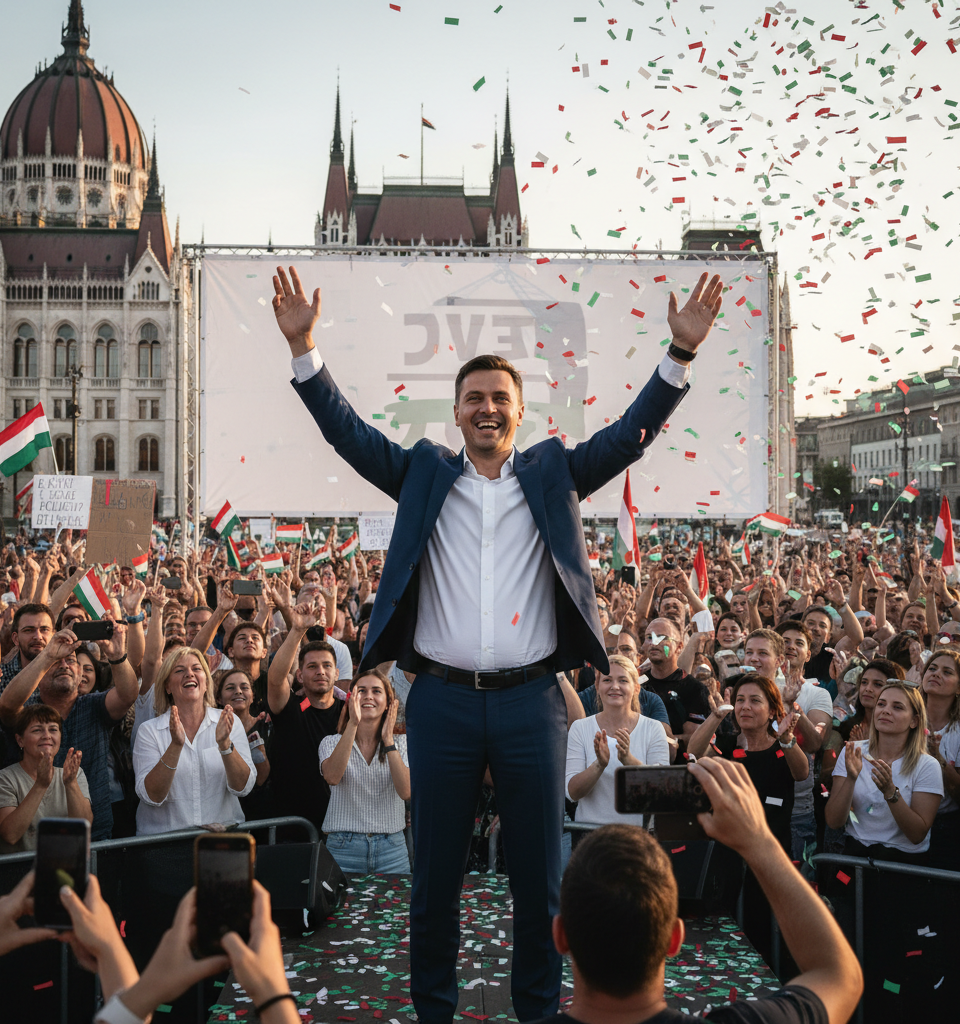
Budapest, Hungary – In a political upset that has stunned observers both domestically and internationally, Prime Minister Viktor Orbán, a figure synonymous with right-wing populism and illiberal democracy, has been defeated in Hungary’s general election by former Fidesz insider Péter Magyar. The victory marks a pivotal moment for Hungary, concluding Orbán’s uninterrupted 14-year tenure and challenging the established political order that has deeply polarized the nation and Europe. Magyar, a former diplomat and ex-husband of former Justice Minister Judit Varga, capitalized on a groundswell of public dissatisfaction, effectively consolidating opposition sentiment against the Fidesz-led government.
Contextualizing a Populist Paradigm Shift
Orbán's rise to power in 2010, following an earlier stint from 1998-2002, was characterized by a systematic dismantling of democratic institutions, a fervent anti-immigration stance, and frequent clashes with the European Union over rule of law and human rights. His 'illiberal democracy' model served as an inspiration for populist movements globally, from Donald Trump in the United States to nationalist leaders across Europe. His long-standing Fidesz party dominated Hungarian politics, often winning supermajorities that allowed constitutional amendments. However, persistent concerns over corruption, the erosion of media freedom, and a lagging economy began to erode his once unshakeable support base, particularly among younger, urban voters and those weary of state capture. The recent elections saw a turnout estimated at 71%, significantly higher than the 63.5% in 2022, indicating a galvanized electorate.
The Rise of a Maverick: Key Details of Magyar's Campaign
Péter Magyar’s meteoric ascent from a disgruntled party insider to a viable political force began just months ago. His campaign gained rapid traction by directly challenging the pervasive corruption within Fidesz and advocating for a more transparent and democratic governance. His speeches, often delivered to massive crowds in Budapest and smaller towns, resonated with a populace tired of the status quo. Preliminary results indicate Magyar’s Tisza Party secured approximately 45% of the popular vote, narrowly surpassing Fidesz, which garnered around 42%. This close margin underscores the deep divisions within the country but also highlights Magyar's ability to unite disparate segments of the electorate. Magyar’s platform focused on strengthening democratic institutions, tackling inflation, and re-establishing trust with the European Union, a stark contrast to Orbán’s confrontational approach.
Regional and Global Implications
Orbán’s defeat sends shockwaves far beyond Hungary's borders. For the European Union, it potentially signals a shift away from obstructionist policies that have often fractured consensus on critical issues like sanctions against Russia, migration, and rule of law enforcement. Orbán had cultivated strong ties with Eurosceptic leaders and parties, and his removal could strengthen the liberal-democratic faction within the EU, potentially influencing future policy directions and reinforcing the bloc's core values. Regionally, it could embolden opposition movements in neighboring countries struggling with similar populist trends, while for global populist movements, it serves as a stark reminder of the potential for public opinion to turn rapidly.
Expert Analysis: A Turn of the Tide?
Political analysts are describing Magyar's victory as a watershed moment. Dr. Katalin Novák, a Central European politics expert at the European University Institute, commented, “This is not just an election result; it’s a powerful repudiation of illiberalism in the heart of Europe. Magyar successfully tapped into a deep well of frustration over corruption and authoritarian tendencies, proving that even entrenched populists are not invincible.” Others point to the demographic shift and the economic anxieties, with Hungary experiencing an inflation rate of 7.9% in 2023, as key factors in Orbán's decline. The Fidesz government's perceived lack of effective response to rising living costs alienated a significant portion of its traditional rural base.
What Lies Ahead: Challenges for the New Administration
Péter Magyar now faces the daunting task of forming a government and navigating Hungary through a complex political and economic landscape. His immediate priorities will include addressing the high cost of living, reforming the judiciary, and repairing strained relationships with the European Union. Reversing 14 years of Fidesz-implemented policies and restoring democratic checks and balances will require significant effort and political deftness. Investors will be closely watching for his administration's economic policies, particularly regarding foreign investment and EU funding, which had been partially frozen due to rule-of-law concerns. The path ahead is fraught with challenges, yet the mood in Budapest is one of cautious optimism for a more transparent and internationally cooperative Hungary.
The Future of Hungarian Democracy
Magyar's victory has injected a renewed sense of hope into Hungarian civil society and opposition movements. However, consolidating power and implementing significant reforms will require building broad political consensus, a task made more challenging by the ingrained Fidesz loyalties within state institutions. The next 12-18 months will be critical in determining whether Magyar can truly dismantle the vestiges of Orbán’s system and steer Hungary towards a more liberal, democratic future, or whether his victory is merely a temporary reprieve in the country's turbulent political journey. The world watches as Hungary embarks on this new, uncertain path.
Economic Outlook Under Magyar
Economists anticipate a period of adjustment. Dr. Zoltán Kovács, Senior Analyst at Budapest Economic Think Tank, noted, "Magyar's focus on transparency and anti-corruption, if effectively implemented, could unlock significant EU funds previously withheld, potentially boosting Hungary's GDP by 1-1.5% over the next two years. However, his administration will need to carefully manage market expectations and implement credible fiscal reforms to reassure international investors." The forint, Hungary’s currency, saw an initial surge of 2.5% against the Euro immediately following the election results, signaling market confidence in the incoming leadership.