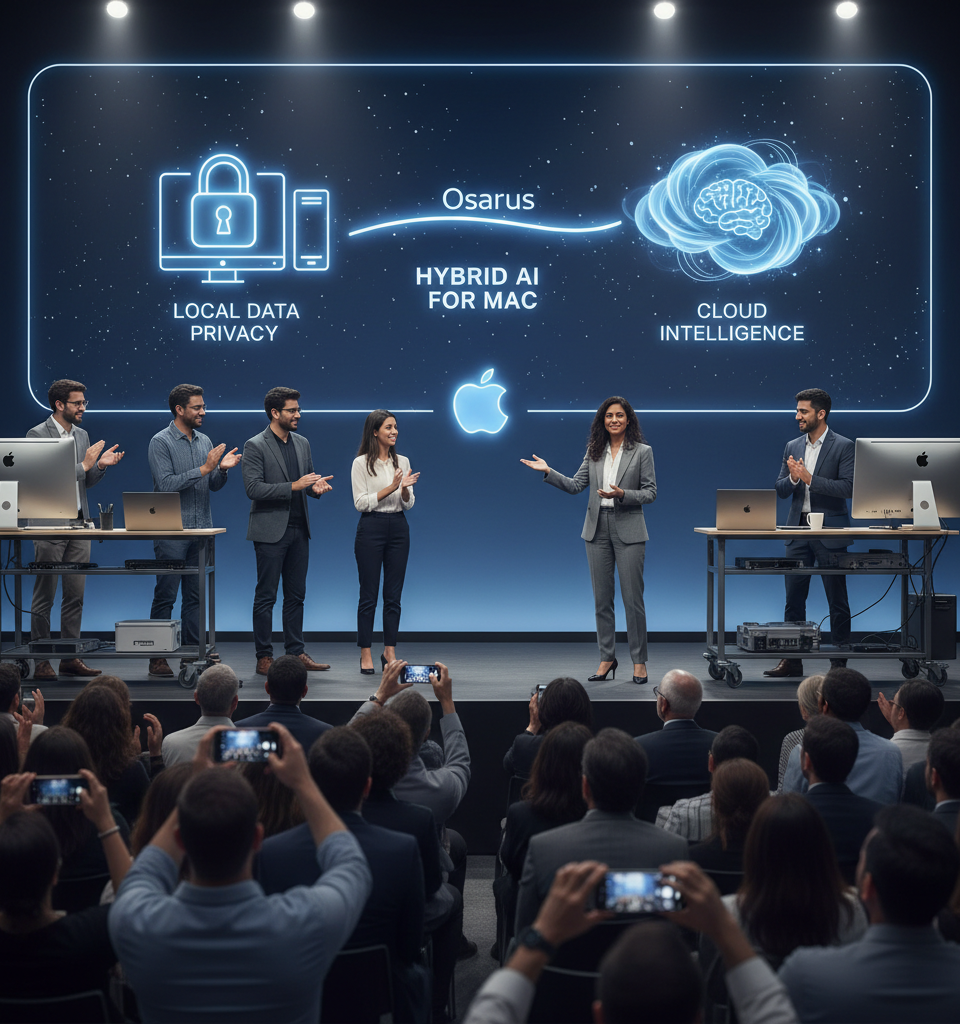
In a significant development for personal computing and artificial intelligence, Osaurus has introduced a new Mac application designed to unify the strengths of both local and cloud AI models. The platform aims to address growing concerns over data privacy and security by enabling users to process sensitive information, files, and personal tools directly on their own hardware, while still tapping into the advanced capabilities of cloud-based AI. This strategic dual-architecture approach marks a critical evolution in how individuals interact with burgeoning AI technologies, offering a hybrid solution that prioritizes user control and data sovereignty.
The Evolving Landscape of Personal AI
For years, the promise of personal AI has been tempered by the inherent trade-offs between computational power, accessibility, and data security. Cloud-based AI offers immense processing capabilities and access to vast datasets, but often requires user data to be transferred and stored on remote servers, raising privacy concerns. Conversely, local AI models, while secure by keeping data on-device, have historically been limited by the processing power of consumer hardware. Osaurus’s new offering enters this landscape at a crucial juncture, as consumer demand for both advanced AI functionalities and robust data protection reaches an all-time high. This innovation could set a new standard for how AI is deployed in personal and professional environments, particularly for users with strict privacy requirements.
Core Functionality and User Experience
At its core, the Osaurus Mac application intelligently routes tasks to either local or cloud AI models based on the nature of the data and the complexity of the processing required. For tasks involving personal files, proprietary documents, or sensitive memory, the application prioritizes local processing, ensuring that data never leaves the user’s device. For more computationally intensive tasks, such as complex language model queries or image generation that benefit from vast training data, the application can securely leverage cloud AI resources. This hybrid model is managed through an intuitive user interface, designed to make the distinction transparent and user-friendly, abstracting the underlying technical complexities. Users retain full control over which data goes where, empowering them to make informed decisions about their digital footprint.
Impact on the Data Privacy Debate
The launch of Osaurus’s hybrid AI solution is poised to have a substantial impact on the ongoing debate surrounding data privacy in the age of artificial intelligence. As regulatory bodies worldwide, from the European Union with GDPR to various state-level initiatives in the U.S., tighten data protection laws, businesses and individuals are actively seeking trustworthy solutions. Osaurus addresses a key pain point by allowing users to benefit from cutting-edge AI without compromising their data's integrity or privacy. This could accelerate the adoption of AI in sectors with stringent compliance requirements, such as legal, healthcare, and finance, where data residency and control are paramount.
Expert Perspectives on Hybrid AI
Industry analysts and AI experts are largely optimistic about the potential of hybrid AI models. Dr. Anya Sharma, a leading AI ethicist, commented, "Solutions like Osaurus are vital for democratizing advanced AI while upholding fundamental rights to privacy. This approach provides a practical framework for the responsible deployment of AI, moving beyond the binary choice of either full cloud or full local processing." Analysts at Tech Insights Global project that the hybrid AI market, encompassing both hardware and software, could grow by an annual average of 25% over the next five years, driven by increasing computational demands and stricter data governance. The ability to seamlessly switch between local and remote processing offers a strategic advantage for both developers and end-users.
Future Implications and Market Trends
Looking ahead, Osaurus's innovation signals a broader trend towards more distributed and user-centric AI architectures. The company plans to expand its integration capabilities, allowing for even more diverse local and cloud AI models to be utilized, offering users greater flexibility and choice. Furthermore, the success of such hybrid models could spur hardware manufacturers to design devices specifically optimized for local AI processing, potentially leading to more powerful and efficient personal AI experiences. As AI continues to become an indispensable tool in daily life, solutions that balance performance, privacy, and user control, like that offered by Osaurus, will likely define the next generation of AI-powered applications. The current trajectory suggests a future where AI is not just intelligent but also inherently respectful of user data and autonomy.