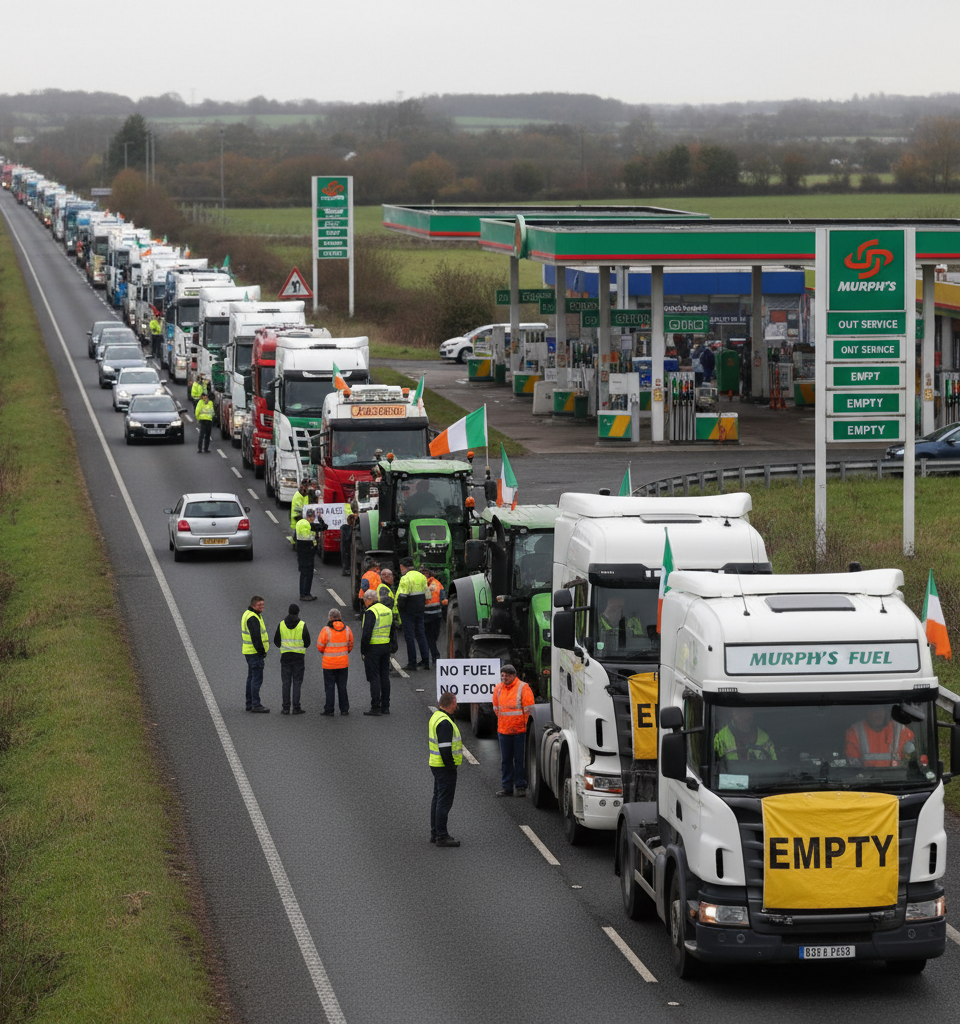
Ireland is currently facing a dire and rapidly escalating fuel crisis, with reports indicating that more than a third of its nationwide fuel stations are now empty. This critical shortage is unfolding amidst persistent and widespread protests by truck and tractor drivers, who have maintained blockades at the country's sole fuel refinery and several key fuel depots for five consecutive days. The confluence of these events is pushing Ireland towards a significant disruption in its transportation and economic sectors.
The ongoing demonstrations, primarily driven by truck and tractor operators, underscore a deep-seated discontent within the haulage and agricultural communities. Their sustained blockades at strategic national fuel points – including the nation's only refinery and crucial distribution depots – have severely constricted the supply chain, directly contributing to the emptying of fuel pumps across the island. The protests highlight broader grievances that, while not explicitly detailed in current reports, are sufficiently impactful to trigger such widespread industrial action.
Nationwide Disruptions and Economic Fallout
The impact of these protests and the subsequent fuel shortages is beginning to reverberate across various sectors of the Irish economy. Businesses reliant on transportation for logistics, delivery, and services are encountering significant operational hurdles. From commercial freight and public transport to agricultural operations and private vehicle users, the scarcity of fuel is creating a bottleneck that threatens to impede daily life and commerce. The one-third of empty fuel stations figure represents a substantial portion of the national infrastructure, indicating a systemic challenge rather than isolated incidents.
This situation is particularly acute given that Ireland possesses only one fuel refinery, making it highly vulnerable to disruptions at this single point of failure. The continued blockades at this vital facility, coupled with similar actions at multiple depots, demonstrate a sophisticated and targeted strategy by the protesting groups to maximize their leverage. The fifth day of blockades signals a hardening of resolve among the demonstrators, with no immediate signs of de-escalation.
Supply Chain Under Strain
The prolonged nature of the blockades is placing unprecedented strain on Ireland's just-in-time supply chains. Essential goods, perishable items, and critical components for industries could face delays or outright interruptions. The ripple effects of a disrupted logistics network extend far beyond the immediate inconvenience of empty fuel tanks, potentially leading to increased costs for consumers, reduced productivity for businesses, and broader economic instability if not addressed promptly. The government and industry stakeholders are undoubtedly monitoring this situation closely, though specific responses or negotiations have not yet been publicly detailed.
Looking ahead, the immediate priority will be to resolve the stand-off with the protesting drivers to allow for the resumption of fuel distribution. The longer these blockades persist, the more entrenched the crisis will become, with potential long-term consequences for Ireland's economic recovery and energy security. The coming days will be critical in determining the trajectory of this evolving situation, with national attention focused on how authorities and industry leaders navigate this challenging environment to restore stability to the nation's fuel supply. The full extent of broader implications will depend directly on the duration and resolution of the current industrial action. If the protests continue, the economic ramifications could deepen, potentially affecting employment and investment in logistics-dependent sectors.