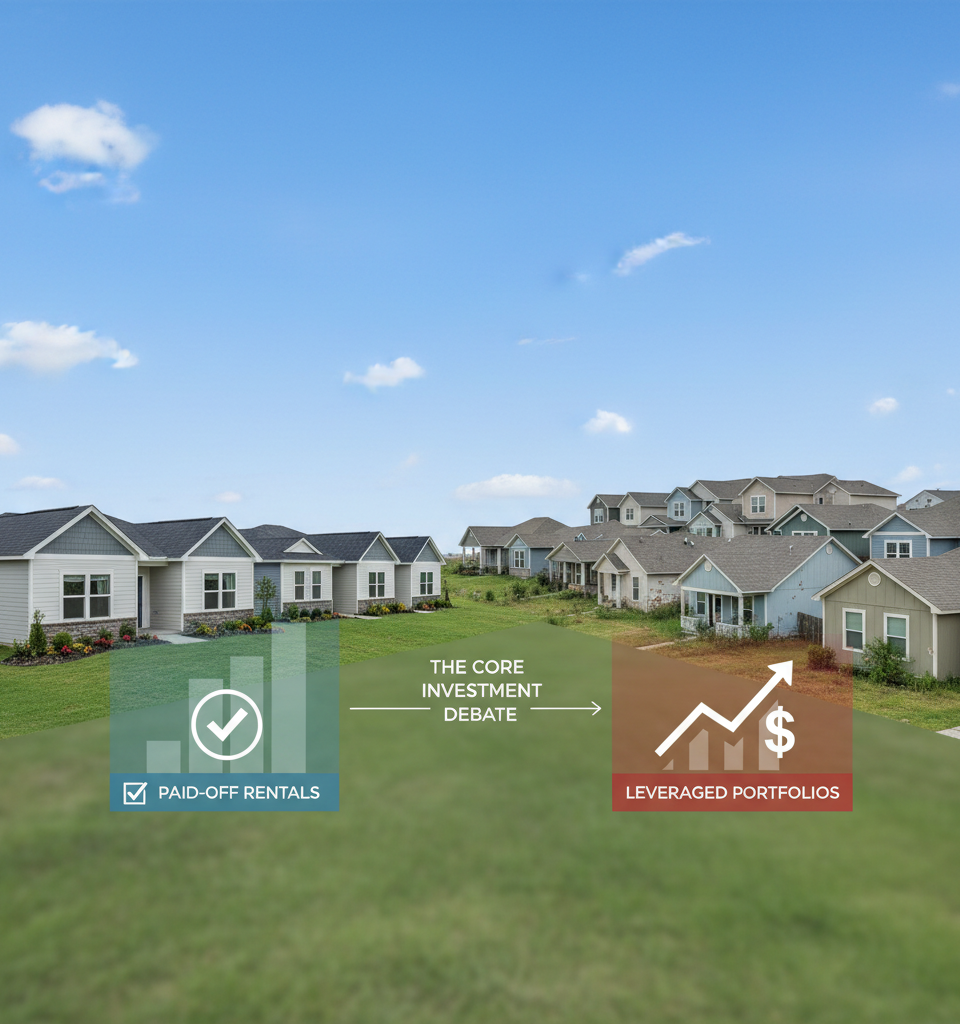
The strategic choice between owning a smaller portfolio of fully paid-off rental properties versus a larger, mortgaged portfolio has emerged as a central dilemma for real estate investors. This critical decision point, frequently debated within investment circles, directly impacts cash flow, risk exposure, and scalability, fundamentally altering how investors approach wealth generation in the current economic climate.
Historical Context and Market Dynamics
Historically, the allure of debt-free assets offered a strong sense of security and consistent, unencumbered cash flow. This conservative approach prioritized stability and minimized financial obligations. However, over the past decade, especially during periods of low interest rates and robust property appreciation, the argument for leveraging debt to acquire more assets gained significant traction. Proponents emphasized the power of equity multipliers and the ability to scale portfolios rapidly, thereby maximizing potential returns through a greater number of income-generating units. The current market, characterized by fluctuating interest rates and varied property appreciation, has reignited this foundational debate.
The Core Financial Divergence
The mathematical divergence between the two strategies is stark. Consider an investor with the capital to purchase or pay off five rental properties outright, each valued at $200,000, generating $1,500 in gross monthly rent. This yields $7,500 in gross rental income with minimal operating costs beyond maintenance, taxes, and insurance. The investor enjoys significant cash flow and reduced financial risk.
Conversely, an investor utilizing conservative leverage (e.g., 25% down payments) could acquire 15 properties with the same initial capital. Each property, valued at $200,000, might generate similar gross rent. However, after mortgage payments (principal, interest, taxes, and insurance), monthly cash flow per property might be significantly reduced, perhaps to $300-$500. While the per-property cash flow is less, the aggregate cash flow from 15 properties could still be higher (e.g., 15 x $400 = $6,000) than the paid-off strategy, crucially, with a much larger asset base and potential for greater equity appreciation across the broader portfolio. This strategy amplifies both potential gains and inherent risks.
Industry and Market Impact
This investment philosophy impacts various facets of the real estate market. The preference for leveraged portfolios often fuels demand, potentially contributing to price appreciation in certain segments. It also drives innovation in real estate financing, with a strong market for investor loans and refinancing products. Lenders, in turn, adjust their offerings based on prevailing sentiment towards leverage. Conversely, a shift towards debt-free holdings could see a slowdown in new acquisitions for some investors, focusing instead on optimizing existing portfolios and reducing liabilities, potentially cooling market activity.
Expert Perspectives on Risk and Reward
Financial analysts and seasoned real estate experts offer varied counsel. Dr. Eleanor Vance, a prominent real estate economist, recently stated, "While the allure of leverage is undeniable for accelerating portfolio growth, the importance of stress-testing cash flow against interest rate hikes and vacancy fluctuations cannot be overstated." She emphasized that excessive leverage can quickly turn favorable returns into financial distress during market downturns.
Conversely, Mr. David Chen, a veteran multi-family investor, highlighted the power of inflation in eroding the real value of debt over time. "With a strategically leveraged portfolio, inflation effectively reduces your real mortgage burden, while your asset values typically appreciate alongside rental income," Chen explained. He advocates for moderate leverage, emphasizing diligent tenant selection and robust property management to mitigate risks.
Future Implications and Evolving Strategies
The future trajectory of this debate will largely be shaped by economic indicators such as interest rates, inflation, and rental market stability. Should interest rates remain elevated or continue to rise, the appeal of fully paid-off properties with predictable, high-yield cash flow may increase significantly. Conversely, a return to a lower interest rate environment could re-energize the leveraged growth model. Investors are increasingly exploring hybrid strategies, such as paying down a portion of their mortgages while still pursuing calculated expansion, or utilizing portfolio-level debt optimization to balance risk and return. The ongoing discussion underscores the need for investors to conduct thorough due diligence and adapt their strategies to a dynamic economic landscape, ensuring alignment with their individual risk tolerance and long-term financial objectives.