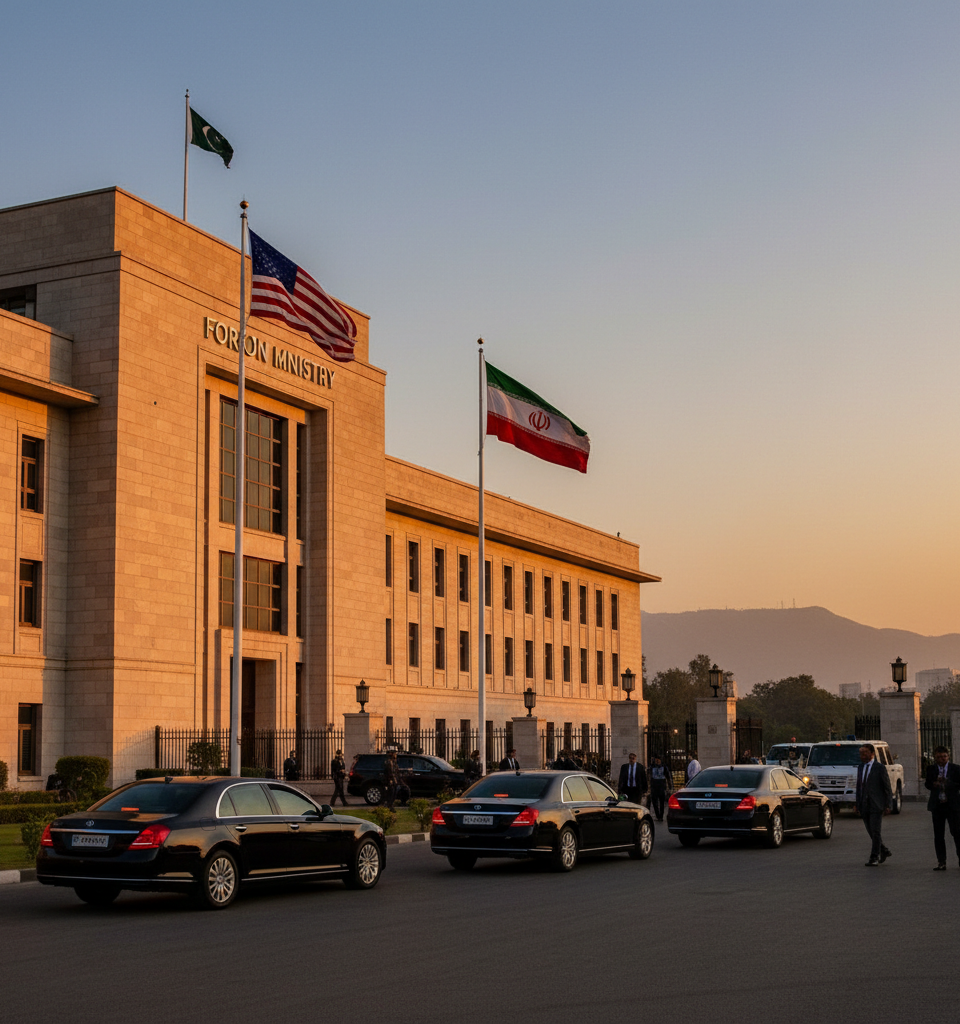
Islamabad, Pakistan – In a move that underscores its increasingly complex geopolitical positioning, Pakistan is preparing to host the first formal, direct talks between the United States and Iran since the recent onset of conflict. This pivotal diplomatic undertaking places Pakistan, a nation besieged by a stalled economy, a persistent terrorism threat, and two hostile borders, at the forefront of efforts to de-escalate tensions between two of the world's most intractable adversaries. The dialogue, anticipated in the coming weeks, represents a significant gamble for Islamabad, which aims to leverage its unique strategic standing to foster a pathway towards regional stability.
A Nation Under Duress: The Imperative for Peace
Pakistan's decision to facilitate these high-stakes negotiations is born out of a stark necessity. The country's economic woes are acute, with a burgeoning national debt exceeding US$130 billion and an inflation rate hovering above 25%. Such economic frailties are exacerbated by ongoing threats from militant groups, particularly the Tehrik-i-Taliban Pakistan (TTP), which has escalated attacks across the country in recent months, claiming over 300 lives in 2023 alone. Furthermore, its relationships with neighboring India and Afghanistan remain tense, adding layers of complexity to its security calculus. By offering a neutral ground for dialogue, Islamabad seeks to temper regional volatility, believing that a de-escalation of the US-Iran conflict is crucial for its own internal stability and economic recovery.
Diplomatic Overtures and Geopolitical Significance
Sources within the Pakistani Foreign Ministry, speaking on condition of anonymity due to the sensitivity of the talks, confirm that preliminary arrangements are underway for representatives from Washington and Tehran to convene in Islamabad. The exact agenda remains fluid, but discussions are expected to encompass maritime security in the Strait of Hormuz, the future of the nuclear deal, and prisoner exchange prospects. Islamabad's historically complex relationships with both the US and Iran position it uniquely as a potential mediator. The US has provided over $30 billion in aid to Pakistan since 9/11, while Iran remains a crucial energy partner, particularly through the stalled Iran-Pakistan (IP) gas pipeline project, which promises much-needed energy supply to Pakistan.
Ramifications for Regional Stability and Global Energy Markets
The ripple effects of these potential talks extend far beyond the immediate participants. A successful de-escalation between the US and Iran could significantly impact global oil prices, which have seen considerable volatility amidst recent tensions, with Brent crude briefly soaring above $90 per barrel. Shipments through the Strait of Hormuz, a vital chokepoint for approximately 21% of global petroleum liquids consumption, would also see reduced risks, benefiting international trade and supply chains. Conversely, a failure to make headway could lead to further escalation, potentially drawing other regional actors into a wider conflict, with devastating economic and human costs.
Expert Insights: A Fragile Path Forward
Dr. Aisha Khan, a geopolitical analyst at the Institute of Strategic Studies Islamabad, notes the delicate balance Pakistan must maintain. "Hosting these talks is a double-edged sword for Pakistan. While it elevates their diplomatic standing, it also exposes them to potential blowback from hardliners in either Washington or Tehran," she states. "However, the alternative – a continuously unstable region – is far more detrimental to Pakistan's long-term interests. This is a calculated risk aimed at securing their own backyard." Other experts highlight the domestic political capital the current Pakistani government could gain by orchestrating a successful diplomatic breakthrough.
The Road Ahead: Navigating Expectations and Obstacles
While the prospect of direct US-Iran talks in Islamabad is a significant development, the path to a meaningful resolution is fraught with challenges. Deep-seated mistrust, fundamental ideological differences, and the shadow of past betrayals loom large over any potential dialogue. The success of these talks will hinge on the willingness of both sides to make genuine concessions and Pakistan's ability to maintain a truly neutral and effective mediating role. Future developments will likely include high-level preparatory meetings, potential public statements from both sides acknowledging the talks, and a close watch on regional power dynamics. The world will be observing closely as Pakistan attempts to broker peace amidst a perfect storm of its own national crises and geopolitical tensions.