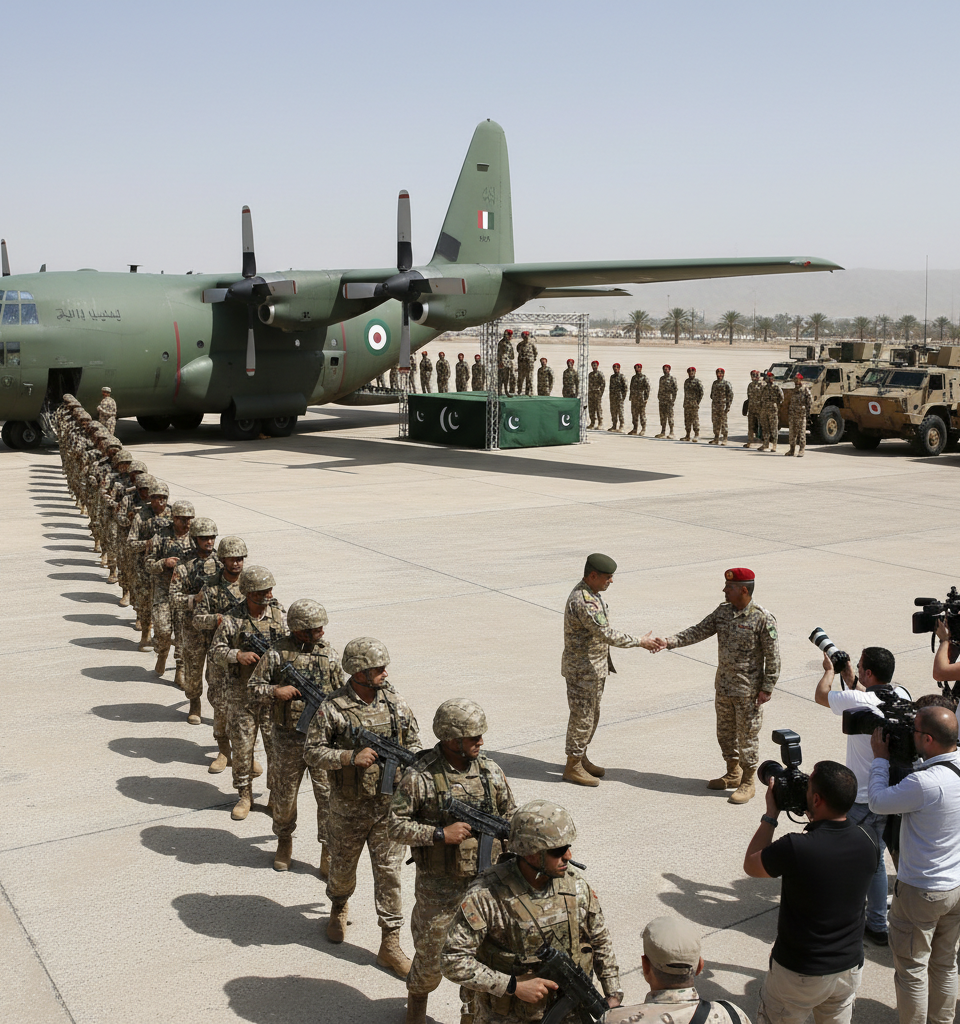
A Pakistani military force, comprising advanced air force fighter jets and essential support aircraft, has been deployed to Saudi Arabia. This significant move underscores the deepening defense ties between Islamabad and Riyadh and is understood to be an integral component of a standing bilateral pact designed to enhance regional security and military interoperability.
Strategic Alliance Solidified
The deployment emerges from a long-standing strategic alliance that has seen both nations engage in joint military exercises and intelligence-sharing initiatives. For Saudi Arabia, the arrival of Pakistani air assets could bolster its air defense capabilities and contribute to regional stability amidst ongoing geopolitical complexities. For Pakistan, the deployment likely represents a commitment to its key Middle Eastern ally and a projection of its military capabilities on the international stage. This mutual cooperation reinforces a security architecture crucial for managing various threats across the wider West Asian and North African (WANA) region.
Details of the Deployment
While the exact number of aircraft and personnel has not been officially disclosed, the presence of both fighter jets and support aircraft suggests a comprehensive deployment intended to facilitate sustained operations. The support aircraft are crucial for logistics, air-to-air refueling, and potentially intelligence, surveillance, and reconnaissance (ISR) missions, ensuring the fighter jets can operate effectively over extended periods. This integrated force structure indicates a well-planned and coordinated effort, moving beyond symbolic gestures to a more operational partnership.
Broader Implications for Regional Security
The arrival of Pakistani military assets could have several implications for the delicate balance of power in the region. It signals a robust commitment from Pakistan to Saudi Arabia's security interests, which may be interpreted by other regional actors as a reinforced alliance. Such deployments often serve as a deterrent against potential aggressors and can contribute to collective security frameworks. Analysts will be closely watching how this development influences regional military dynamics, particularly in light of ongoing conflicts and alliances.
Historical Context of Collaboration
Pakistan and Saudi Arabia have a history of close military collaboration dating back several decades. This has included military training programs, joint exercises, and arms sales. The current deployment can be seen as a natural progression of this relationship, adapting to contemporary security challenges. The depth of this partnership often transcends pure military cooperation, extending into economic and political spheres, making it a cornerstone of both nations' foreign policy strategies. The pact under which this deployment is occurring likely outlines mutual defense obligations and shared security objectives, further cementing their strategic relationship.
Operational Exercises and Training
It is anticipated that the Pakistani contingent will engage in joint exercises with the Royal Saudi Air Force (RSAF), focusing on enhancing interoperability, sharing tactical knowledge, and refining combined operational procedures. Such exercises are invaluable for ensuring that different air forces can work seamlessly together in complex scenarios. These training initiatives often cover a range of drills, from air superiority missions to ground attack simulations and aerial refueling, preparing both forces for potential real-world contingencies. The lessons learned from these joint operations are critical for maintaining a high state of readiness and effectiveness.
Looking Ahead
The deployment is expected to be a sustained arrangement, rather than a temporary measure. This signifies a long-term commitment from both nations to regional defense and security cooperation. The ongoing presence of Pakistani air force assets in Saudi Arabia could lead to further integration of their defense strategies and potentially expand into other areas of military collaboration. Future developments might include technology transfers, joint weapons development, or even more extensive combined force deployments, depending on the evolving geopolitical landscape and shared security imperatives. This move solidifies a critical regional alliance and positions both countries as key players in maintaining security in the Middle East.