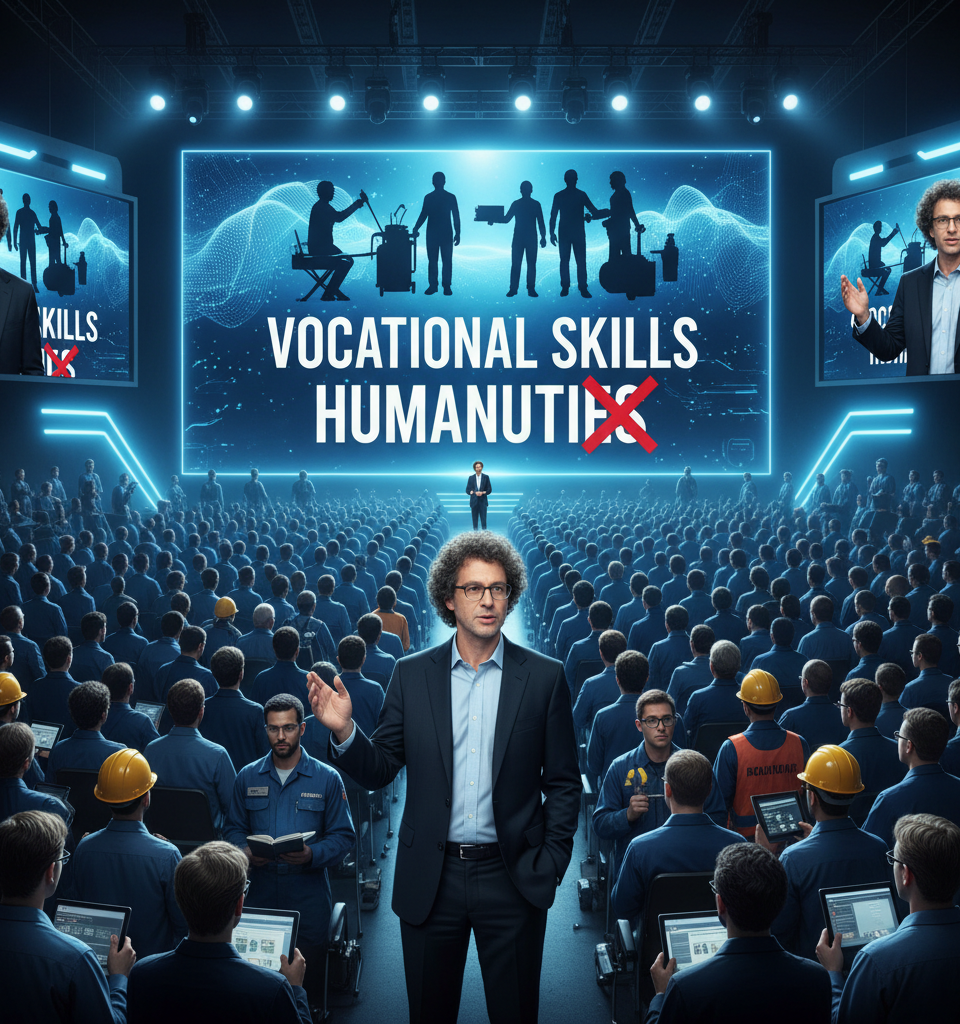
PALO ALTO, CA – [Date] – Alex Karp, the outspoken CEO of the data analytics behemoth Palantir Technologies, delivered a stark prediction this week regarding the future of the global workforce. Karp asserted that the accelerating advancement of artificial intelligence (AI) is poised to decimate jobs traditionally held by individuals with humanities degrees, while simultaneously creating a robust demand for vocally trained professionals. This provocative outlook, shared during a recent industry forum, signals a significant paradigm shift in how corporations like Palantir view the economic landscape of the coming decades.
The Imminent AI Revolution and Job Disruption
Karp's prediction is predicated on the idea that AI's capabilities are rapidly expanding, enabling automation of tasks previously considered exclusive to human intellect. He specifically highlighted that analytical and communicative functions, often associated with humanities fields, are increasingly becoming within the grasp of sophisticated AI algorithms. This isn't merely a theoretical concern; it reflects a tangible shift already being observed in various sectors where AI-powered tools are streamlining processes, from content generation to data analysis. The historical context of technological disruption, from the industrial revolution displacing manual labor to the internet revolutionizing information access, provides a parallel for the scale of transformation Karp anticipates.
Karp's Personal Reflection and Key Insights
Adding a personal dimension to his forecast, Karp recounted his own challenging experience in securing his first job despite holding a Ph.D. in Neo-classical Social Theory from Goethe University Frankfurt. He explicitly stated, "I struggled mightily to market my humanities skills to get my first job," a candid admission that lends weight to his current industry observations. During his address, Karp emphasized, "AI will destroy many, many jobs in the humanities, but there will be more than enough jobs for people with vocational training." He did not provide specific figures on potential job losses but underscored the dramatic divergence in job creation based on skill sets. In contrast to a skills-based approach, studies by the World Economic Forum suggest that around 85 million jobs may be displaced by 2025 due to automation, while 97 million new roles may emerge, many requiring technical and vocational aptitudes.
Implications for Industry and Education
Karp's statements carry significant weight, particularly given Palantir's deep involvement in developing advanced AI and data analytics solutions for governments and large corporations. His perspective suggests a strategic pivot within the tech industry towards prioritizing practical, hands-on skills that AI is less adept at replicating. This has profound implications for educational institutions, urging a re-evaluation of curricula to better prepare students for the emerging job market. Vocational schools, technical colleges, and apprenticeship programs are likely to experience a resurgence in relevance and demand, potentially leading to increased enrollment and funding in these areas, while traditional liberal arts programs may face pressure to adapt their offerings or demonstrate more direct career pathways.
Expert Perspectives and Economic Analysis
While Karp's predictions are bold, they resonate with ongoing discussions among labor economists and futurists. Dr. Anya Sharma, a senior analyst at TechForward Research, commented, "Mr. Karp's observations align with our projections that the demand for human skills will shift from purely cognitive tasks to those requiring complex problem-solving, critical thinking, and hands-on technical proficiency that AI can augment but not fully replace." However, some critics argue that a holistic education, including humanities, fosters creativity and ethical reasoning – qualities essential for guiding AI development responsibly. They suggest that the long-term impact of devaluing these skills could be detrimental to societal innovation and well-being.
The Path Forward: Reskilling and Adaptation
Looking ahead, Karp's pronouncements underscore the urgent need for robust reskilling and upskilling initiatives. Governments, corporations, and educational bodies will be compelled to collaborate on programs that transition workers from roles susceptible to AI automation into vocational fields such as advanced manufacturing, cybersecurity, renewable energy installation, specialized healthcare support, and complex data infrastructure management. Palantir itself, with its focus on large-scale data integration and AI deployment, is well-positioned to contribute to – and benefit from – this societal reorientation towards practical skills. The next five to ten years are expected to be critical in shaping this new labor landscape, with significant investment in vocational training programs and partnerships between academia and industry becoming paramount to navigating this transformative era successfully.
Conclusion: A Call for Strategic Workforce Planning
Karp's candid evaluation serves as a powerful call to action for strategic workforce planning. While the potential disruption to humanities-focused careers is concerning, the projected abundance of vocational roles offers a clear pathway for economic adaptation. The onus is now on policymakers, educators, and individuals to proactively embrace this shift, ensuring that the workforce of tomorrow is equipped with the skills necessary to thrive in an AI-driven economy.