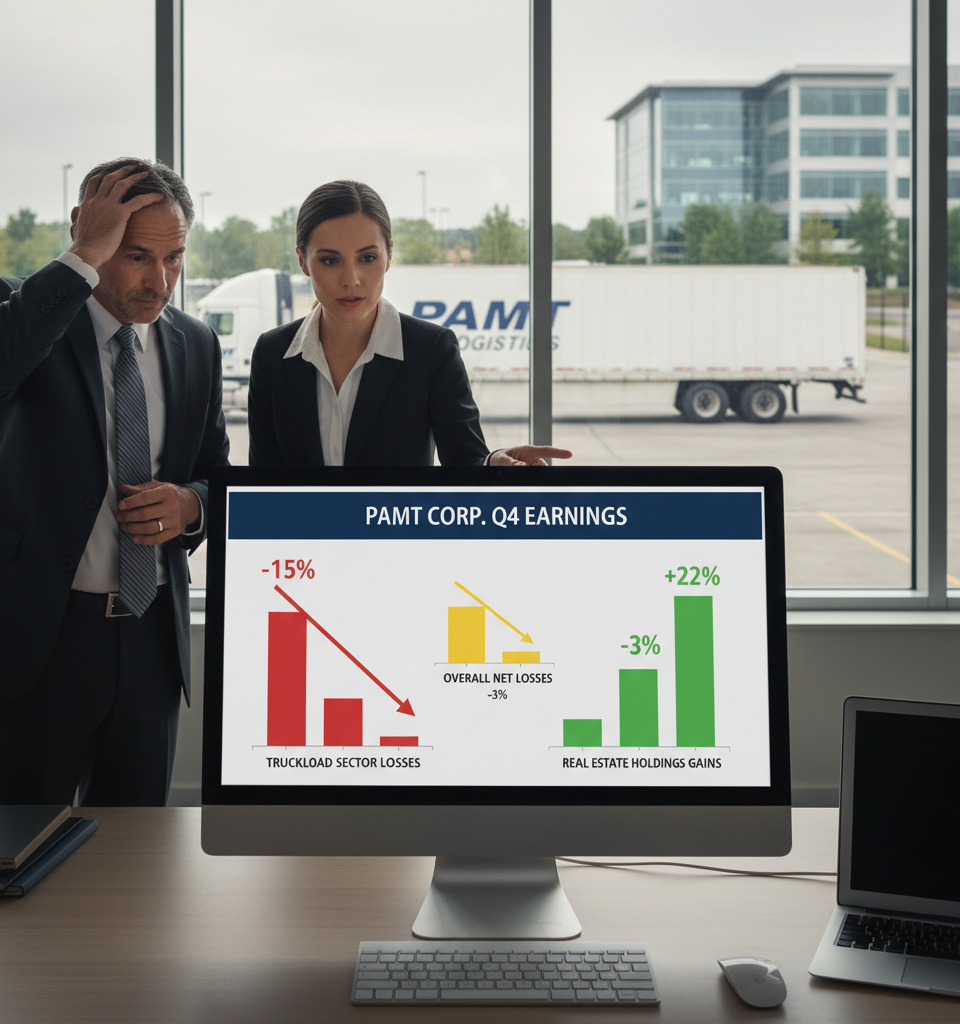
Pamt Corp., a long-standing player in the truckload transportation sector, has once again reported a net loss for the first quarter, underscoring the severe headwinds impacting the industry. The company's financials, released recently, indicated that while the core trucking business continued to bleed red, a substantial gain from the sale of real estate assets proved instrumental in mitigating the overall deficit, preventing an even more severe outcome for the period.
Context and Industry Landscape
This marks a continuation of a challenging period for Pamt Corp. and many of its peers in the truckload segment. The freight market has been characterized by an oversupply of capacity and softer demand for several quarters, leading to intense competition and downward pressure on rates. Companies like Pamt, which rely heavily on volume and efficient route management, are finding it increasingly difficult to turn a profit under these conditions. The reliance on non-core asset sales, such as real estate, points to the depth of the operational challenges currently faced.
Key Financial Details
While specific figures for the net loss in the truckload operation were not immediately disclosed in detail, company statements emphasized the critical role of the real estate gain in preventing a larger consolidated loss. This strategic divestment provided a much-needed influx of capital and positive accounting adjustments. Analysts familiar with Pamt Corp. suggest that without this one-time gain, the company's financial report would have painted a significantly bleaker picture, potentially triggering more aggressive cost-cutting measures or strategic reviews. The company's revenue from its core trucking activities reportedly saw a decline of approximately 8% year-over-year, reflecting the broader market trends.
Broader Market Impact
Pamt Corp.'s situation is emblematic of a wider industry struggle. Numerous publicly traded and privately held trucking companies have reported compressed margins, reduced fleet utilization, and, in some cases, outright losses. The excess capacity built during the pandemic-driven freight boom has yet to fully recede, keeping spot market rates low and even impacting contracted rates upon renewal. This environment forces carriers to scrutinize every operational expense, from fuel efficiency to driver retention, to maintain any semblance of profitability.
Expert Perspectives
"Pamt Corp.'s reliance on real estate gains to offset operational losses is a classic sign of a company struggling in a soft market," commented Sarah Jansen, a senior analyst at Transport Insights Group. "It buys them time, but it doesn't solve the fundamental problem of an unprofitable core business. The focus must shift to aggressive cost management, technology adoption for efficiency, and potentially even fleet right-sizing." Another expert, Mark Thompson of Freight Market Advisors, added, "This indicates that the cycle bottom might still be a quarter or two away for many carriers. Companies with diversified assets are better positioned, but long-term success still hinges on freight market recovery."
Strategic Responses and Future Outlook
Pamt Corp. has indicated that it is actively pursuing several initiatives to improve its operational efficiency and return to profitability. These include optimizing its fleet, enhancing route planning technologies, and renegotiating certain vendor contracts. The company also suggested it would continue to explore opportunities to monetize non-core assets where strategically advantageous. However, the path to sustained recovery largely depends on an eventual rebalancing of supply and demand in the freight market. Industry forecasts suggest a gradual improvement in demand later in the year, but a significant rebound in rates is not expected until the next fiscal year. Pamt Corp. will need to navigate this prolonged downturn carefully, leveraging all available resources while meticulously managing its primary operations to emerge stronger.
The coming quarters will be critical for Pamt Corp. as it endeavors to demonstrate the effectiveness of its strategic adjustments. Investors and industry observers will be closely watching for signs of improved operational performance and reduced reliance on one-time gains to stabilize its financial health.