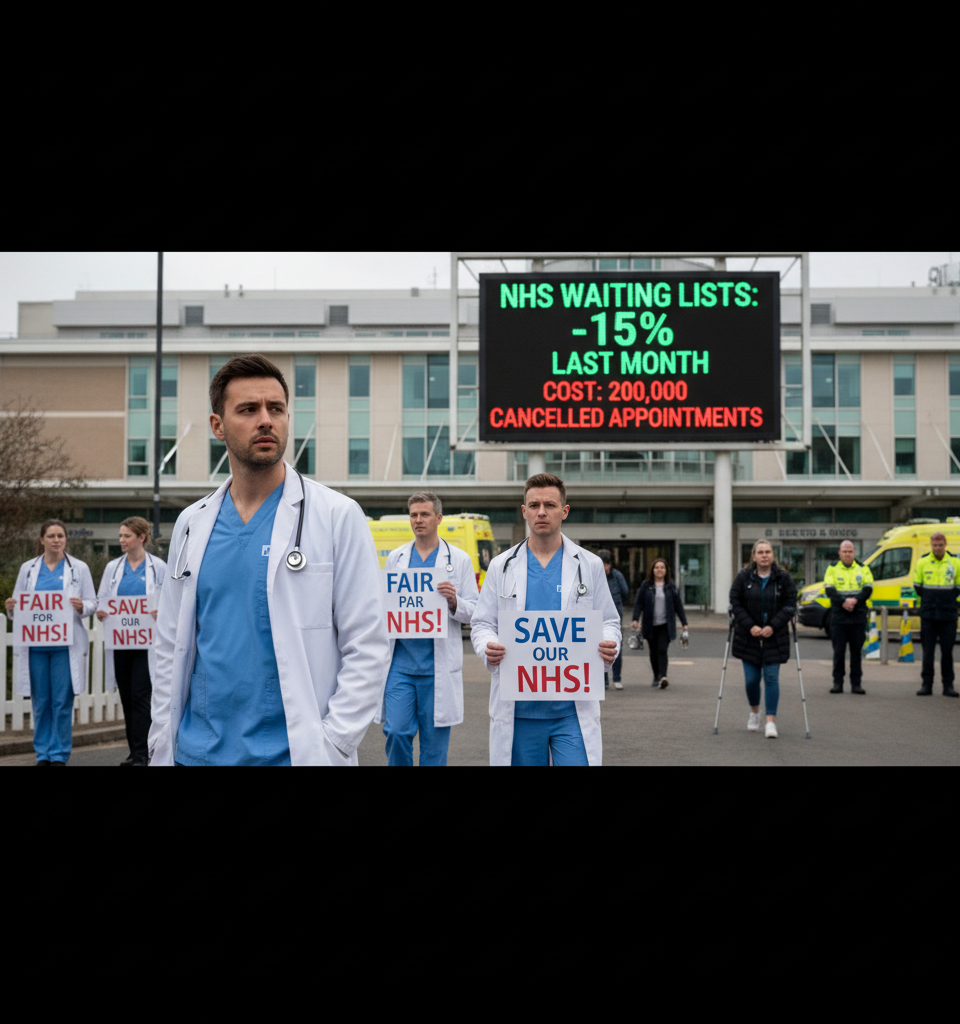
London, UK – In a surprising turn of events, industrial action by doctors across the National Health Service (NHS) has, in certain instances, inadvertently led to a temporary but noticeable reduction in patient waiting lists and an acceleration of clinical decision-making. This counterintuitive outcome, highlighted by several hospital trusts in interviews with the BBC, poses a complex dilemma for healthcare policymakers: achieving greater efficiency during periods of disruption but at a considerable financial and human resource cost. The phenomenon has sparked debate within the sector, prompting a closer examination of how hospitals adapt their operations during periods of intense pressure.
The Unforeseen Ripple Effect of Industrial Action
The current wave of doctor strikes, primarily involving junior doctors and consultants, represents a significant escalation in a long-running dispute over pay and working conditions. Far from overwhelming service delivery entirely, some trusts have reported quieter corridors, faster patient throughput in emergency departments, and even a reduction in routine procedure backlogs in the immediate aftermath of strike days. This unexpected effect is largely attributed to a radical streamlining of operations, the cancellation of non-urgent appointments, and a reallocation of senior medical staff to critical areas, forcing swifter, more decisive clinical judgments. The background to these strikes dates back to significant real-terms pay cuts over the last decade, with junior doctors, for example, demanding a 35% pay restoration to compensate for 15 years of erosion in their earnings.
Streamlined Operations and Surprising Statistics
Specific examples cited by NHS managers to the BBC include a trust in the South East noting a 10% decrease in a specific elective surgery waiting list in the weeks following a strike. Another in the Midlands reported a notable drop in the average length of stay for certain conditions due to intensified consultant-led care. During strike periods, hospitals typically consolidate services, focusing solely on emergency care and life-saving procedures. This often means consultant-led teams, usually supervising junior doctors, are directly involved in patient care at a more granular level. The downside, however, is the massive cost associated with cancelling tens of thousands of appointments. NHS England data reveals that over 1.2 million routine appointments and procedures have been cancelled or rescheduled due to industrial action since December 2022, incurring an estimated cost well into the hundreds of millions of pounds through compensation claims, rebooking expenses, and loss of productivity.
Broader Implications for Healthcare Delivery
The paradoxical efficiency observed during strikes raises profound questions about the NHS's operating model during normal periods. Critics argue that the system is often burdened by bureaucratic inefficiencies, excessive layers of management, and a culture that may inadvertently encourage slower decision-making. The strike-induced acceleration suggests that a more agile, consultant-led approach, less reliant on tiered delegation, could unlock dormant efficiencies. However, maintaining such an intensely focused, high-stakes operational model permanently is neither feasible nor desirable, placing immense strain on senior clinicians and potentially leading to burnout.
Expert Insights and Systemic Challenges
Healthcare economists and policy experts offer varied perspectives on this phenomenon. Professor Alan Maynard, an independent health policy analyst, commented, "While the strikes highlight latent efficiencies, they also expose the severe under-resourcing of the NHS. The fact that waiting lists can shrink by cancelling non-urgent care means that under normal circumstances, our capacity is barely keeping pace with demand, leaving no buffer for unforeseen circumstances." Others, like Dr. Sarah Jones, a consultant in emergency medicine, fear that while short-term gains might be observed, the long-term impact of postponed routine care will lead to sicker patients and an even greater burden on the system once normal service resumes. The financial package demanded by striking doctors often translates to billions of pounds, a figure the government maintains is unaffordable without significant tax increases or cuts elsewhere.
The Lingering Aftermath and Future Negotiations
Looking ahead, the long-term implications of these strike actions are multifaceted. While specific waiting lists may temporarily shorten, the overall backlog of elective care continues to grow due to repeated cancellations. The psychological toll on both medical staff and patients facing extended waits for crucial treatments is substantial. Future negotiations between the government and medical unions are expected to be protracted and challenging, with both sides entrenched in their positions. The ongoing industrial action serves as a stark reminder of the fragile balance within the NHS, caught between the demands of its workforce, the financial constraints of the state, and the ever-growing healthcare needs of the population. The insights gained from these periods of disruption may, however, inform future strategies for streamlining healthcare delivery, albeit in far less contentious circumstances.
Calls for Sustainable Solutions
As the cycle of strikes and their aftermath continues, there is increasing pressure on all stakeholders to find a sustainable resolution. This includes not only addressing pay disputes but also tackling wider systemic issues such as workforce planning, retention, and technological integration. The temporary efficiency gains during strike action, while illuminating, cannot be a blueprint for a healthy, functioning healthcare system. Instead, they serve as a potent signal that significant, structural reforms are needed to ensure the NHS can meet the demands of the 21st century without resorting to disruptive and costly industrial action.