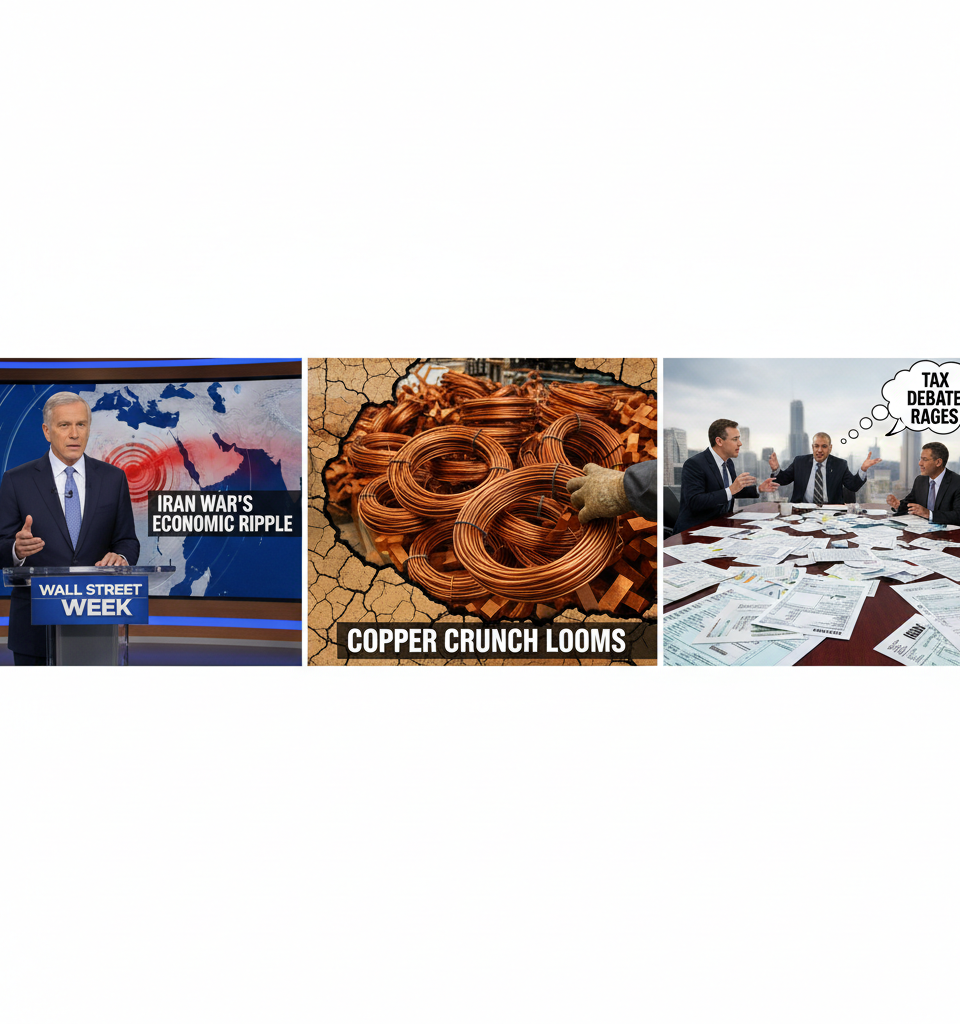
Former U.S. Treasury Secretary Hank Paulson has sounded a resonant alarm, cautioning that the most significant economic threat stemming from a potential conflict with Iran lies in the cascading global shocks that could inevitably spill into American markets. Speaking on "Wall Street Week," Paulson's remarks underscore a period of heightened geopolitical and economic uncertainty, exacerbated by a burgeoning global demand for critical resources like copper and an ongoing national debate regarding tax fairness for the wealthiest Americans. The convergence of these issues presents a complex challenge to policymakers and investors alike.
The Geopolitical Fault Line: Iran and Global Market Volatility
Paulson's prognostication is rooted in the intrinsic volatility of the energy sector and the broader implications of instability in the Middle East. A direct conflict with Iran, a major oil producer and strategic player in global shipping lanes, holds the potential to disrupt global oil supplies, leading to sharp price spikes. Such an event would not only impact energy-dependent economies but could also trigger a ripple effect across supply chains, inflame inflationary pressures, and dampen consumer spending worldwide. This echoes historical instances where geopolitical tensions in the region have directly translated into global economic downturns, highlighting the interconnectedness of world markets.
Copper's Criticality: Demand Outpaces Dwindling Supply
Adding to the economic headwinds is the intensifying strain on global copper supplies. The burgeoning demand for copper, driven by the global push towards electrification, renewable energy infrastructure, and advancements in digital technology, is rapidly outpacing the rate of new discoveries and production. Copper, often referred to as 'Dr. Copper' for its bellwether status in economic health, is a fundamental component in everything from electric vehicles and wind turbines to data centers and smart grids. Current projections indicate that global demand could surge by 25-30% by 2030, while supply growth struggles to keep pace, exposing significant gaps in U.S. domestic production capacity and increasing reliance on volatile international markets for this crucial mineral.
The American Tax Predicament: Wealth Distribution Under the Microscope
Simultaneously, the perennial debate over tax fairness in America has once again taken center stage. The question of whether the wealthiest Americans are contributing their equitable share to the nation's coffers, or if the current tax system allows for substantial portions of ultra-high-net-worth income to remain untaxed, continues to fuel public discourse. This discussion often revolves around the nuances of capital gains taxation, inherited wealth, and the effectiveness of tax loopholes and deductions available to the super-rich. Recent analyses suggest that effective tax rates for the top 1% can sometimes be lower than those for middle-income earners when considering all forms of income and tax expenditures.
Expert Insights and Market Reactions
Economists and market analysts are closely monitoring these intertwined developments. Many concur with Paulson's assessment, emphasizing that the lack of clear escalation pathways in the Middle East adds a layer of unpredictable risk premium to global assets. In the commodity markets, the "supercycle" narrative for copper is gaining traction, with some analysts forecasting sustained price increases. "The long-term fundamentals for copper are exceptionally strong, driven by the energy transition, but the short-term supply response is lagging significantly," noted one metals analyst. On the tax front, policy experts are proposing various reforms, from adjustments to capital gains taxes to enhanced enforcement mechanisms, to address perceived inequities.
Forward Outlook: Navigating a Volatile and Demanding Future
The immediate future will likely see continued volatility across financial markets as investors grapple with these multifaceted risks. Geopolitical tensions in the Middle East will remain a critical watchpoint, with any escalation having immediate and severe economic repercussions. For copper, expect sustained investment in exploration and mining, alongside increased focus on recycling initiatives to bridge the supply gap, though these are long-term solutions. The tax debate, meanwhile, is poised to intensify as the U.S. approaches another election cycle, with proposals for wealth taxes, increased corporate taxation, and reform of tax incentives for the wealthy likely to remain at the forefront of policy discussions. The confluence of these challenges necessitates a strategic and coordinated global response to mitigate economic fallout and ensure sustainable growth.