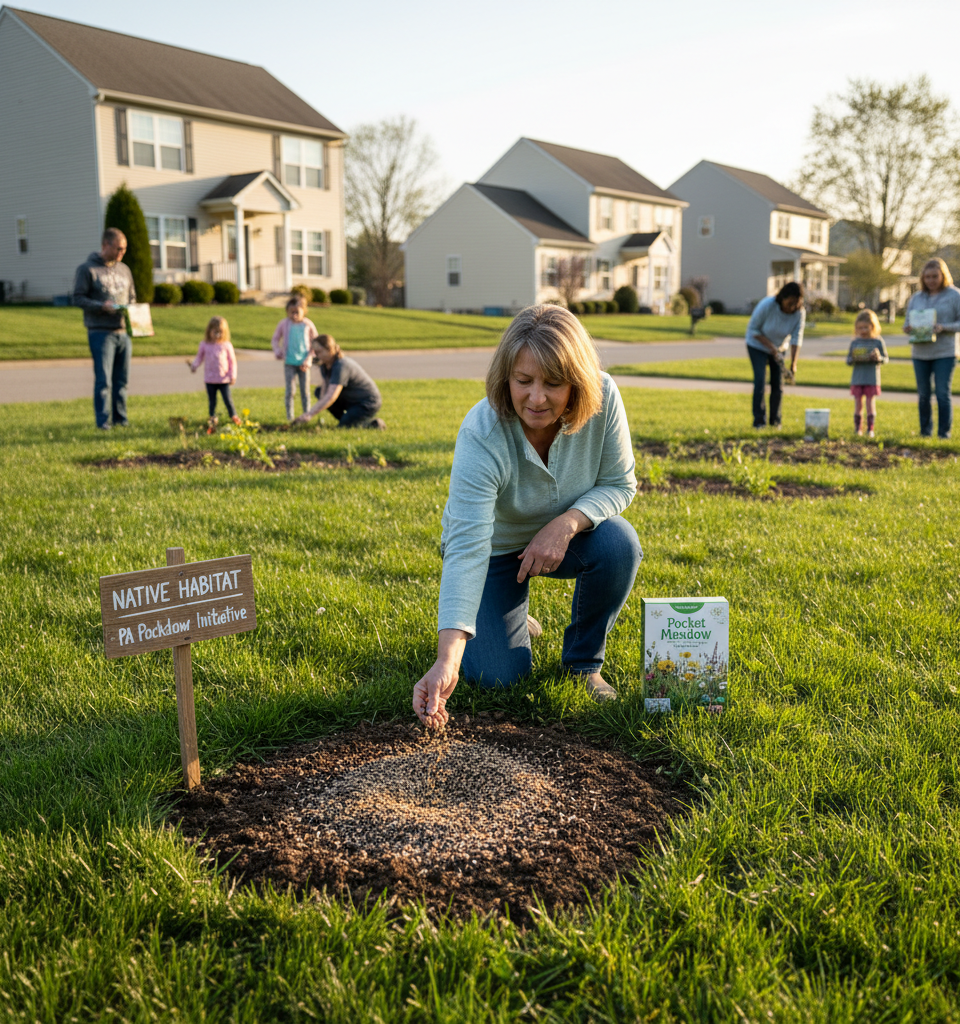
Pennsylvania's Department of Environmental Protection (DEP) has launched a groundbreaking initiative, distributing free 'Pocket Meadow' kits to residents, encouraging the transformation of conventional lawns into biodiverse native plant meadows. The program, which commenced distribution earlier this year, aims to combat ecological degradation, enhance local ecosystems, and foster a new understanding of landscape aesthetics across suburban and exurban communities within the state.
The Roots of a Green Revolution
The widespread adoption of monoculture lawns has long been linked to significant environmental challenges, including excessive water consumption, pesticide and herbicide use, and a dramatic loss of native pollinator habitats. Historically, the pristine, manicured lawn became a symbol of prosperity and community standards, often at the expense of ecological health. The 'Pocket Meadow' program directly addresses these concerns, offering a tangible, accessible solution to residents eager to contribute to environmental stewardship. This shift reflects a broader societal movement towards sustainable land management and a re-evaluation of what constitutes an attractive, well-maintained property.
Program Mechanics and Impact
Each 'Pocket Meadow' kit, weighing approximately 2.5 pounds, contains a carefully curated mix of native wildflower and grass seeds, specifically chosen for Pennsylvania's diverse ecoregions. The DEP estimates that each kit can establish a meadow covering roughly 100 square feet, capable of supporting a variety of native insects and birds. Initial demand for the kits has been exceptionally high, with thousands distributed in the first few months, indicating a strong public appetite for environmentally conscious landscaping solutions. Participating residents receive detailed instructions on soil preparation, planting, and long-term maintenance, ensuring the success of their fledgling meadows. The initiative is bolstered by educational campaigns, highlighting the ecological benefits, such as improved soil health, reduced stormwater runoff, and increased pollinator populations.
Redefining Curb Appeal and Market Trends
The 'Pocket Meadow' program is not just an environmental initiative; it is also a cultural and economic disruptor. By promoting naturalized landscapes, it challenges long-held notions of suburban curb appeal. Real estate professionals are beginning to observe a nascent trend where properties featuring native plantings and eco-friendly landscaping are becoming more desirable to a segment of buyers. This reflects a growing market for sustainable living and a rising awareness among homeowners about the ecological value of their land. Landscape design firms are also adapting, with increasing demand for native plant installations and meadow conversions, creating a new niche within the green industry.
Expert Endorsement and Future Prospects
Environmental scientists and horticultural experts universally laud the 'Pocket Meadow' initiative. Dr. Evelyn Reed, an ecologist at Penn State University, stated, "This program is a critical step in reconnecting fragmented habitats and providing vital resources for our native pollinators, which are experiencing dramatic declines. It's an accessible way for individual citizens to make a significant collective impact." She emphasized the importance of biodiversity hotspots within urban and suburban areas. Analysts predict that if successful, the program could serve as a blueprint for other states, fostering a nationwide movement towards native landscape integration.
Scaling Up for Greater Impact
Looking ahead, the Pennsylvania DEP plans to expand the 'Pocket Meadow' program, potentially increasing the number of kits distributed annually and diversifying the seed mixes to cater to even more specific regional conditions. There are discussions about creating advanced kits for larger plots and developing partnerships with local nurseries to ensure a sustainable supply of native plants for those wishing to expand beyond the initial kit. The long-term goal is to measure the aggregate ecological impact, such as total acres converted, increases in pollinator counts, and reductions in pesticide use. This pioneering program holds the promise of transforming Pennsylvania's suburban fabric, one pocket meadow at a time, towards a more resilient and biodiverse future.