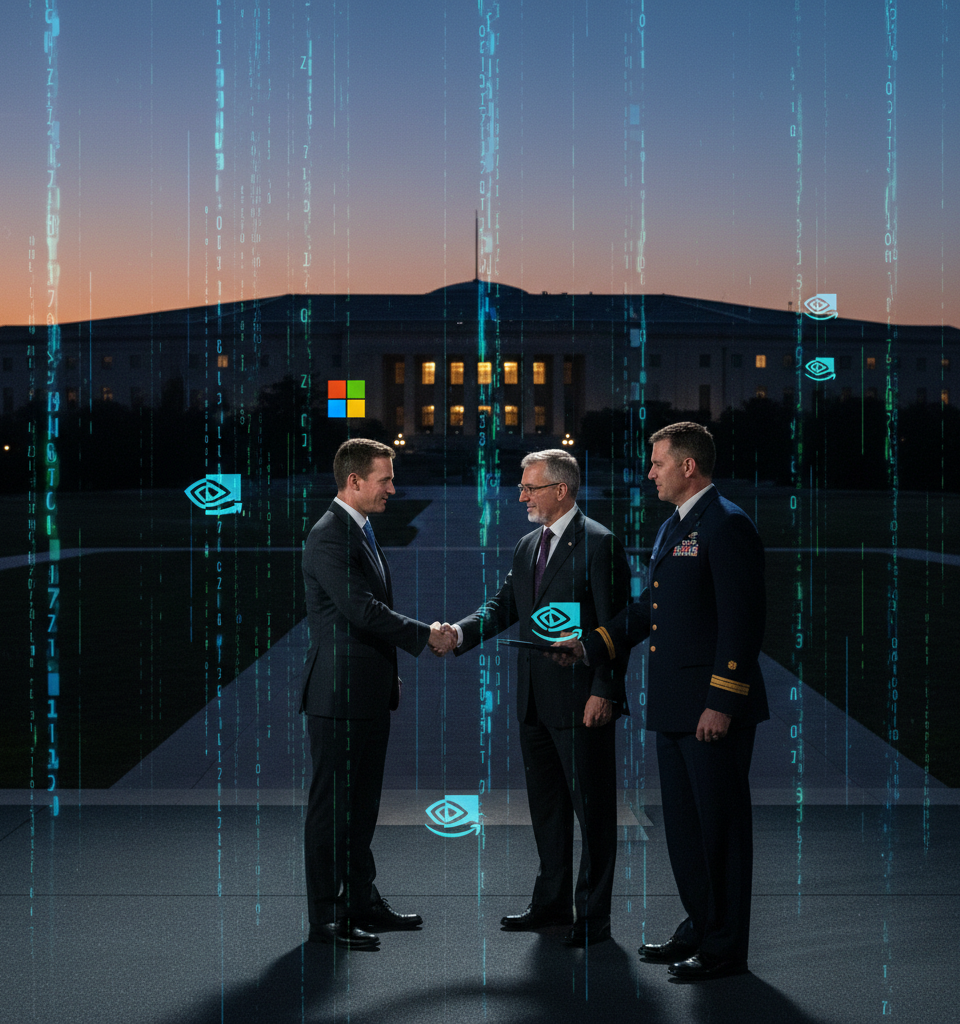
The U.S. Department of Defense (DoD) has announced a watershed collaboration with a trio of technology powerhouses: Nvidia, Microsoft, and Amazon Web Services (AWS). These agreements are set to usher in advanced artificial intelligence (AI) functionalities across the Pentagon's highly sensitive, classified networks, marking a pivotal moment in national security technological integration. The initiative unfolds as the DoD strategically expands its roster of AI vendors, a direct response to recent challenges and a clear indication of its commitment to fostering a more resilient and competitive AI supply chain for defense applications.
Context and Strategic Imperatives
This robust vendor diversification strategy is not coincidental. It directly follows a publicly acknowledged and contentious dispute involving the DoD and AI firm Anthropic, specifically concerning the usage terms of its AI models. That episode underscored the critical need for the Pentagon to avoid over-reliance on a single provider for nascent and rapidly evolving technologies like AI. By engaging multiple industry leaders, the DoD aims to mitigate risks, foster innovation through competition, and ensure continuity of operations for mission-critical AI deployments. The urgency for these integrations is amplified by the escalating global technological competition and the imperative for the U.S. to maintain a decisive military advantage through superior AI capabilities.
Key Details of the Agreements
While specific financial terms of the individual contracts were not immediately disclosed, the magnitude of the undertaking implies substantial investment. Nvidia, a global leader in AI hardware and software, is expected to provide specialized graphics processing units (GPUs) and AI development platforms crucial for processing vast datasets and running complex algorithms within secure environments. Microsoft and AWS, dominant players in cloud computing, will likely offer their respective secure cloud infrastructure services, tailored for classified data handling, alongside their extensive suite of AI development tools.
These partnerships are designed to facilitate everything from predictive analytics and enhanced intelligence gathering to autonomous systems and sophisticated cyber defense mechanisms, all operating within the stringent security protocols of classified government networks. Deputy Secretary of Defense Kathleen Hicks has repeatedly emphasized the strategic imperative of "delivering AI at the speed of relevance" across all domains of military operations.
Industry and Market Impact
The ripple effects of these Pentagon deals are profound for the technology sector. For Nvidia, it solidifies its position as an indispensable provider of foundational AI technology, extending its influence beyond commercial data centers into the high-stakes realm of national security. For Microsoft and AWS, these contracts represent a significant vindication of their investments in secure cloud offerings and specialized government solutions, reinforcing their competitive edge in a lucrative, yet highly regulated, market. The announcement could also galvanize other tech firms to enhance their government-grade AI solutions and security postures, fostering a more competitive ecosystem. Furthermore, it signals to the broader market that AI security and compliance are paramount, potentially influencing product development and investment trends.
Expert Perspectives
Industry analysts are largely optimistic about the move, viewing it as a pragmatic approach to a complex challenge. Dr. Sarah Chen, a leading defense tech consultant, remarked, "This multi-vendor approach isn't just about risk mitigation; it's about leveraging the best-of-breed technologies from different specialists. Nvidia brings unparalleled compute power, while Microsoft and AWS offer scalable, secure infrastructure. It's a smart playbook for rapid AI adoption in a controlled environment." Others point to the potential for these partnerships to accelerate the development of industry standards for secure AI, which could have long-term benefits beyond defense applications.
Future Implications and Next Steps
Looking ahead, the immediate focus will be on the seamless integration and testing of these AI systems within the classified networks. This will involve rigorous security audits, performance evaluations, and the development of robust governance frameworks for AI ethics and responsible use. Future developments are likely to include expanding the scope of AI applications, potentially incorporating more sophisticated large language models and advanced machine learning techniques for diverse military functions. The DoD is expected to continually evaluate new technologies and potentially onboard additional vendors as the AI landscape evolves. This strategic pivot underscores a long-term commitment to maintaining technological superiority through agile and diversified AI procurement, setting a precedent for future government-tech collaborations in an increasingly AI-driven world.