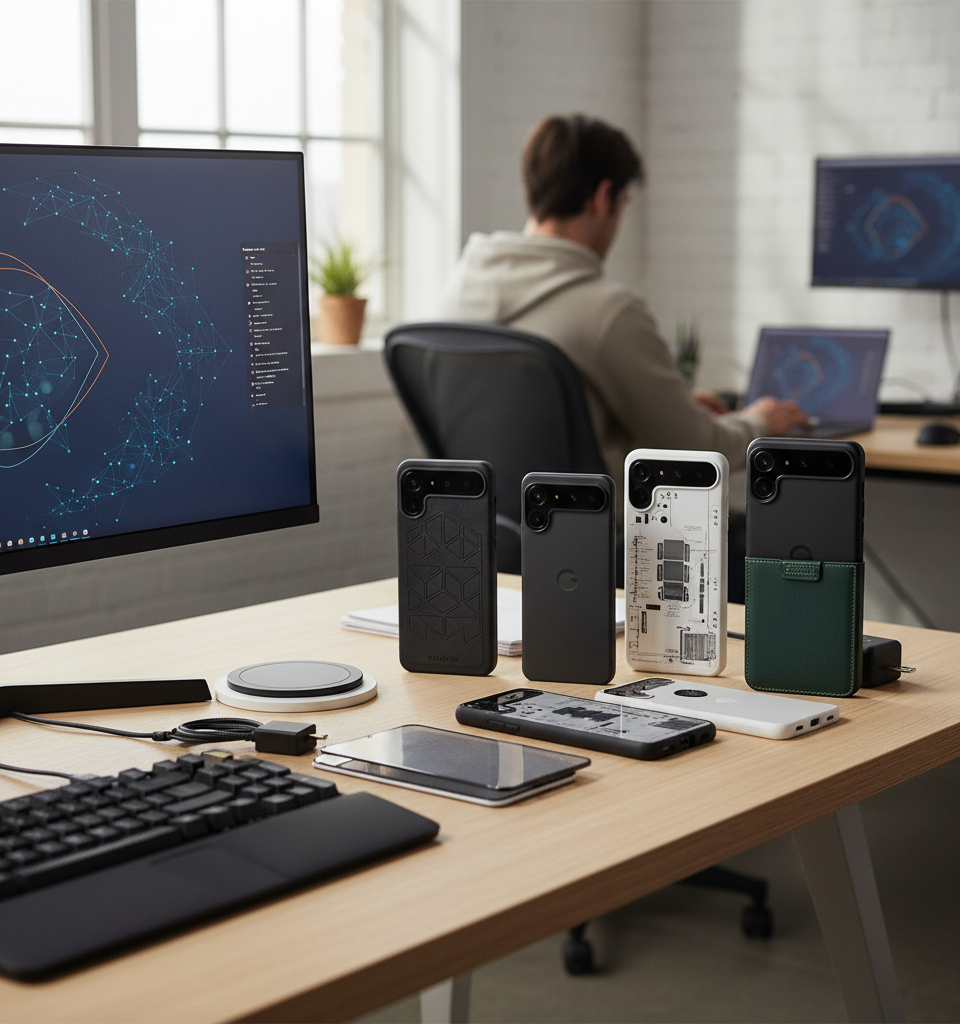
The accessories market for premium smartphones represents a significant revenue stream, influencing consumer retention and overall brand loyalty. For manufacturers like Mous, dbrand, and Bellroy, successfully navigating this competitive landscape by offering distinct value propositions is crucial for maintaining and expanding their global market share in the rapidly evolving tech sector.
Market Landscape for Pixel 10 Accessories
Google's new flagship lineup, including the Pixel 10, Pixel 10a, and the high-end Pixel 10 Pro XL, has quickly solidified its footing in the global smartphone market. This successful rollout has, in turn, fueled a robust demand for accompanying accessories, as consumers look to protect their significant investments and personalize their devices. The accessory segment, encompassing everything from protective cases to specialized add-ons, is experiencing significant growth, driven by a consumer base that increasingly values durability, style, and enhanced functionality.
Leading Contenders: Mous, dbrand, and Bellroy
Among the array of accessory providers, Mous, dbrand, and Bellroy have emerged as prominent players, each carving out a distinct niche. Mous is renowned for its extreme impact protection, often incorporating proprietary AiroShock™ technology into its cases, which undergo rigorous drop testing. Their focus on robust defense without significant bulk appeals to users seeking ultimate device security. dbrand, conversely, specializes in customization and aesthetic personalization, offering a vast array of precision-cut skins and grips that allow users to drastically alter the look and feel of their Pixel 10 devices. Their emphasis is on unique, high-quality finishes and an almost limitless combination of designs.
Bellroy occupies the premium end of the market, focusing on elegance, minimalist design, and sustainable materials. Known for their refined leather cases and integrated wallet features, Bellroy targets consumers who prioritize sophisticated aesthetics and practical utility, often integrating eco-friendly practices into their production. The brand's products often feature slim profiles while still offering adequate protection, blending form and function seamlessly.
Strategic Differentiation and Consumer Appeal
These brands’ strategies highlight the diverse needs within the smartphone accessory market. Mous taps into the core anxiety of accidental damage, offering peace of mind through engineering. dbrand caters to the desire for individual expression and aesthetic refinement, transforming a mass-produced device into a personal statement. Bellroy appeals to the discerning buyer who values craftsmanship, premium materials, and understated luxury. The ability of these companies to clearly differentiate their offerings is critical in a crowded market where many generic alternatives exist.
Industry Impact and Broader Trends
The strong performance of these accessory brands alongside Google's Pixel 10 series underscores a broader trend: the increasing importance of the peripheral ecosystem in influencing smartphone purchasing decisions. Consumers are not just buying a phone; they are investing in a complete experience that includes protection, personalization, and functional enhancements. This trend encourages innovation within the accessory sector, pushing brands to develop more advanced materials, integrated technologies, and sustainable practices. The success of premium accessory makers also validates Google's strategy of delivering high-quality devices that warrant such investments from users.
What's Next for the Accessory Market
Looking ahead, the competition among accessory brands is expected to intensify, particularly as augmented reality (AR) and artificial intelligence (AI) functionalities become more integrated into smartphone use. This could lead to the development of cases with embedded smart features, enhanced thermal management for intensive applications, or even modular designs that allow for specialized attachments. Brands like Mous, dbrand, and Bellroy will likely continue to innovate, adapting their core strengths—protection, customization, and premium design—to meet these evolving technological demands and consumer expectations. Monitoring their next product cycles will offer insights into the future direction of premium smartphone accessories.