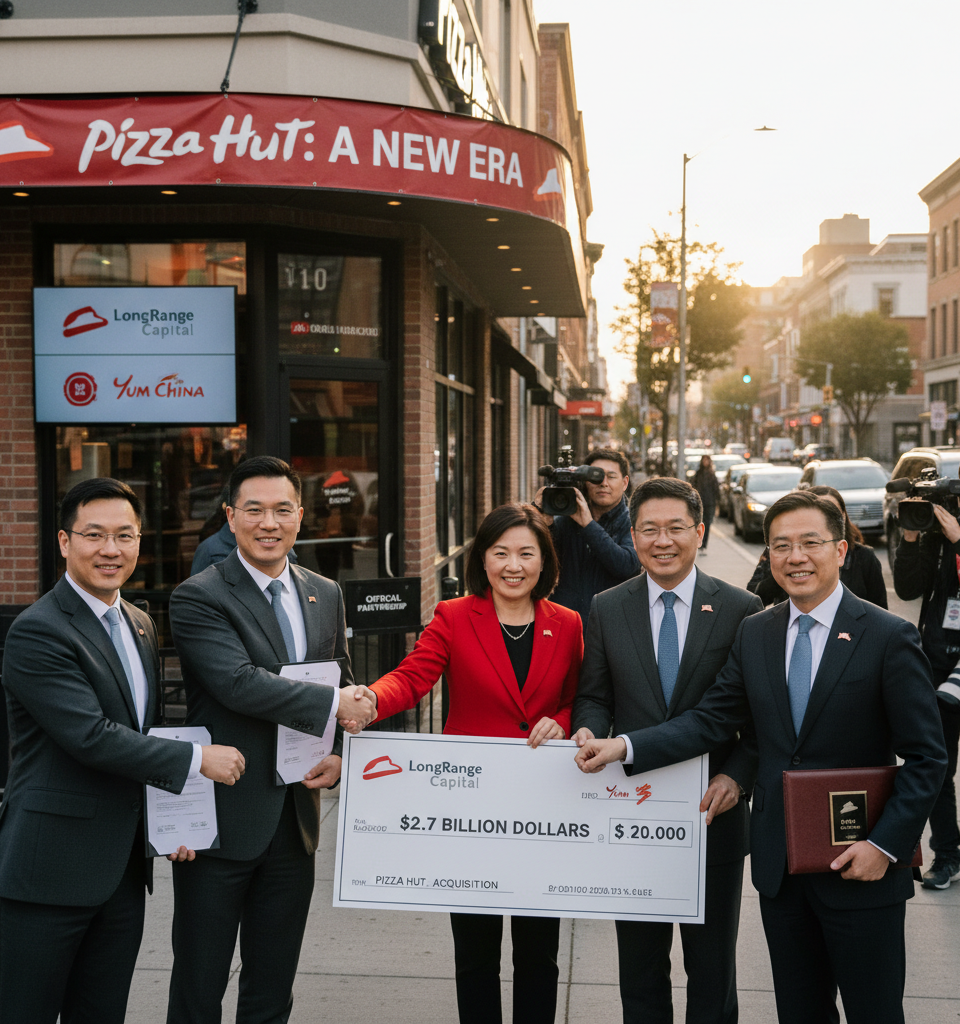
Yum Brands has completed the sale of its Pizza Hut division in a substantial transaction valued at $2.7 billion. The iconic pizza chain, long a fixture in the American dining landscape and a symbol of 1990s cultural memory, has been acquired by a partnership consisting of private equity firm LongRange Capital and Yum China Holdings Inc. This divestiture represents a pivotal moment for Pizza Hut, signaling a strategic repositioning by its former parent company and a new chapter for the brand under private equity stewardship.
The move comes as established restaurant chains continue to navigate a dynamic and increasingly competitive fast-casual and delivery-focused market. For Yum Brands, the sale allows for a streamlining of its portfolio, potentially enabling a sharper focus on its remaining core brands. For the acquiring entities, the investment in Pizza Hut at this valuation underscores a belief in the brand's enduring recognition and potential for revitalization and growth, particularly with the strategic involvement of Yum China Holdings Inc., which already operates a significant portion of Pizza Hut's international presence.
Transaction Details and Strategic Implications
The $2.7 billion price tag reflects a substantial investment in a brand with decades of history and a vast global footprint. While specific motivations beyond portfolio optimization for Yum Brands were not detailed, private equity acquisitions typically aim to enhance operational efficiencies, drive aggressive growth strategies, and eventually position the acquired asset for a lucrative future exit. LongRange Capital's involvement suggests a focus on the domestic or broader international operations outside China, while Yum China's participation solidifies its commitment to the brand within its expansive market, potentially creating a synergistic approach to global development.
This transaction could signal a broader trend of mature restaurant brands attracting private equity interest, as investors seek opportunities to leverage established brand recognition through operational overhauls, digital transformation, and aggressive market expansion. For Pizza Hut, this could translate into significant investments in technology, supply chain optimization, and menu innovation, areas often prioritized by private equity firms seeking to maximize value.
Impact on the Restaurant Industry Landscape
The sale of a brand as recognizable as Pizza Hut has ripple effects across the restaurant industry. It highlights the ongoing evolution of the quick-service and casual dining segments, where traditional sit-down models are increasingly challenged by delivery-centric platforms and digitally native competitors. The influx of private equity into such a prominent brand could accelerate new strategies for customer engagement, operational efficiency, and market penetration, setting a precedent for other legacy brands considering similar transformations.
The involvement of Yum China Holdings Inc. is particularly noteworthy. As a powerhouse in one of the world's largest consumer markets, its expanded role could lead to an even more integrated global strategy for Pizza Hut, leveraging its deep understanding of consumer preferences and operational scale in Asia. This dual ownership structure between a Western private equity firm and a major Asian market operator could offer a unique model for international brand management and growth.
Looking Ahead: A New Era for Pizza Hut
The immediate future for Pizza Hut under its new ownership will likely involve a comprehensive assessment of its current business model, with potential changes spanning from menu development and marketing strategies to technological infrastructure and store formats. The focus will undoubtedly be on reinvigorating the brand's appeal and enhancing its competitive edge in a crowded market. Industry observers will be watching closely to see how LongRange Capital and Yum China Holdings Inc. leverage their combined expertise and capital to reshape Pizza Hut for a new generation of consumers, while also honoring the nostalgia that has defined the brand for decades.
This deal represents more than just a change in ownership; it's a recalibration of a beloved brand in a rapidly shifting global dining landscape. The coming years will reveal whether this multi-billion dollar bet on Pizza Hut's enduring power will pay off, solidifying its place not just in nostalgic memory, but as a robust and relevant player in the future of food service.