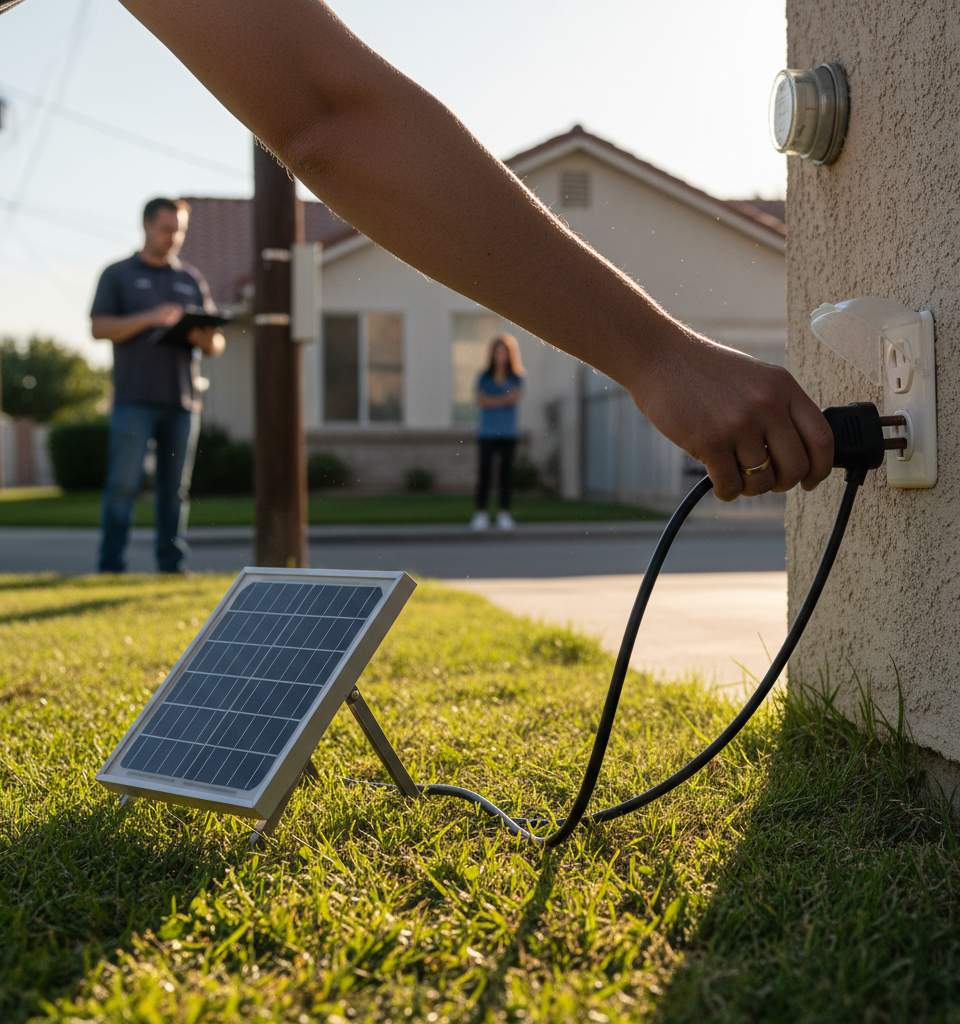
The burgeoning interest in plug-in solar technology is empowering homeowners to generate their own electricity, offering a more accessible entry point into renewable energy compared to traditional rooftop installations. However, the path to widespread adoption is significantly hampered by a patchwork of complex and often prohibitive governmental regulations, creating a landscape where the feasibility of self-generated clean power varies dramatically by region. While the allure of 'DIY' energy independence is strong, navigating the legal and technical requirements, from permitting to grid interconnection, remains a formidable challenge for individuals seeking to embrace this innovative solution.
The concept of plug-in solar represents a democratization of energy production. Unlike large-scale, professionally installed solar arrays that can cost upwards of $20,000, modular plug-in systems typically range from $500 to $2,000, making them an attractive option for renters, apartment dwellers, and those with limited upfront capital. This technology allows individual panels, often rated between 300W and 800W, to be connected directly to a standard wall outlet, feeding electricity into a home's existing electrical system and reducing reliance on the grid.
The appeal lies in its simplicity and portability, transforming previously inaccessible solar power into a consumer-friendly appliance. Historically, solar adoption was centralized and capital-intensive, but plug-in variants promise a future of decentralized energy generation, akin to the shift from mainframe computers to personal computers.
Despite the significant potential, the primary obstacle facing plug-in solar enthusiasts is the convoluted web of local, state, and utility regulations. Many jurisdictions, for instance, classify even small plug-in systems as requiring the same stringent permitting and inspection processes as a full-scale rooftop installation. This can involve costly engineering reports, electrical inspections, and lengthy approval times, effectively negating the 'DIY' advantage and driving up overall costs.
Anecdotal evidence suggests some homeowners have faced fines or even disconnections for installing plug-in systems without navigating this complex bureaucracy. Crucially, the legality and ease of installation depend heavily on a homeowner's geographical location, creating a highly uneven playing field. Some forward-thinking municipalities are beginning to streamline these processes, but they remain the exception rather than the rule.
The broader energy market stands at a crossroads. Widespread adoption of plug-in solar could significantly impact utility companies, potentially reducing their revenue from individual consumers and shifting the grid from a solely centralized model to a more distributed one. This disruption could prompt utilities to either resist such technologies through regulatory lobbying or adapt by creating new tariff structures and grid management systems that integrate micro-generation more effectively. The current lack of a standardized national framework for plug-in solar interconnection is a major impediment, preventing manufacturers from scaling production efficiently and confusing consumers about their rights and responsibilities.
Energy policy experts and environmental advocates largely view plug-in solar as a net positive, accelerating the transition to clean energy. However, they also emphasize the critical need for regulatory modernization. Dr. Eleanor Vance, a senior fellow at the Renewable Energy Policy Institute, notes, "The technology is ready; the regulations are not. We need streamlined, unambiguous plug-and-play standards that protect grid safety without stifling innovation and consumer choice." She suggests that a national standard or template for low-power distributed generation could unlock vast potential, similar to how personal computers gained widespread adoption once common standards were established.
The future of plug-in solar hinges on a critical dialogue between consumers, manufacturers, utilities, and regulators. Upcoming developments are likely to focus on advocating for standardized interconnection agreements and simplified permitting processes, potentially through federal guidelines or interstate compacts. Furthermore, advancements in smart inverters and battery storage will enhance the utility and economic value of these systems, allowing homeowners to store excess energy rather than solely rely on net metering—a practice often contested by utilities. The trajectory suggests that as energy independence becomes a greater priority for consumers, the pressure to reform outdated regulations will intensify, eventually paving the way for plug-in solar to fulfill its promise as a truly accessible clean energy solution.